


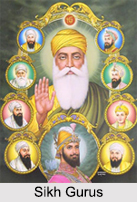
 Sikh Gurus are the proponents of the Sikh religious faith who founded Sikhism in the 15th century. The tenure of the Sikh Gurus roughly extends from 1469 to 1708 AD. The term 'Guru' has its origins in the Sanskrit language meaning a religious preacher, tutor or a saint. In Sikhism, the term 'Guru' has been used primarily with respect to the 10 Sikh Gurus who escalated the foundation and growth of the religion. It is believed that the spirit of the Divine Being was inherent within the Sikh Gurus who served as mediators between the Lord and his devotees. Sikh Gurus are the proponents of the Sikh religious faith who founded Sikhism in the 15th century. The tenure of the Sikh Gurus roughly extends from 1469 to 1708 AD. The term 'Guru' has its origins in the Sanskrit language meaning a religious preacher, tutor or a saint. In Sikhism, the term 'Guru' has been used primarily with respect to the 10 Sikh Gurus who escalated the foundation and growth of the religion. It is believed that the spirit of the Divine Being was inherent within the Sikh Gurus who served as mediators between the Lord and his devotees.
Guru Nanak was born in 1469 and he was followed by an illustrious lineage of Gurus who were selected on the basis of rigorous guidelines and it was not hereditary. The Sikh Gurus who succeeded Nanak worked with immense dedication to preserve and propagate his teachings. The teachings of Guru Nanak were compiled by the later Gurus to develop the Sikh Holy Scriptureor the ‘Adi Granth’ or ‘Guru Granth Sahib’. Upon the death of the 10th Guru, Gobind Singh in 1708, the ‘Guru Granth Sahib’ was pronounced as the last Guru. Guru Nanak, 1st Sikh Guru The first of the Sikh Gurus and the ‘Founder of Sikhism’ was Guru Nanak (1469-1539). In the year 1469, Guru Nanak who was born in Talwandi, now known as Nankana Sahib is situated in Pakistan. He travelled across the country and on foreign shores with the sole purpose of spreading the tenets of Sikhism. He promoted equality of all living beings in the eyes of God and condemned ritualistic practices and any form of discrimination. 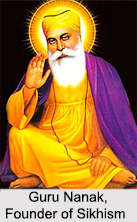 Guru Angad Dev, 2nd Sikh Guru Guru Angad Dev, 2nd Sikh Guru
The teachings of Guru Nanak and his biographic details provided by the ‘Janam Sakhis’ were compiled by his successor Guru Angad Dev (1504-1552). He is also known as ‘Bhai Lehna’ who is renowned for introducing the ‘Gurmukhi’ script which is used in the composition of the ‘Adi Granth’. He worked rigorously for the spread of Sikhism and various prominent religious institutions like the ‘Sangats’ were established by him. The idea of community kitchens or ‘Langar’ introduced by Guru Nanak was further popularized by Angad Dev. Guru Amar Das, 3rd Sikh Guru Guru Angad Dev was succeeded by Guru Amar Das (1479-1574). His tenure as Sikh Guru extended from 1552-1574 and this era was marked important in the history of Sikhism owing to the significant social reforms that he introduced. Particularly, Guru Amar Das's contributions towards the upliftment of women were enormous and he strongly condemned the evil practices of ‘Sati’ and the ‘Purdah’ system that was prevalent in his times. He incorporated the ritual of regular utterance of the five ‘banis’ known as ‘Anand Sahib’. Guru Ram Das, 4th Sikh Guru Guru Ram Das (1534-1581) founded Amritsar in 1574. He is the fourth of the Sikh Gurus who facilitated the spread of Sikhism in different parts of northern India from 1574-1581. The premises for the ‘Anand Karaj’ or the marriage ceremony of the Sikhs were provided by the hymnical compositions composed by Guru Ram Das. He was also instrumental in arranging the constitution of the Sikh society. 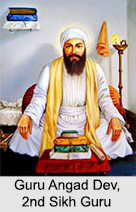 Guru Arjan Dev, 5th Sikh Guru Guru Arjan Dev, 5th Sikh Guru
Guru Arjan Dev (1563-1606), the fifth Sikh Guru holds immense importance in the history of Sikhism as the compiler of the ‘Adi Granth’ in 1604, which later came to be known as the ‘Guru Granth Sahib’. The Harmandir Sahib or the Golden Temple of Amritsar, the seat of Sikhism, was founded by him. Guru Har Gobind, 6th Sikh Guru Arjan Dev was succeeded by the sixth Guru Har Gobind (1595-1644) who introduced the importance of martial skills and physical prowess among the Sikhs. He preached the concept of two swords, the ‘piri’ and the ‘miri’ which signified ‘holy power’ and ‘secular power’. During his tenure, the ‘Akal Takht’ was introduced in the year 1608. He was imprisoned for a while in Gwalior and the event of his liberation is celebrated by the Sikhs as the ‘Bandi Chhor Divas’. Guru Har Rai, 7th Sikh Guru The seventh Sikh Guru Har Rai (1630-1661) was instrumental in popularizing Sikhism greatly. He propagated the martial expertise introduced by his predecessors and worked efficiently for upholding the tenets of the Holy Scriptures. 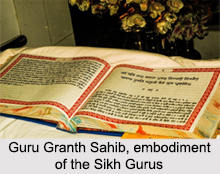 Guru Harkrishan, 8th Sikh Guru Guru Harkrishan, 8th Sikh Guru
Guru Har Rai was succeeded by his son Guru Harkrishan (1656-1664) whose tenure of three years came to an end with his untimely death while serving the community. He came to be known as the ‘Bal Guru’ as he was just a small child when he assumed the Guru Gaddi. Guru Har Krishan was very wise and mature beyond his age. Guru Tegh Bahadur, 9th Sikh Guru Guru Tegh Bahadur (1621-1675), the ninth Sikh Guru founded Anandpur Sahib. He believed that all religious beliefs can aid in the attainment of God and every individual had the right to practice his own faith freely. He was killed by the Mughal emperor Aurangzeb upon his refusal to embrace Islam. Guru Gobind Singh, 10th Sikh Guru The last of the living Sikh Gurus was Guru Gobind Singh (1666-1708) who established the ‘Khalsa’ in 1699. The Khalsa Sikhs were the baptized Sikhs who were christened in the elevated spirit of Sikhism. Gobind Singh also composed the ‘Dasam Granth’ which is recognized as one among the Sikh Holy Scriptures. He chose the ‘Adi Granth’, which was renamed as the ‘Guru Granth Sahib’ to be honoured as the last of the Sikh Gurus. It contained a compilation of all the teachings preached by the 10 Sikh Gurus and also includes tenets provided by the devotees or ‘Bhagats’. The ‘Guru Granth Sahib’ is honoured by the Sikhs as the embodiment of the Sikh Gurus and it is believed to serve as the medium which emanates the word of God. The ‘Guru Granth Sahib’ is honoured at the Gurudwara not as a substitute for an idol, but rather as a source of intimacy with the Lord. |
| |||



Sikh Gurus
| Sikh Gurus are the ten prophet-teachers who contributed to the development of the Sikh religion. Each of the Sikh Gurus represented a divine attribute. |
| ||||||||||||||||||||||||||||

