


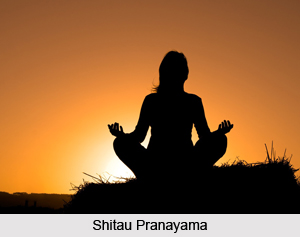
 Shitau Pranayama is a form of exercise practiced by many for attaining health as well as mental benefits. This pranayama is also known as Shitah Pranayama. It is obvious from the name of the pranayama itself that it gives cooling effect to the body. Shitau Pranayama is a form of exercise practiced by many for attaining health as well as mental benefits. This pranayama is also known as Shitah Pranayama. It is obvious from the name of the pranayama itself that it gives cooling effect to the body.
Practice of Shitau Pranayama Shitau Pranayama is practiced in a way in which air is drawn in over the tongue and kumbhaka is performed. The practitioner then breathes out slowly through both the nostrils. The technique of this pranayama describes that the practitioner should sit in the posture of Padmasana or Ardha-padmasana with straight spine. Before inhaling for puraka the tongue is drawn out and by lifting its sides voluntarily, a structure like a channel is formed. Shiv Samhita describes it as 'beak of a crow'. Those who cannot do this may turn the tongue upward, form the horizontal channel and then inhale. Now the tongue is held between the lips and inhale through it; a sound like 'si' is produced. Inhaling slowly results more cooling sensation. After this proportionate puraka, kumbhaka is started. Rules for the kumbhaka are similar like other. For rechaka, exhale is performed through both the nostrils slowly for double time than puraka. This is performed for ten rounds or more. The technique of this pranayama is simple and easy to do. As the name suggests, one experiences cooling sensation in the whole body. During the normal breathing the air becomes immediately warm as soon as it enters through the nose. In this pranayama, the air is sucked through the wet channel of the tongue and therefore gets cooled. Benefits of Shitau Pranayama In summer, this pranayama is helpful in reducing the temperature of the body. Hathapradipika claims that the diseases of spleen, fever, inflammation, over production of bile and the consequences of poisonous food consumption are cured by this pranayama. The practice of this pranayama also helps to control thirst and hunger and enhance calmness and peace in mind. The mental steadiness, pleasant and 'energetic feeling' after this pranayama is experienced through out the day. Moreover, the Shitau Pranayama increases lung capacity and stamina of human body. Precaution of Shitau Pranayama Though Shitau pranayama has several beneficial effects, this pranayama should be practiced in a moderate and healthy atmosphere. This pranayama should not be practiced in open air when the temperature is as low as 5-10 centigrade because the air is directly entering into the lungs. One may catch a cold. Similarly practice of this pranayama in the hall where too many persons are gathered should be avoided. |
| |||



Shitau Pranayama
| Shitau Pranayama is a kind of pranayama which helps to control thirst and hunger. |
| ||||||||||||||||||||||||||||

