|
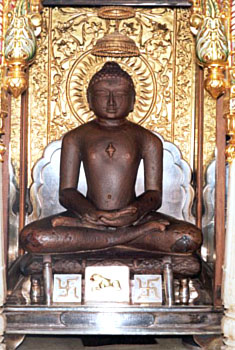 The principles of Jainism state that the way to nirvana lies through the three jewels or triratna which includes faith in Jina, right knowledge and perfect conduct. Belief in real existence or tattvas is right faith; knowledge of real nature without doubt or error is right knowledge and an attitude of neutrality without desire or aversion towards the objects of the external world is right conduct. The three together form one path, and are to be simultaneously pursued. The principles of Jainism state that the way to nirvana lies through the three jewels or triratna which includes faith in Jina, right knowledge and perfect conduct. Belief in real existence or tattvas is right faith; knowledge of real nature without doubt or error is right knowledge and an attitude of neutrality without desire or aversion towards the objects of the external world is right conduct. The three together form one path, and are to be simultaneously pursued.
The principles say that virtue is incorporated in the fivefold conduct which includes Innocence, or ahimsa, which is not mere negative abstention, but positive kindness to all creation; charity and truth speaking; honourable conduct, such as, not stealing; chastity in word, thought and deed and renunciation of all worldly interests mark the good man. The Jain principles lay stress on both faith and works. A distinction is drawn between the code for laymen and that for ascetics. All those actions which lead to peace of mind are punya. There are nine ways of obtaining punya or merit such as giving food to the deserving, water to the thirsty, clothes to the poor, shelter to monks, etc.
Hinsa or infliction of suffering is the great sin or papa. Other sins are untruthfulness, dishonesty, unchastity and covetousness. Anger, conceit, deceit and avarice also tie individuals down to the world, and their opposites of patience, humility, simplicity and contentment further the growth of the spiritual instincts. Other sins, such as hatred, quarrelsomeness, slander, defamation, abuse of others, lack of self-control, hypocrisy and false faith are also mentioned. Sin is no offence against God, but only against man.
It can be said that the Jain principles are far stricter than the principles of Buddhism. It looks upon patience as the highest good and pleasure as a source of sin. Man should attempt to be indifferent to pleasure and pain. True freedom consists in an independence of all outer things. That jiva, which through desire for outer things experiences pleasurable or painful states, loses his hold on self and gets bewildered, and led by outer things, he becomes determined by the other. That jiva, which being free from relations to others and from alien thoughts through its own intrinsic nature of perception and understanding perceives and knows its own eternal nature to be such, is said to have conduct that is absolutely self-determined.
The Jains are not opposed to the caste system, which they try to relate to ones character. By one's actions one becomes a Brahmin, or a Kshatriya, or a Vaishya or Sudra. He, who is exempt from all karmas, is called a Brahmin by the Jains. The Jains and the Buddhists use the word Brahmin as an honorific title, applying it even to persons, who did not belong to the caste of Brahmins. The exclusiveness and pride born of caste are condemned by the Jains.
|





