
Murshid Quli Khan was the founder of the Nawabi Regime in Bengal. Mughal Empire started declining after the death of Emperor Aurangzeb. Under these circumstances Murshid Quli Khan became the first Nawab of Bengal, serving from 1717 to 1727. Though there was still the authority of the Mughals above him but he was nevertheless the first independent ruler of Bengal. The death of Aurangzeb was marked by the rise of three notable nobles namely Saadat Ali Khan of Oudh, Murshid Quli Khan of Bengal and Qamar ud-din Khan of Deccan. Murshid Quli Khan of Bengal gradually united his force and position and in the year 1719 he renamed his capital city from Makhsusabad to Murshidabad after his name. Murshid Quli Khan began his career in Bengal as the provincial Diwan and ended as the Governor of Bengal and Odisha, Diwan of Bihar and Faujdar of several districts, occupying all posts at the same time in the early 18th century.
Early Life of Murshid Quli Khan
The early life of Murshid Quli Khan is rooted in obscurity. Nothing is known in certain about his family or parenthood. Among the many versions of his early life the most reliable account is that he was born of a poor Brahmin in the Deccan before being sold to slavery. He was bought by one Haji Shafi Isfahani, a merchant from Persia who converted him to Islam and changed his name to Muhammad Hadi. He joined the services of Haji Abdullah, the Diwan of Berar and gradually came under the royal service of Emperor Aurangzeb.
Rise of Murshid Quli Khan
Emperor Aurangzeb was in search of an efficient man for being the "Diwan of Bengal" when his choice fell on Murshid Quli Khan. In the year 1701 he was sent to Bengal as the "Diwan". Murshid Quli Khan was an honest officer and he had already served as a Diwan of the province of Odisha. He was efficient in his work and was praised among the imperial officials. Murshid Quli Khan was held unparalleled in goodness and morality of purpose. The title of Murshid Quli Khan was bestowed upon him by Emperor Aurangzeb. During and after the reign of Aurangzeb, Murshid Quli Khan"s rise was noteworthy.
Administration of Murshid Quli Khan
Murshid Quli Khan was an able and efficient administrator. As an administrative decision, Medinipur was estranged from Odisha and annexed to the Province of Bengal. In matter of collecting revenues, Murshid Quli Khan made no compromise. The Hindu Zamindars suffered under him and were terrorised by the revenue collectors who were often ruthless. Under his rule, the Zamindars were debarred from collecting the Imperial revenue and their sources of income were also limited to profits of tax free lands given in consideration for services rendered.
Administration of Murshid Quli Khan in the matters of land reforms was also strict. He sent his men to every village and the cultivated and the waste lands were measured and were leashed back to the tenants plot by plot. Agricultural loans were meted out to the poorer section and he also put forth effort for the augment in the produce of the lands. In Murshid Quli Khan"s time, Bengal`s internal and international trade grew enormously. Arab, Persian and Armenian merchants were very active in Bengal. Murshid Quli Khan was aware of the importance of trade and encouraged traders and companies in fair trade but punished unfair traders very severely.
Death of Murshid Quli Khan
Murshid Quli Khan died on 30th June 1727. He was succeeded initially by his grandson Sarfaraz Khan, but his son-in-law Shuja-ud-Din Muhammad Khan did not accept the succession, and planned to fight a war against him. Khan gave up without a fight and Shuja-ud-Din became the Nawab in 1727. Murshid Quli Khan was buried under the steps of the staircase after his death on 30 June 1727 at the Katra Masjid in Murshidabad.
Murshid Quli Khan
Murshid Quli Khan was the first independent Nawab of Bengal after the death of Mughal emperor Aurangzeb. During his reign, he changed the Jagirdari system to the Zamindari system. He changed the name of Makhsusabad to Murshidabad.
Recently updated articles in States of India

Bandare Waterfalls, Meghalaya
Bandare Waterfalls in South Garo Hills, Meghalaya, is a secluded natural attraction surrounded by dense subtropical forests and rugged mountain terrai...
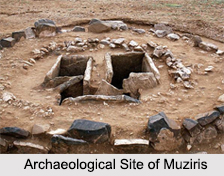
History of Thissur District
Early History of Thissur District explains flourishing of the port cities. Now these port cities are transformed into archaeological sites.
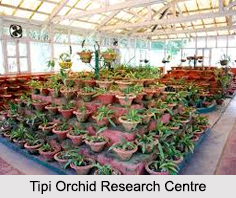
Tippi Orchid Research Centre, Arunachal Pradesh
Tippi Orchid Research Centre in Arunachal Pradesh is renowned for its rich collection of exotic and endangered orchids. Surrounded by lush rainforest...

Tourism in Nashik District
Pilgrimage tourism in Nashik district involves visiting the various places of Hindu and Jain worship located here. Some of the holiest sites for Hind...
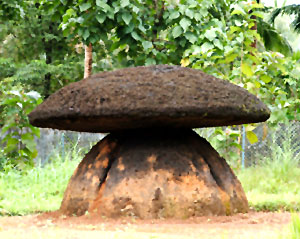
Mangadu, Kerala
Mangadu in Kerala’s Kollam district is a significant megalithic site known for its urn burials, cist burials, menhirs, and stone circles. Excavations...
Related articles in States of India
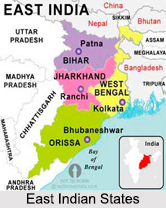
East Indian States
East Indian States comprises of Bihar, Jharkhand, West Bengal, Odisha and also the Union Territory of Andaman and Nicobar Islands. It defines the cult...
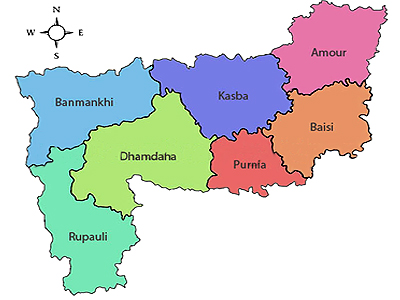
Purnia District in Bihar
Purnia District is located in Bihar and extends from River Ganga to Nepal. The district has a rich Hindu history and glorious past.
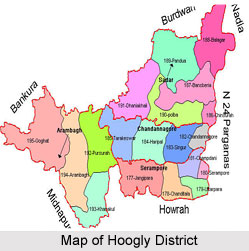
Hooghly district
Hooghly District along the bank of the river Hooghly is one of the principal trading ports of West Bengal.
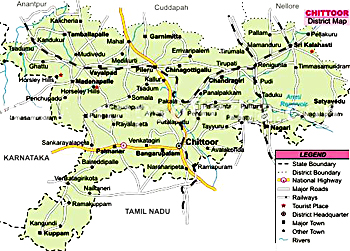
Geography Of Chittoor District
Geography of Chittoor district is spread along the topography of the land which is divided into two natural divisions; Chittoor has a dry and healthy...
Districts of West Bihar
Districts of West Bihar is comprised of medieval monuments that were built by the different governors of Mughal era.