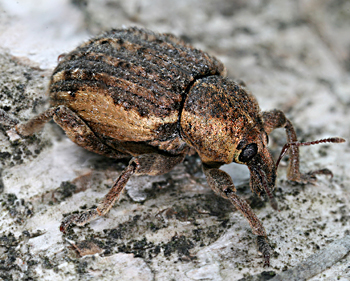
 Beetles account for more than three-fourths of all forms of life on earth. Latest estimates suggest that almost four lakh beetle species have now been named. Beetles are among the largest and most diverse groups of insects.
Beetles and their larvae occur on all sorts of vegetation, on flowers, moss, grass tussocks, in plant debris, soil, under stones and fallen logs, in plant galls, beneath tree bark, in fungi, in hollow stems and the like. Many species also occur in carrion and in nests of mammals, birds, termites, ants, wasps and bees. Others live in stored products, in dung, in or on the wood of dead, burnt or dying trees and also in caves. The aquatic or semi-aquatic groups live in fresh water, from temporary pools to mountain torrents, brackish water, beneath high-water debris on the seashore, in rock clefts in the inter tidal zone or in sand, mud, gravel or on margins of streams and rivers. Unlike most other flying insects, beetles are generally rarely seen on wing. However, when necessary they are able to fly strongly and for long distances. The beetles are often brightly coloured and generally long-legged with elongate antennae.
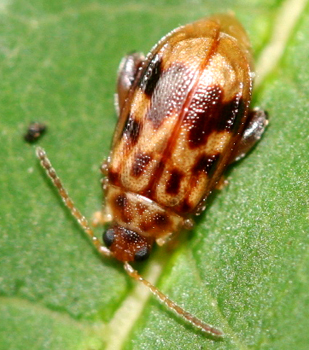 A large number of beetles feed on plants, the more common of man`s pests being species of the Curculion-idae, Chrysomelidae, Elateridae, Scarabaeidae, Buprestidae, Dermestidae, Bostrichidae, Nitidulidae, Coccinellidae, Meloidae, Cerambycidae, Bruchi-dae, Anthribidae, Brenthidae and Apionidae. Many beetle families are also predacious, the significant ones being Carabidae, Dytiscidae, Gyrinidae, Silphidae, Sta-phylinidae, Histeridae, Lampyridae, Cantharidae, Cleri-dae, Meloidae and Coccinellidae. The Rhipi-phoridae larvae are all parasitic, as are the curious Stylopoidea. The Lampyridae, which are called glow-worms, feed on snails and earthworms and the larvae of Meloidae attack bee larvae and eggs of grasshoppers. A few beetles of the Leptinidae and Staphylinidae live as ectoparasites of mammals. Along with the Lepidoptera, the Coleoptera comprises a major share of the crop pests of man. However, many beetles also help man as natural enemies of injurious insects and several others are of assistance to him as scavengers.
The diversity of beetles is now divided into four suborders: Archostemata, Myxophaga, Adephaga and Polyphaga, the last including more than 88% of all species of beetles. More than 150 families are now recognised. The most primitive suborder Archostemata has a single super family Cupedoidea with two families. The Cupedidae were apparently common in the Mesozoic, and the species of Cupes are the dwindling relics of this ancient family, whose larvae are born into rotting wood. The Myxophaga also have a single super family, Sphaerioidea, with four extant families, each of them containing a single genus. One species each of Hydroscapha, Hydroscaphidae and Sphaerius are present in India.
The hard exoskeleton and hard forewings is an important characteristic of beetles. Such features of its body help to protect itself and to maintain the flexibility of the body. The forewings of the beetles are not used for flight. Beetles like all other arthropods are segmented and consists of three segments namely the head, thorax and the abdomen.
Instead of blood, beetles have hemolymph inside their bodies and an open circulatory system. At the time of mating beetles display an extremely complex behaviour. Camouflage is an important system of defense which is maintained by the beetles.
Beetles are advantageous to human kind in the sense that they prey on many of the harmful insects and some time they also eat several harmful weeds and thus help in the undisturbed growth of crops.