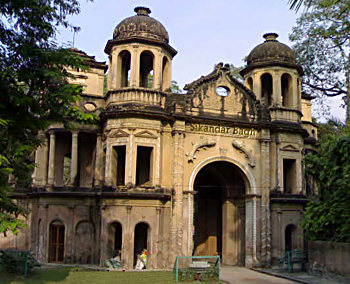
Architecture in East India comprises a main section in the panorama of Indian architecture. East India includes the states of Sikkim, West Bengal, Odisha, Jharkhand and Bihar. Assam is situated in the faraway of East. The Buddhist monasteries of Sikkim, the temples of the Middle Ages in Odisha, the terracotta temples of the recent past in West Bengal and the Buddhist and Islamic style of architecture in Bihar are the most conspicuous parts of the architecture in the East India. Thus the architecture in East India is a magnanimous array of Hindu, Buddhist and Islamic architecture.
History of Architecture in East India
East India was the heart of the ancient empires of the Maurya, Kalinga and the Magadha. Buddhism originated in the East India and was propagated extensively by Ashoka. As result a number of Buddhist architectures came into being such as the Nalanda University was set up in Bihar in the East India. Sikkim also witnessed numerous creations of Buddhist architectures. Hindu temples were also major architectural creations of this period. A number of ancient buildings in these regions were renovated and what endures now is afterwards brick or real temples at those sites. The terracotta was the main medium of construction. A large number of sculptures have been found in Bengal, which shows the growth of significant local schools in those regions.
 The states of Bihar and West Bengal came under the supremacy of the Mughal Empire during the 16th and the 17th century. The architecture of East India witnessed further changes with the coming of the colonial rule. The British East India Company defeated the Muslim rulers and established their control over East India. The impact of the British invasion was strongest in Bengal and the Odisha coast.
Features of Architecture in East India
The Rumtek monastery of Sikkim is the most popular of all and is built in the traditional style. The other monasteries are the Labrang monastery, the Pemayangtse monastery and the Tashiding monastery. Buddhism and Jainism originated in Bihar as well and this fact adds to the importance of the place. The Daibosatsuji Temple in Bodh Gaya and the ruins of Nalanda are the Buddhist architectural specimens of this place. Vaishali in Bihar is the birth place of Lord Mahavira and the Parasanad hills are a sacred place for Jains, but architecturally there is not much left here. The Choti Dargah in Bihar is an earliest example of Islamic architecture which dates back to the Mughal era. There is a closed corridor and a small mosque in the precincts. The Lomas Rishi cave in the Barabar hills in Bihar belongs to a religion called Ajivika which was prevalent in those days. The caves are small and uncomplicated, with very little adornment.
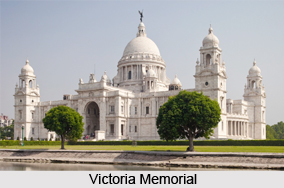
Raw clay panels were carved on baked in the kiln and was used as decorative cladding over brick walls. This is a unique terracotta style seen only in West Bengal to make the temples monumental, unlike the temples in Odisha, Bengali temples are small and cannot be called very grand, but they reflect the Bengali lifestyle and are appealing structures. Bishnupur with its varied and beautiful terracotta and laterite temples is a treasure trove of Bengali temples for example the Madana Mohana temple. In the 18th century, when the British founded the East India Company they made Kolkata their head quarters and built many buildings here and left behind an architectural legacy. The major colonial architectures of West Bengal are the Victoria memorial hall and the Writer"s building in Kolkata.
During the 3rd century BC, Emperor Ashoka conquered this region and unified most of India. He converted to Buddhism and built stupas (Pagodas) and stambhas (memorial pillars) in various places for renouncing violence. Bhubaneshwar in Odisha is significant because every milestone in architectural development from the 7th to13th century is seen here. Maturity in design and the scale of the Lingaraja Temple of Bhubaneshwar and the Jagannath Temple of Puri is equal to that of Gothic cathedrals. The Sun Temple in Konark is the zenith of Odisha"s architecture. The unique feature of Odisha"s architecture is the numerous statues of gods and scooped-out decorations sculpted on stone.