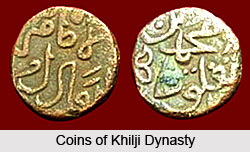
Sources of Indian archaeology comprise of the different inscriptions, coins, terracotta and architectural structures that are built in different ages by different dynasties. These are reckoned as the important evidences that justify the Indian history from all the aspects of art, culture and society.
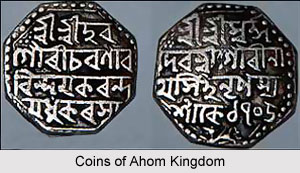
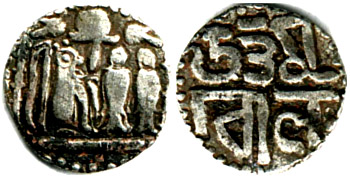
One of the main evidences available in the sources of Indian archaeology is the coins of different dynasties. Principally, two types of coins first appear in the early historic Indian archaeological records that are punch-marked silver and copper coins and uninscribed cast copper coins. The punch-marked coins were made by imprinting symbols on the obverse and reverse of these coins by individual punches. These coins were made mostly of silver and, in a much lesser quantity, of copper. The weight system was linked to the weight of a parti¬cular type of seed, which was expressed as `rati` or `ratti` weight. The punched symbols include a sin¬gularly wide range of motifs like geometric patterns, plants, weapons, minus¬cule representations of humans, and some animals like elephants, hares, bulls, dogs, etc. These motifs are said to run into several hundred varieties. According to numismatists of mod¬ern India, each of the symbols is found confined to the coins of a particular area or on those of a particular variety or type. The coins of each of these states differ from one another in their execution, fabric, weight, qual¬ity of metal and symbology. This offers a most interesting line of enquiry and speaks more eloquently of the extent of monetary economy in early historic India than anything else.
As far as the regional divisions of early punch-marked coins are con¬cerned, the silver bent-bar coins of Gandhara form a special category and so does the group of coins which are small, globular and bear the imprint of a single punch. The latter category does not seem to be confined to a single region.
At Kausambi, the uninscribed cast copper coins are thus considerably earlier than the silver punch-marked coins. Apart from these, the extensive distribu¬tion of black-and-red ware sites in the Sonabhadra region on one of the routes between Gangetic India and central India. As far as the other coins of early period are concerned, mentioning of the presence of the Achaemenid daric or `sigloi` type in a hoard of the Bhir mound of Taxila, which makes sense in view of the Achaemenid occupation of the area, and the early inscribed copper coins of the Chola, Pandya and Chera kings of the south" is important. The earlier square coins like Peruvaluthi clearly stand as testimony that the Tamil kings started issuing coins as early as the 3rd century BC. Before this, the local punch-marked coins as suggested by the fish, bow-and-arrow symbols in¬signia of the Pandyas and Cheras respectively are found.
From the late centuries BC onwards, the coin range of the north-western region is dominated, perhaps exclusively, by the coins of the Indo-Greeks, Indo-Scythians and Indo-Parthians till the coins issued by the Kushana kings supplant them not merely here but also over a very large tract of Gangetic India. There is a world of difference between the `Attic-standard` (the standard introduced by Alexander in his empire and accepted by his successors in the east), `drachms` and `tetradrachms` of the Bactrian Greek kings up to Euthydemus II and the introduction of `Indian-standard` coins with bilingual inscriptions (Greek on one face and Prakrit on the obverse) from Agathocles onwards. It has been evidenced that the Bactrian Greek king Demetrius I, who first tried his strength in the south of the Hindukush in the wake of the Mauryan decline, introduced a new coin-type with die-struck punch-mark symbols for his territories south of the Hindukush, which was still used to the punch-marked system. This underlines once again the tremendous significance of the Hindukush as providing a firm geo-political limit of the South Asian land mass. The coins of Agathocles and the later Indo-Greek coins bear the replicas of In¬dian deities such as
Brahmi script or
Kharosthi script the Greek name gets Indianised; Agathocles becomes `Agathuklaya` and Pantaleon `Pamtaleva`. The Indo-Scythian kings like Maues, Azes I and others and the Indo-Parthians like Gondophares are very much in the In¬dianized Indo-Greek tradition.
India was not ignored in the Kushana coinage. Even in the first group of Kushana issues under Kujula Kadphises the `bull` appears on one type and `Kharosthi` as the bilingual counterpart of `Greek` in all. Kujula`s coins were all in copper, but Wima Kadphises, his successor, introduced gold coins of three denominations on the model of the Roman coins which were then being imported into south Asia as part of Indo-Roman trade. However, `bull` and
`Shiva` figure in the Wima coinage, also conti¬nued the tradition of bilingual (Greek and Kharoshthi) inscriptions. What is important, however, is that with their extensive possessions in central Asia and with the whole of Afghanistan in their control, the Kushana kings and their coinage were influenced by motley of elements: Greek, Iranian and Indian. The king after Wima,
Kanishka, retains Shiva and introduces
Lord Buddha as deities on his coins, but a whole host of Iranian and Greek deities also make their appearance on his coins. On the coins of Huvishka `Uma` and `Karttikeya` find a place along with Shiva.
In North India as a whole the phase of early coins was succeeded by an extensive range of local coinage belonging either to kings or tribal republics. The punch-mark tradition is now replaced by the die tradition, but the same symbols continue to occur. As far as the political history based on kings of different areas (Ayodhya, Panchala) and tribal republics like the Yaudheyas, Arjunayanas, etc. are concerned, these coins constitute the principal source of study. In the next phase, of course, the Kushana coinage takes over, leaving its mark in different forms even in the post-Kushana coinage.
The tradition of the coinage system in the post-Maurya phase in south India and the Deccan belongs to royal families such as `Sadakana` and the succeeding `Ananda` families in
Karnataka, and the `Kura` family of the Deccan. These are die-struck coins but the punch-marked symbols continue to occur. This particular tradition of local coinage is soon overshadowed by the coinage of the
Satavahana kings, issued mostly in lead and copper. Quite unusually, some Satavahana kings of the early centuries AD issued silver coins bearing their own portraitures and names (in Prakrit written in Brahmi script). It is obviously a case of Indo-Greek influence or the influence of Roman coins flowing by now in peninsular India in thousands. The successors of the Satavahanas, such as the Ikshakus of
Andhra Pradesh, continue the Satavahana coinage tradition in some way. The case of the Satavahana contemporaries in western India, the `Western Kshatrapas` with their two branches of Kshaharatas and Karadamakas, shows some influence of the Indo-Greek or Roman coinage in the sense that a royal bust is placed on one side, but the inscriptions are in
Sanskrit and
Prakrit language. The north-western tradition had a faint echo in the coinage of west India and the Deccan but that was purely ephemeral. The Kushanas, with all their central Asiatic interests, could not forget south Asia altogether.
In addition to the coins in medieval India there are other sources that provide ample information to the study of Indian archaeology namely sculpture, terracotta and painting. It is in the Mauryan period that the growth of sculptural art was witnessed after an interregnum of more than a thousand years since the end of the Indus civilization which had a complete command over stone-cutting and sculpting. It is not known how the Indus tradition was passed on or whether the Mauryan period brought about a completely new phase of Indian stone-cutting. This uncertainty once impelled scholars to look for the genesis of Mauryan art in the Achaemenid imperial style and stone-cutting tradition. While some interaction between the Mauryans and the contem¬porary artists of western Asia is entirely probable and some features of Mauryan art bear its signature. Second, the Mauryan terracottas too mark a new phase in the history of Indian terracotta art. One need not deny a distinct sense of modelling in some pre-Mauryan terra¬cottas of the Ganga valley, but the evidence is not pervasive. The Indian terracottas assume a distinct time-bound style in the Mauryan period. From both these points of view the Mauryan art marks a new phase in the history of ancient Indian art.
The Ashokan pillars are all monolithic and sculpted and are considered, along with their animal capitals above, parts of the sculptural tradition. Parts of Mauryan capitals and broken pillars of the same period occur at a number of other places. The Rampurwa bull is firmly modelled but full of natural dynamism in the basic style of the elephant which emerges out of the live rock at Dhauli and the small elephants which occur on the facade of the Lomash Rishi cave in the Barabar hills. The tradition of naturalism is equally manifest in the bull, lion, horse and elephant which are shown along the diameter of the abacus of the Sarnath capital and in the row of geese shown in the sides of the Bodhi throne of Bodh Gaya. The honeysuckles, rosettes, palmettes, lotus-buds, bead-and-reels and volutes as designs on some capitals foreshadow the long history of such motifs in Indian art. The Didarganj specimen, which is in the form of a female fly-whisk-bearer, combines dignity with statuesque sensuousness. The much smaller mustachioed human head and a few animal heads from the late Mauryan level at
Sarnath and the small, partly broken, limestone image of a humpless bull or cow from Harinarayanpur strengthen the assumption that the range of Mauryan art is much wider than the assumed circle of court art. Ringstones of soapstone and metamorphosed schist reveal a large range of iconographic elements, among which the figure of the earth goddess or Prithvi, of a type found in gold at Lauriya Nandangarh, seems to be common. Miscellaneous stone reliefs, including three pairs of frolicking male and female on a panel of three scenes from Rajgir, are reminiscent of the iconographic tradition of this type. The flounced-skirted and heavily coiffured females that one sees as a dominant type in the Mauryan terracottas are much less attractive than the naturalistic representations of Mauryan terracotta elephants.
The recent discoveries of seemingly contemporary stupa railings and medallions in Orissa and the
Kanpur district of
Uttar Pradesh along with the exca¬vated stupa remains at Pauni in Berar indicate that the distribution of the Sunga period and immediately later stupas is more widespread than its distribution along the Gangetic valley-Deccan route at Bodh Gaya, Bharhut and Sanchi would suggest.
That the stupa complex on the Sanchi hill was not an isolated complex but a part of a wider arrangement covering several places and is one of the excavated areas from where several sources have been derived. Supreme import¬ance is given in this art to human figures which are now elongated and sturdy and shows relief after relief of frenzied sensuous humans with a bet¬ter sense of perspective, more light and shade and rhythmic lines leading to a dynamic compositional unity and these reliefs are the representations of the most voluptuous and the most delicate flower of Indian sculpture.
Voluptuousness with less of delicacy and a lot more of earthbound strength was the characteristic feature of the yakshinis of the
Mathura school of sculpture. They occur as components of the stupa remains (presumably Jaina in affiliation) at Kankali Tila in
Mathura. It is also here that one can trace the transformation of primitive earth-bound yakshas into standing
Bodhisattva type images, of which the one dedicated by Bhikshu Bala is a famous example. The diverse elements which represent Gandhara art are the following:
Buddhism, both in spirit and iconography; central Asian influence in the royal attire; Iranian sun and moon gods; and finally, the row of Classical garland-bearing figures and Corinthian pilasters. It has been designated as "the Indus-Oxus school of Buddhist art" and its area of origin has been supposed to be the Swat valley.
Another distinct genre of Indian art of the period is ivory. The Kushana period ivories provide a rapturous mix of sensuousness and elegance in their female forms. These compare well with the sculptural and terra¬cotta specimens of the Sunga period.
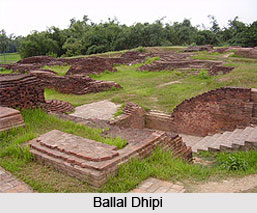
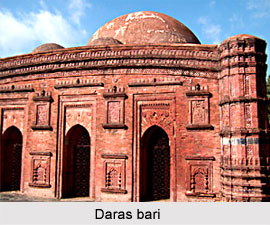
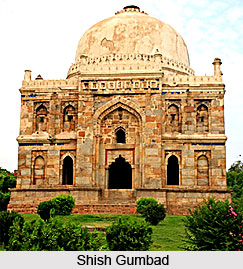
Moreover the architectural evidences are other sources of Indian archaeology. Starting from the early historic Buddhist architecture, encompassing stupas, chaitya halls and monasteries, the architectural evidences are scattered hither and thither and they all are the evidences of the early history of India. The pillars and stupas under the reigning period of the Sunga period, the Satavahana kings" et al serves as the sources of the study of Indian archaeology. The stupa plan and its decorative styles were different from one another and with time the stupa plans differed from area to area. For instance, in some stupas at
Nagarjunakonda the walls were arranged in the form of a multiple-spoked wheel, whereas in the Gandhara region the min¬iature stupa from Loriyan Tongai stands on an oblong platform with sides showing sculptured panels and Corinthian pilasters.
Some of the architectural constructions that date from the third century BC are found and they refer to the art and architectural evidences of the era like the chaitya-halls, a major form of Buddhist architecture. Rock-cut examples with variations in planning occur in the Sudama and Lomas Rishi caves of the Barabar hills date from the same period. Broadly similar plans from later contexts (c. first century BC) occur in the Tulja-Lena group of rock-cut caves at Junnar near Nasik, Kondivte in
Mumbai and Guntupalle in the Krishna district of Andhra Pradesh. Apsidal chaitya halls dating from the third century BC have been noticed in the Sanchi temple and at Sarnath and
Rajgir (below Maniyar Math). Free-standing Hindu temples occur only from the Gupta period onwards, although shrines have been represented in sculptural reliefs from Mathura, Sanchi and Bharhut. Excavated examples of earlier dates are still rare and occur at Sanchi, Vidisa, Nagari and Sonkh. The Sonkh specimen, an apsidal Naga temple, belongs to the second century AD. Recently, an apsidal structure on rammed burnt-brick foundation has been dated to the late Mauryan period at Sarnath.

 The history of archaeology in India dates back to the early sixteenth century and involves three groups of people namely Portuguese residents of Goa, other European sailors and occasional travellers. Principally, two categories of monuments are dealt with during this phase: the rock-cut caves of west India and the south Indian temples. Among the monu-ments in the interior, Elephanta was frequently described, and in the east the Black and White Pagodas, the Konark and Jagannatha temples of Orissa respectively, were known as early as the seventeenth century when they served as prominent navigational markers on the Orissan coast. By the middle of the eighteenth century, European familiarity with Indian monu-ments was fairly broad-based.
 Coins come mostly from `stashes`; accidental, non-contextual discoveries which very often end up with the coin-dealers. A framework of the study of coins has no doubt emerged, but on many occasions the study of ancient Indian coins has not been able to proceed beyond a study of their design. The same is true of the specimens of art and architecture. They are concerned much more with the religious life of the day in different regions and less with the issues of individual authorship and patronage, precisely the issues which would have made them exciting as historical documents.
 As far as the Third World countries go, the most pressing need these days is certainly to go beyond the bagful of colonial theories which they have all inherited and try to build up an image of themselves in which every member of their nation state can participate, irrespective of their regional, caste, tribal, religious, sectarian and a whole host of other affiliations. The primary sector of the past in which such a broad-based parti-cipation is possible is the history of their land, that particular patch of the earth`s surface which has befallen to their lot as a product of the historical circumstances and through which they have interacted in various ways through time. This approach makes archaeology predominantly a part of the environmental sciences.
 The modern phase of Palaeolithic studies in archaeology in India began in the 1930s when there were attempts to go beyond the succession and distribution of artifacts and consider the issues of related environment and geochronology. The interrelationship between the stratigraphic profile of prehistoric tools and related environment was first highlighted in a major way in India by a study of tools collected in the Eastern Ghats of the Andhra region.
 Since the mid-seventies, Palaeolithic research in India has branched out in several directions beyond stratigraphical and typological considerations. First, a few traces of primary occupation of Palaeolithic people have been exposed through controlled excavations at Paisra in
  The footsteps of Indian archaeol-ogy can easily be traced from the beginning of the early sixteenth century to the closing years of the nineteenth century with its dominant theoretical frame of field-enquiry being a concern with the issue of ancient Indian historical geography. Sites, inscriptions, coins, sculpture, architecture, all had their place in this over¬riding scheme. At the dawn of the twentieth century there was a definite archaeological shape of India`s ancient past. Some recent excavations that are carried out by the archeologists of modern era also serve important information in the Indian archaeology.