Pranayama aims primarily at the control on the mind. When the mind is under control, it remains unaffected by disturbing thoughts. Thus, by controlling the mind one would be able to control different emotions and as a result, the temperament, moods, desires and natural instincts of mind would also be controlled automatically. So long as breathing continues and the air is moving in and out of the body, the mind remains unstable. When the breathing comes to a halt, the activity of the mind is also controlled and it comes to a standstill. Thus, a yogi attains the complete motionless state of chitta (consciousness).
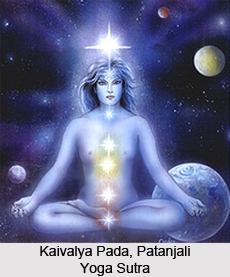
"Tatahkshiyate prakashavaranam. Dharanasucha yogyata manasah"
As per the above shloka from Patanjali Yoga Sutra, by practicing Pranayama the ability to perceive, to know the reality is intensified. The mind is trained and made capable for the process of dharana. Since the mind becomes steady and peaceful after the practice of Pranayama, it becomes suitable and capable to concentrate on a particular object. Such `one-pointedness` or `ekagrata` is a pre-requisite for dharana.
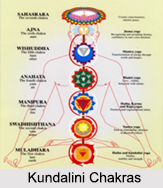
Besides these the Pranayama aims at building a better health in humans too. Different nadis can also be purified by performing Pranayama on a regular basis. This is known as Nadishuddhi Pranayama. Nadis in yoga are the subtle channels or the passages for the transmission of nerve impulse or the conduction of the `prana` or life-force for the circulation of the blood or lymph or even for the flow of air through them. Most important nadi, which opens when both the nostrils are equally open, is sushumna. By cleaning these nadis, Pranayama eradicates all types of malas from the body and mind. Mala in yoga is considered to be a toxic factor that gives rise to an imbalance in the body and mind by obstructing or blocking the normal functions of nadis.
Psychologists have proven that the personality pf a person may depend on the breathing pattern. Experiments have also shown that emotions, attention, mental pressure and behavioural pattern influence and modify one"s breathing process. During Pranayama the breathing is consciously made slow, deeper and rhythmic. This brings about noticeable relaxation, tranquility, balance and sense of well-being to the mind. In this situation, one`s ego-consciousness, which is the seat of all instincts and desires, is controlled. As a result it cannot interfere with the mind. When ego is controlled, the behavioural pattern can also change. Thus, the practice of Pranayama also contributes in transforming the total personality. This helps one in controlling his non-yogic tendencies, instincts and urges arising in his mind (chitta vritti nirodhah). This leads one to further stages like pratyahara and dhyana.
Hatha yoga claims that practicing Pranayama can also cure the psychosomatic diseases. But it also warns that if Pranayama is not practiced judiciously then many diseases may arise, for instance, asthma, constant hiccup, pain in head, ear and eyes, etc. however, by practicing it carefully one can build sound health, steady and peaceful mind, slim and lustrous body and can eradicate all kinds of diseases.