


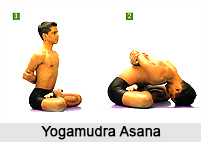
 Yogamudra Asana is a cultural yoga asana posture that has come through tradition. Its reference is not found in the ancient Yoga texts. However, this yoga asana is practiced widely to cure nerve and digestion problems. The person who will practice the Yoga Mudra regularly can get a flexible backbone. Both the ankles and the large intestine are pressed together so that the chronic constipation will be cured. Yoga Mudra is practiced as the last asana in the asana segment of the full yoga routine. Yogamudra Asana is a cultural yoga asana posture that has come through tradition. Its reference is not found in the ancient Yoga texts. However, this yoga asana is practiced widely to cure nerve and digestion problems. The person who will practice the Yoga Mudra regularly can get a flexible backbone. Both the ankles and the large intestine are pressed together so that the chronic constipation will be cured. Yoga Mudra is practiced as the last asana in the asana segment of the full yoga routine.
Practice of Yogamudra Asana Effects of Yogamudra Asana Yogamudra Asana bestows immense benefits to the human body. The internal organs of abdomen work efficiently as a result of its practice. The connected nerves of navel also become strong. If somebody has a fatty thigh and tummy and cannot touch the floor by their nose properly, they have to try this Yogamudra with the other asanas. They can reduce the excess fat from the thigh, hip and tummy and the nerves will become flexible. Precautions in the practice of Yogamudra Asana While practicing Yogamudra Asana, if one is unable to come into the posture of Padmasana, then he can practise it in Ardha Padmasana or Vajrasana. He has to close the fists and place them at the navel region. The fingers of the fists should be towards navel. Then one may bend forward and touch the ground with forehead. One should not allow the buttock to leave the ground during its practice. If it becomes easy to touch the ground with forehead, then he can gradually try to touch the ground with nose and chin. |
| |||



Yogamudra Asana
| Yogamudra asana benefits the digestive and nervous system of human body. |
| ||||||||||||||||||||||||||||

