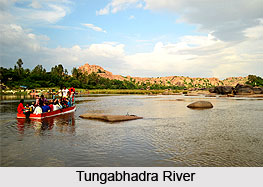
 Tourism in Hampi carries the great architectural and sculptural edifices that inspire the interest of any traveler as well as the history and art enthusiasts who want to see the history with the impressive representation of architecture and sculpture of the Vijaynagar Empire. Hampi in Bellary District of Karnataka is known for the temples and Pampa Sarovar. This ancient city in South India was founded in the middle of 14th Century by two local princes, Hakka and Bukka.
Virupaksha Temple
Virupaksha Temple at the western end is an earliest structure in the city of temples- Hampi. Virupaksha is the presiding deity of this temple. He is revered as one of the incarnation of Lord Vishnu.
Hemakuta Hill
 Hemakuta Hill is located near the Virupaksha temple. It is located to the south of the temple. Hemakuta hill is considered sacred from the Vijaynagara times because of the presence of the temples of Narasimha avatara.
Ugra Narasimha
The monolith structure of Ugra Narasimha is located near the Hemakuta Hills. It is a 6.7m tall monolith statue. The gigantic image is situated in the south of the Hemkuta group of temples that includes the Virupaksha Temple. Here the Narasimha is a seated as four-armed figure under a canopy of a seven-hooded snake.
Vitthala Temple
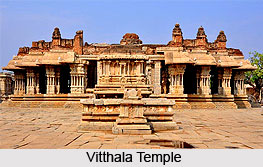
There is another temple of Hampi called Vitthala Temple. It is located to the east of Hampi Bazaar. The ruins of the temple are a World Heritage monument. It is in a relatively good state of preservation. The fantastic sculptural works of the temple attracts the tourists most. It is a finest example of the Vijayanagara art and architecture.
Hazara Rama Temple
 Hazara Rama Temple was built within rectangular complex and lies at the heart of the royal centre. Dating from the early 15th century, the hall of this temple has finely carved basalt pillars depicting the incarnations of Lord Vishnu. This temple is popular after the Khajuraho Temples of Madhya Pradesh for the erotic sculptures.
Shivalinga in Hampi
Another remarkable structure is Shivalinga. This gigantic Shivalinga is located very next to the Narasimha figure. It is 3 metres high and stands permanently in water that comes through a channel.
Lotus Mahal
Lotus Mahal is located in the "zenana" enclosure. It shows an example of Hindu-Islamic art.
Queen"s Bath
Queen"s Bath is situated in the citadel area, south of the Hazaara Rama Temple. It is a large square structure. It is remarkable for the contrast of the exterior and interior walls.
Singaradu Hebbagilu
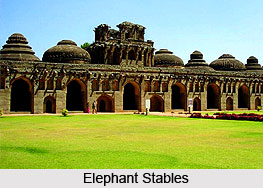
Singaradu Hebbagilu is located behind the elephant stables. It is a massive gateway to enter in Hampi. The gate according to an inscription was erected during the later phase of Vijaynagara rule.
Maha Navami Dibba
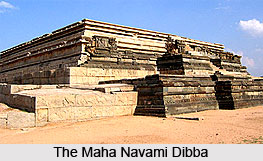
Maha Navami Dibba is believed as a ruined temple along with a platform. It is 80 square feet in area and 22 feet in height. It is believed that Krishnadeva Raya erected it in memory of his conquest of Odisha.
Monolithic Sculptures in Hampi
 The ancient city of Hampi is filled and scattered with monolith sculptures. The sculptures are belonged from Hindu deities and religious iconography. These were made of granite and are available in plenty in this rocky place. There are also huge sculptures of Nandi, Lakshmi, Narasimha, a linga and statues of Lord Ganesha. One of such statue of Lord Ganesha is called "Sasivekalu Ganesha", which is 2.5 meters high. Another splendid image of this deity, known as "Kadale Kalu Ganesha" is almost twice the height of the previous once.
King"s Balance
There is a structure called the "King"s Balance" is one more attractive point of Hampi. This structure has two tall pillars of fifteen feet high with a stone beam on top with three stone rings underneath from which the balances or scales are hung. It is said that during the "Tulabhara ceremony", the kings used to evaluate themselves against an equal amount of gold or precious stones and distributed them later.
Water Tanks of Hampi
The water tanks of various sizes are one of the interesting features of the Hampi. Several canals were also constructed in the city to bring water from the Tungabhadra River following, which is flowing adjacent to the city. The Archaeological Survey of India has recently discovered a step-well. This octagonal tank was used for the royal bath.