


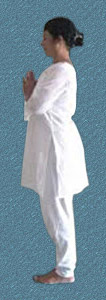
 Sthitaprarthanasana is a meditative yoga asana that helps maintain an erect posture and is essentially the iconic Indian prayer stance: standing straight with palms joined at the chest. It is often performed as part of post natal therapy for women undergoing pregnancy. Sthitaprarthanasana is a meditative yoga asana that helps maintain an erect posture and is essentially the iconic Indian prayer stance: standing straight with palms joined at the chest. It is often performed as part of post natal therapy for women undergoing pregnancy.
Meaning of Sthitaprarthanasana Sthitaprarthanasana means the prayer pose in Sanskrit. The asana is essentially the stance generally taken by Hindus during prayer. Practice of Sthitaprarthanasana Sthitaprarthasana is the starting point of Yogic postures. This is recommended as the first lesson in Yoga postures. The Prarthanasanas are a series of postures for prayer, out of which the Shitaprarthanasana is the easiest. A sequential process for performing Sthitaprarthanasana follows * Keep the feet together and place all the weight upon the balls of the feet. * Throw the head and chest well up, the shoulder blades should fall flat upon the back, the abdominal muscles are deflated at their lower part but not necessarily drawn inwards and fuller just below the ribs * The pelvis should be slanted at such an angle so as to prevent any exaggeration of the lumbar curve * The knees should be straight but not stiff, the legs together, touching each other (above the knees), and the hands folded and brought over the sternum. One should avoid tension, and relax the mind and fix the eyes on any object kept in front. The purpose is to gain steadiness through gradual control over the voluntary muscular movements. This prayer-pose, thus, serves a threefold purpose. This pose offers through steadiness the best physical attitude for prayer in standing and also teaches normal posture in standing pose through coordination of skeletal muscles and corrects postural defects by helping proper carriage. Effects of Sthitaprarthanasana Women often practice Sthitaprarthanasana during the post natal period. In this position of Sthitaprarthasana, the thorax is full and round, the diaphragm is high, and the abdomen is given its greatest length, thus, holding the stomach and the intestinal viscera in place, and the pelvic organs are free from any excessive pressure from above. There is partial relaxation of the muscles and no tension noticeable, moreover no part of the body is overworked or strained. With the arms relaxed and one must let down at their respective sides, as an alternative variant for proper carriage, it offers the most ideal position for standing. |
| |||



Home > Health > Yoga > Yoga Asanas > Types of Yoga Asanas > Meditative Asanas > Sthitaprarthanasana Yoga Asana
Sthitaprarthanasana Yoga Asana
| Sthitaprarthasana, meaning the prayer posture, is a meditative asana taught first to novice yogis, and used in therapy during the post natal period for women. |
| ||||||||||||||||||||||||||||

