


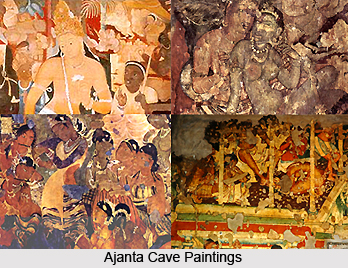
 Paintings in Gupta period have been the testaments of artistic excellence that prevailed during the ancient era (320 CE-550 CE). This period is called the Golden Age of India.
Painting as an art reached its perfection in Gupta period. These paintings are to be found in the Bagh Caves in Madhya Pradesh and Bedsa Caves and the Ajanta caves in Maharashtra. Paintings in Gupta period have been the testaments of artistic excellence that prevailed during the ancient era (320 CE-550 CE). This period is called the Golden Age of India.
Painting as an art reached its perfection in Gupta period. These paintings are to be found in the Bagh Caves in Madhya Pradesh and Bedsa Caves and the Ajanta caves in Maharashtra.
The school which these paintings represent was the source from which half the art of Asia drew its inspiration. These paintings are characterised by instinctive beauty of line, majestic graceful figures, decorative imagery and dramatic expressiveness. The refined art of Ajanta is clearly the culmination of hundreds of years of cultivation and practice. Characteristics of the Gupta Paintings The Gupta art had religious and spiritual appeal. The artists were Shilpa-Yogins. They were the monks who had dedicated their lives to higher things of life and gave their best in chiselling the scenes in their various paintings. There is great simplicity of style and felicity of expression. The technique and the subject were blended harmoniously. The art of the Gupta period reveals certain chief characteristics. It is marked by refinement and restraint, signs of a highly developed cultural taste and aesthetic enjoyment. Balance, freedom and elegance are properly combined. There is worship of beauty but not at the cost of good taste. Beauty was the expression of the nobility of the soul within and could not be sullied by notions or feelings of sheer sensuousness. Ajanta Paintings Ajanta paintings now in Maharashtra lies in the Western Ghats which marks the boundary of the Deccan land separating it from that of Khandesh along the valley of the river Tapti. An outstanding feature of Ajanta art is that it combines architecture, sculpture and painting in its variety of expression. They are blended into marvellous unity of conception. The selection of the site shows good taste. The situation is romantic and full of natural scenery. The mural paintings are among the best of Ajanta art. A painting of the mother and child before Lord Buddha is a great example. There is religious feeling of adoration in it. The artists have poured out their souls in colour and there is a supernatural grace. Even ordinary events are wrapped with mystic significance in Ajanta caves. Another painting is seen where a Nagaraja is seated with his queen. Both of them are in a mood of contemplation and are deeply absorbed in what they are hearing. There are innumerable figures of Buddha that suggest the enthusiasm of the artist's devotion. The Ajanta tradition furnished a basis for new creations both in India and other countries too. The frescoes at Sigiriya in Ceylon, the painting at Bagh in Gwalior district, frescoes in the temple of Sittannsvasal in Tamil Nadu and many more can be sited as examples. Gupta age witnessed the creative and aesthetic enthusiasm of the race pouring itself into things material, into the play of the senses, into the pride and beauty of life. Never in her history has India seen such a many sided blossoming of her force of life. Culturally, she has never been so rich, so colourfully creative. Thus the paintings of Gupta period mirror the influence of the Buddhist art. Besides Buddhism, a streak of Hinduism can also be traced in the wall paintings from Gupta Empire. |
| |||



Paintings in Gupta Period
| Paintings in Gupta period came to be a social achievement no longer limited to religious use but practiced by amateurs as well as professional craftsmen. |
| ||||||||||||||||||||||||||||

