
Modern Indian languages comprise of the Indo-European languages, Indo-Aryan and the Dravidian languages. Apart from the Indian languages there are some other languages that are spoken by the inhabitants residing in several parts of India, which have originated from Austro-Asiatic and Tibeto-Burman language families. By about the year 1000 A.D. the modern Indo-Aryan language vernaculars had developed out of the Middle Indian dialects, and from the 12th century onwards these languages started show literatures of their own. Thus they acquired an identity and recognition of their own as modern Indian languages.
The main block of Indo-Aryan stretches as a solid mass across north and central India. In addition there are certain minor and eccentric languages outside the main block, which are of no literary importance but are often of great interest for linguistic history. Such are the Dardic languages of the north-west, which are both extraordinarily numerous and remarkably archaic. The gypsy languages were taken to the Near East and Europe by itinerant tribes who probably left India about A.D. 500 or shortly after. The only literary language outside the main block is Sinhalese, which was introduced into the island by settlers from north India about the time of Lord Buddha.
The literary development of these languages took place at various times, Marathi language and Gujarati language being among the earliest. The most important of the vernaculars is Hindi, the language of the ancient Madhyadesa or midland, i.e. of the greater portion of the Gangetic Doab and of the adjacent plain to the Himalaya in the North, beyond Delhi in the West and nearly as far as Kanpur in the East. Of the numerous Hindi dialects, Kanauji language and Bundeli, and especially Braj Bhasha (the language of the district of Mathura), have produced literature worthy of the name. Urdu originated in the twelfth century in the neighbourhood of Delhi, then the centre of the Muslim rule, in the camps (Urdu) of the soldiers. In the 16th century it also began to produce literature. Now-a-days it is widely in use in Northern India. High Hindi is a return to the vernacular of the Upper Doab, which is not as yet influenced by Persian. The following languages, belonging to the adjacent regions, are closely related to the language of the midland: Punjabi language in the North-West, Rajasthani language and Gujarati in the West, Eastern Pahari or Nepali (the language of Nepal), Central Pahari and Western Pahari in the East. Eastern Hindi, the language in which Tulsidas wrote, is more closely related to the `Outer` languages. Among the latter are: Lahnda (the language of Western Punjab) and Sindhi language in the North-West, Marathi in the South, Bihari, Oriya language, Bengali language and Assamese language in the East. Maithili language is a dialect of Bihari. Since the beginning of the 19th century literary Bengali has diverged considerably from the vernacular by reason of the absorption of so many Sanskrit words. The High Hindi of Varanasi shows a similar tendency. The Dardic or modern Pisaca languages, among which Kashmiri language possesses a considerable literature, form a separate group.
The partition of the subcontinent between India and Pakistan had considerable effects on language. The principle result was that Hindi was adopted as the official language of India, while Urdu occupies a similar position in Pakistan. Bengal was divided into two, with consequent differences developing between the Bengali of East Pakistan (now Bangladesh) and that of West Bengal. A similar division took place in the case of Punjabi.
All the Indian languages mentioned up to now belong to the Indo-Germanic group of languages. Besides these there are a number of non-Indo-Germanic languages, namely the Munda language (scattered dialects in the Mahadeo Hills of the Central Provinces, in the Santal Parganas and Chota Nagpur), the Tibeto-Burmese languages (on the "Northern and North-Eastern borders of India proper). Another important group of languages are the Dravidian languages. It is believed that at one time they must have been popular in the North as well, for the Indo-Aryan languages show strong Dravidian influence. The most important Dravidian languages are Malayalam language, Telegu language, Kannada language and Tamil language in the states of Kerala, Andhra Pradesh, Karnataka and Tamil Nadu respectively. Although these languages are not Indo-Germanic, numerous Sanskritisms have penetrated into them. Moreover, the literature of these languages is greatly dependent on the Sanskrit literature.
These discussed are the many languages spoken in Modern India.
Modern Indian Languages
Modern Indian languages have emerged out of a gradual process of linguistic development. Among the different vernacular languages spoken in the country, Hindi is the most important and it is in fact the national language of the country.
Recently updated articles in Languages in India
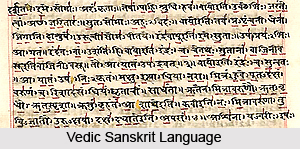
Linguistic History of India
Linguistic history of India traces down two basic kinds of literary styles still prevalent in the country.
Ancient Sanskrit Grammarians
Ancient Sanskrit grammarians were pioneering scholars who considered factors like pronunciation and euphonic combination and the discrimination of par...
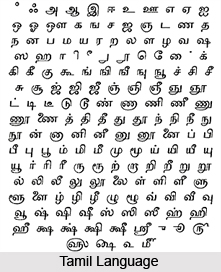
Tamil Language
Tamil is a Dravidian language spoken primarily in India and other countries of South Asia. It is one of the official languages of Tamil Nadu. With a r...
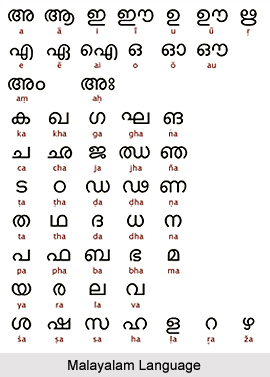
Malayalam Language
Malayalam language, one of 22 scheduled languages of India, is mostly concentrated in Kerala, Lakhswadeep and Puducherry. A Dravidian language, Malaya...
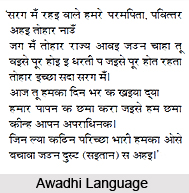
Awadhi Language
Awadhi is one of the enriched languages of India, Hindi too originated from it. Awadhi, an Indo-Aryan language from the Indo-European family, originat...
Related articles in Languages in India
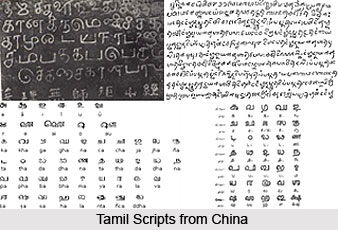
Development of Tamil Scripts
Development of Tamil scripts can be traced to the period just after the reign of Asoka. The Tamil script is believed to have developed from the Brahmi...
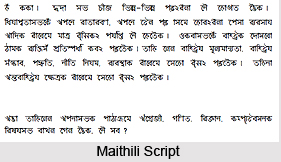
History of Maithili Language
History of Maithili Language can be dated back to the early fourteenth century. Maithili is now one of the national languages of India.
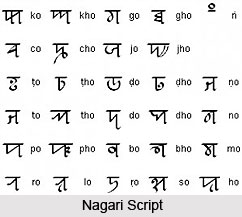
Nagari Script
Nagari script today is classified as Devanagari, believed to have served as the ancestor of various modern-day writing.
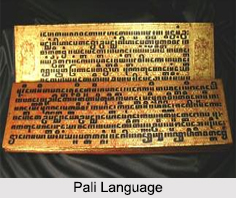
Pali Language
Pali Language owes its origination to Gautama Buddha and his disciples, who were chief to propagate it.
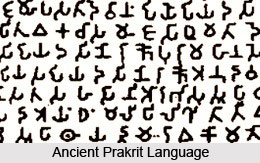
Origin of Prakrit Language
Origin of Prakrit language can be attributed to Sanskrit according to some historians. Some consider it as nature’s gift which is easily comprehensibl...