Lord Birkenhead, Secretary of State, British Empire in India - Informative & researched article on Lord Birkenhead, Secretary of State, British Empire in India
 Indianetzone: Largest Free Encyclopedia of India with thousand of articlesHistory of India


in  
 Art & Culture|Entertainment|Health|Reference|Sports|Society|Travel
Forum  | Free E-magazine  | RSS Feeds  
History of India : Sources of History of India |Ancient History of India |Medieval History of India |Modern History of India |Indian Historical Dynasties |Indian Battles |Sepoy Mutiny 1857 |Indian Rulers |History of India |Indian Freedom Struggle |Indian Governor- Generals |British Indian Acts |Post Independence India |Iron Age in India
Home > Reference > History of India > Modern History of India > British Empire in India > Lord Birkenhead
Lord Birkenhead, Secretary of State, British Empire in India
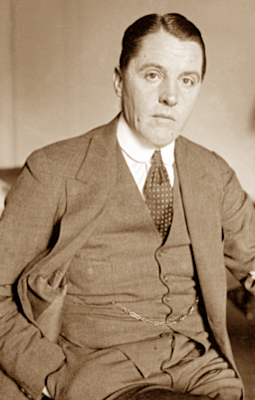
Lord Birkenhead was the Secretary of State or India Secretary from 1924 to 1928.

 TLord Birkenheadhe Secretary of State for India or India Secretary is the office that was created in 1858. This office was created when the Company rule in India ended and India was brought under direct British administration. The Secretary of State was the political head of the India Office. It was the department responsible for the government of India. This office came to an end in 1947 after the Partition of India and the creation of two new independent dominions. Lord Birkenhead served as the Secretary of State from 6 November, 1924 to 18 October, 1928.

Lord Birkenhead was born on 12 July 1872. He received his early education from Birkenhead School. During the period when he served as the Indian Secretary of State Muddiman Committee was signed. Moreover, the political situation in Bengal was quite tense because of the terrorist movement during that phase. Birkenhead expressed an outburst when the Congress refused to co-operate in the working of the reforms.

He delivered a lecture in this regard and challenged the Indian leaders to put forward a Constitution which would carry fair measure of general agreement among the people of India. Lord Birkenhead also invited the leaders to discuss the failure of the British government. This challenge was accepted by Pandit Motilal Nehru on behalf of the Swarajya Party in the Central Legislative Assembly in September 1925. He put forth an amendment that came to be known as the `National Demand`. It carried the support of all parties, including the Liberals and the Muslims.

This article is a stub. You can enrich by adding more information to it. Send your Write Up to content@indianetzone.com
(Last Updated on : 07/10/2011)
 
 
Viceroys of India British East India Company British Military Monuments in India
Conspiracy Cases during British India Missionary Activities of British in India History of British Architecture in India
British Domestic Architecture South India during British Rule Developments During British Regime
Judicial conditions during 17th-18th century Art and Architecture during British Rule in India Anglo-Sikh Wars
Advent of English Education in British India Presidencies in British India Gwalior Residency
Administration of British Empire Faraizi Movement British Conquest and Dominion of India
Impact of British Rule in India Socio-economic condition of Eighteenth Century India Formation of Kishan Sabhas
Lord Birkenhead Grain Riots In The Nagpur District Provincial Autonomy
History of Textile Industry in British India Revenue Policy in South India under British Lord Ripon
Princely States of India Ranbir Singh Gulab Singh
Rana Pohap Singh Pratap Singh Order of the Indian Empire
Star of India Yusef Ali Khan Kalb Ali Khan
Privy Purse in India Residencies of British India Union of India
Resident of British India Central India Agency Bagelkhand Agency
Bundelkhand Agency Vindhya Pradesh Indian Independence Medal
Mewar Residency Indian Civil Service Provinces of British India
Agra Presidency in British India Indian Service Medal Indian Distinguished Service Medal
Royal Indian Navy British Indian Association Congress Socialist Party of India
Order of the Crown of India Presidency Armies in British India Order of British India
21st Kohat Mountain Battery (Frontier Force) Indian Order of Merit Sannyasi Rebellion
Recently Updated Articles in History of India
Trade Union Movement in India
Trade Union Movement in India emerged due to the state intervention for the need of improved working conditions of the working classes.
Post Independence India
Post independent India was a dichotomous amalgamation of both dark and bright sides, striving towards best.
Sultan Shahjahan Begum
Sultan Shahjahan Begum was the ruler of the princely state of Bhopal. She ruled for two terms, from 1844 to 1860 and again from 1868 to 1901.
Abu al-Hasan
Mughal Emperor Jahangir took the initiative to train Abu al-Hasan in his enormous studios and workshops.
Origin of Bahmani Dynasty
Origin of Bahmani Dynasty deals with the emergence of Bahmanid Empire or Bahmani Kingdom in the region of Karnataka in the medieval era.
E-mail this Article | Post a Comment
Forum
Forum on History of India
Free E-magazine
Subscribe to Free E-Magazine on Reference
 
 
Lord Birkenhead, Secretary of State, British Empire in India - Informative & researched article on Lord Birkenhead, Secretary of State, British Empire in India
Sitemap
Contact Us   |   RSS Feeds
Copyright © 2008 Jupiter Infomedia Ltd. All rights reserved including the right to reproduce the contents in whole or in part in any form or medium without the express written permission of
Jupiter Infomedia Ltd.