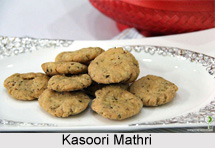
 Kasoori Mathri is a perfect tea time snack made from maida, besan and dry fenugreek leaves. It is an Indian snack and a variant of Mathri that is relished for the sharp taste and smell of fenugreek. Kasoori Mathri is considered as a favourite delicacy in the Northern States of India especially Rajasthan and Punjab and is served with pickle as a tea time snack. It is prepared for festivals like Diwali, Holi and Karva Chauth. These crackers can either be deep fried as Savoury Crackers or baked by the conventional oven method which is more popular in India today. Indians are presently very health conscious, so the fried version is replaced by baking the mathris in oven. The beautiful fragrance and slightly bitterish taste of fenugreek leaves are often used to flavour lentils, vegetables and breads. These crispy methi mathris can be stored for many days and best eaten with mango pickle and hot cup of tea or coffee.
Ingredients:
•2 cups Refined flour
•1/2 cup besan
•1tsp Salt
•Â½ tsp Carom seeds
•1tbsp dry Fenugreek leaves
•5 tbsp ghee
•1tsp black pepper
•1 tsp red chilli powder
•Water to make dough
•Refined vegetable oil to deep fry
Method:
•Crush the pepper corns very coarsely.
•Take flour and besan in a bowl, add salt, carom seeds, crushed dried fenugreek leaves, red chilli powder, pepper corns and mix well.
•Add ghee and mix well. Add sufficient cold water and bring together into a hard dough.
•Cover the dough with damp cloth for about 15 minutes.
•Now make small lemon size round balls with the dough.
•With the help of rolling pin, roll it into thick round shape about 3 inches in diameter.
•Pierce every mathri randomly with the help of a fork so that they do not puff up while frying.
•Heat sufficient oil in a pan. Slide in the mathris and deep-fry on medium heat till golden and crisp.
•Drain and place on an absorbent paper. Cool completely. Store in airtight tins.
•Crispy methi mathri is ready to be served.