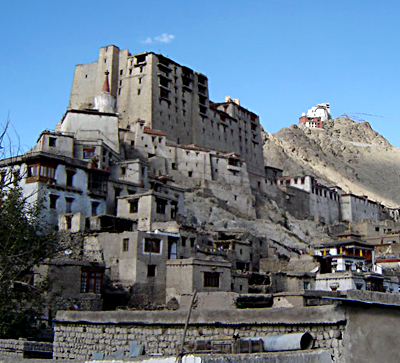
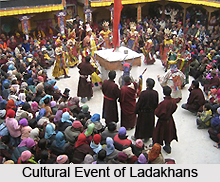
 Demographics of Ladakh comprise a mixture of various races and religions. The major races found here are the Tibetans, Mons and the Dards and among the predominant religions in the region are Buddhism, Christianity and Islam. The Buddhists and Muslims, concentrated in the north and east and to the south respectively, comprise the majority religion in Ladakh whereas the Christians form a smaller minority.
Buddhism has determined the life and culture of the people of the area in a big way. Being the religion of the majority of the people, the tokens of Buddhist influences are evidenced throughout this place. Most of the Muslims found in the place have descended from the Leh area either from immigrants, or from marriages contracted by local women with Muslim merchants from Kashmir and Yarkand settled in Leh. This mixed community are the Arghons who are Sunnis by belief. The most important of the immigrant-descended groups is the Balti community who inhabit in the large village of Chushot, across the Indus. This is located about fifteen kilometres upriver from Leh. Like the Kargil Muslims, the Chushot Baltis too are Shias, and many of them follow injunctions of their faith with uncompromising strictness. The Christian community is found in Leh and a few of the surrounding villages. Most of the Christians constitute the upper strata of society.
Apart from these, the people of Dard descent predominate in Dras and Dha-Hanu areas. The Brokpa communities, who are the inhabitants of Dha-Hanu, are followers of Tibetan Buddhism.
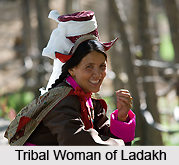 They have and have maintained their original Dardic traditions and customs since long time. The Dards around Dras, however, have converted to Islam and have been strongly influenced by their Kashmiri neighbours. Even most Ladakhis in Leh District as well as Zangskar Valley of Kargil District are Tibetan Buddhist and the rest of the people of Kargil District are the followers of Shia Muslims. The Changpa nomads who are the inhabitants of Rupshu plateau are more closely related to Tibetans. Since the early 1960s nomad numbers have increased as Chang Thang nomads from across the border flee Chinese-ruled Tibet. There are about 3,500 Tibetan refugees from all parts of Tibet in Leh District. The Muslim Arghons, descendants of Kashmiri or Central Asian merchants and Ladakhi women, reside in Leh and Kargil towns. Similar to the other Ladakhis, the Baltis of Kargil, Nubra, Suru Valley and Baltistan exhibit strong Tibetan links in their appearance and language, and were Buddhists.
The language which is spoken in Ladakh is Ladakhi. It is a Tibetan dialect. Apart from this, the people of Ladakh also speak in Hindi, Urdu and often English. The Balti language, which is spoken mainly in Kargil, Nubra and Central Ladakh closely resembles Ladakhi. The dialects spoken in the region are quite different among the different communities. For instance, the language of the Chang-pa people may differ markedly from that of the Purig-pa in Kargil. In Leh, foreign influences have greatly enriched the language as well as the racial composition.
Ladakhi has not had a separate written language from classical Tibetan traditionally. Traditionally, Ladakhi had no separate written language from classical Tibetan. Lately some of the Ladakhi authors have started using the Tibetan script to enrich their writings with the indigenous taste. The administrative work and education are carried out in English.