 The policies formulated by the British Empire underwent changes from time to time. In 1917 the British Policy in India became authoritative, especially during the First World War. However, their approach to India completely altered post Second World War. By this time Britain decided to transfer power to India. The British policy, thus, continued to modify even after 1857, when the Crown assumed the governance of India. The British Policy in India also witnessed changes during emergencies and other circumstances.
The powers previously exerted by the Court of Directors of the Company and by the Parliamentary Board of Control passed to the British Crown by passing an act in 1858. In addition to that, the British administrators in India sensed the consequences of attempting to govern India without the wishes of the people of the country. These views and apprehensions led to the passing of the Indian Councils Act of 1861. The passing of the act was an important British policy in India. This act introduced important changes in the administration of the country. The Governor-General was authorised to make rules for the transaction of business in the Executive Council. The Governor-General`s Executive Council was reinforced by additional members for proper functioning of legislation. The additional members were nominated for two years. The number of additional members varied from six to twelve additional members. Their function was limited strictly only to legislation. However, in 1862, Lord Canning nominated three Indians to his `Legislative Council`. Furthermore, the Act restored the power to the Governments of Bombay and Madras which were subjected to certain restrictions of making laws and regulations for the peace and good government of those presidencies. Each of the Governors` executive councils was enlarged by the addition of the Advocate-General and had four to eight members who were nominated by the Governor. The Governor-General in Council was authorized to create such legislative councils in the provinces of Bengal, the North-West Provinces and the Punjab.
The Indian Councils Act of 1861 witnessed the emergence of an educated class who had popular interest in the administration of the country. They were critical of the acts of Government and thus various local political organizations began to spring up in Calcutta, Bombay and Madras. During that period, a retired British I.C.S. official, Allan Octavian Hume was resolved to find constructive means. He addressed letter to the graduates of the Calcutta University to organize an association for the cultural, moral, social and political regeneration of the people of India. Consequently, the first session of the Indian National Congress was held on 27th December 1885 under the Presidentship of W. C. Bonnerji. The Congress resolutions were aimed at the enlargement of the legislative councils and their powers; there issues were also concerned regarding the examinations for the I.C.S. in India and in Britain, and certain other administrative reforms. There Congress members include Dadabhai Naoroji, Gopal Krishna Gokhale, Surendranath Banerjee and Sir Ferozshah Mehta.
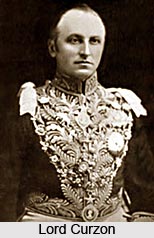
Among the major British policies in India, the Partition of Bengal, 1905 by Lord Curzon initiated a feeling of discontent among the Indian masses. After the resignation of Lord Curzon, Lord Minto succeeded him. The period of Lord Minto`s viceroyalty Lord Morley became the Secretary of State for India, in December 1905. One of Lord Minto`s first considerations was to end the general unrest in the country.
The breach between the Congress and the Muslin League was also showing growing signs of opposition towards British policy and administration. Thus, to bring about a steady reform in the existing system of administration and by promoting national unity, fostering public spirit and developing and organising the intellectual, moral, economic and industrial resources of the country, there came the Minto-Morley reforms were launched. The inauguration of the Minto-Morley Reforms was followed by the important announcements was the transfer of the capital from Calcutta to Delhi. The maintenance of British rule in India depends on the ultimate supremacy of the Governor-General in Council.
When the war entered an acute phase, in 1917 the political situation in India was far from satisfactory. The `Home Rule` agitation was started by Tilak and Mrs Annie Besant and this agitation had gained popular support in the country. In 1919 an act was formed called the Government of India Act. It laid down for the first time the British Government`s policy towards India. Under the Act, the spheres of the central and provincial governments were demarcated by a division of subjects into` central` and` provincial`. Central subjects were those subjects which were directly administered by the Government of India or in which extra-provincial interests were dominant. On the other hand provincial subjects were those in which the interests of the provinces essentially predominated. The provincial subjects were divided into two categories, called `reserved` and `transferred`. Each province was to be governed in relation to ` reserved` subjects by a Governor in Council, and in relation to ` transferred` subjects by a Governor acting with ministers, a system commonly known as dyarchy. 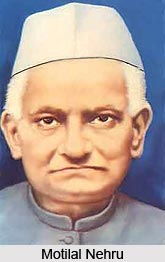 A Governor appointed by His Majesty as the head of each province, ordinarily for a term of five years. The Governor was responsible for the appointments of ministers and it rested with the Governor to decide how many ministers were required for the proper administration of the transferred departments. Furthermore, the dualized system of government set up by the Act required a clear division of responsibility between the two halves of the Government. The Act of 1919 brought into existence new sources of power. The Secretary of State and the Government of India retained power to safeguard the administration of central subjects
On the other hand, the authors of the Joint Report sensed that separate electorates should be accorded only to Mohammedans and to the Sikhs in the Punjab depending on the communal representation. Thus, communal representation was allotted to Mohammedans on the basis of the Lucknow Congress-League Pact and to the Sikhs in the Punjab. On February, 1924 there was the appointment of the Reforms Enquiry Committee, popularly known as the Muddiman Committee. This committee dealt with the difficulties arising from or the defects inherent in the working of the Government of India Act. In April 1926, Lord Irwin was appointed the Viceroy of India. In March 1927, His Majesty`s Government announced their decision to appoint a Statutory Commission.
The personnel of the Commission consisted of seven members who were from the three political parties in the British Parliament, under the chairmanship of Sir John Simon. However, there was the exclusion of Indians from the personnel of the Commission and this was viewed to be an insult. Moreover, it also denied them the right to participate in the determination of the constitution of their own country. Thus in December 1927, a resolution was passed advocating the boycott of the Simon Commission. In addition to that all Indian political parties opposed the Simon commission.
Finally, an influential committee was formed under the chairmanship of Pandit Motilal Nehru in order to determine the principles of a constitution for India. This Committee prepared a report known as the ` Nehru Report`, which was published in August 1928. However, the Nehru Report was not accepted by Jinnah and his members. Jinnah during this period formulated his ` fourteen points` for the safeguarding of the rights and interests of Muslims in any future constitution.
In April 1928, the `Independence of India League` was formed with Jawaharlal Nehru and Subhas Chandra Bose as Secretaries and S. Srinivasa Iyengar served as the President. This league dealt with the objectionable British Policy in India. Lord Irwin became the viceroy at that phase and he announced that after the Simon Commission and the Indian Central Committee had submitted their reports, His Majesty`s Government would consult with the Government of India to invite representatives of British India and of the Indian States to meet them separately so that discussion in regard to both British-Indian and all-Indian problems can be held.