 The year 1939 was a period of international tension. The future of Europe as well as India was extremely perilous. Moreover, on 11th August, 1939 Congress Working Committee passed a resolution and declared that it opposed any kind of imperialist war. Furthermore, the working committee was also determined to oppose any attempt of forcing a war on India. Other issues which were condemned by the Working Committee included the sending of troops to Egypt and Singapore and it also protested against the extended life of the central Legislative Assembly. The main aim of the Congress was to condemn the British Administration during Second World War. Thus, a resolution was passed in which all Congress members of the Central Assembly refrained from attending its next session. In spite of the resolution passed, certain prominent Congressmen supported the British Policy and were prepared to co-operate in the war effort.
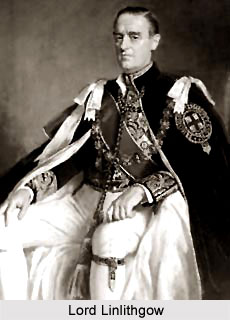
According to the British Administration during World War II, Lord Linlithgow, the Viceroy, wanted that the Government of India should be vested with certain authorities so that it can co-coordinate the activities of the central and provincial governments. Thus, a Bill through Parliament was passed to the His Majesty`s Government. As a result, under the Government of India (Amendments) Act of 1939, the Central Government was empowered to make laws conferring executive authority in respect of provincial subjects on the central Government and its officers. However, in 1939, the Viceroy announced that India had declared war. The Indian Assembly had not been consulted. Although, according to the Government Act of India the Viceroy should have consulted the Executive Committee before making decisions about defence or foreign affairs. On the other hand Congress and the Muslim League fell out regarding this issue and it further deteriorated their relation.
The Congress did not support the war and various divergent views prevailed within the party. Gandhiji desired that whatever co-operation was given should be given unconditionally. At the other end, notably, Subhas Chandra Bose openly declared that the difficulty faced by Britain during this war would bring opportunity to India and improve its chances for independence. As a result the Congress members did not support the policy of the British. In fact all the Congress leaders resigned from the Assembly in protest.
On the other hand, the Muslim League supported the British Administration during Second World War. It backed Britain concerning the war on Germany. Thus, during the war the Muslim League became increasingly powerful in India. The resignation of the Congress ministries became a preferred issue for Jinnah. In the month of December, Jinnah and the Muslim League observed 22 December 1939 as a day of deliverance and thanksgiving. He marked the day as deliverance from the `tyranny, oppression and injustice` of the Congress regime in the provinces.
In 1940 the Muslim League held its annual session in Lahore towards the end of March. Jinnah declared in this session that democracy was unsuited to India and the Muslims must have own their homeland, their territory and their State. The resolution which was passed came to be known as the `Pakistan Resolution`. The session held by the Muslim League at Lahore aroused widespread concern. Its proceedings shocked many sections of public opinion and even angered the Hindus and other minorities were displeased as well.
The Congress laid down a condition in the year 1940 that Indian support for the war would come with a National Government. The Viceroy however refused, and a movement, known as, Civil Disobedience was launched by the Congress. About 1700 Congress members were arrested in 1940. Thus, the position of Congress was weakened as many Congress members were imprisoned between 1940 and 1945. The Congress also held an open session in Ramgarh.
On 23rd November, the All-India Congress Committee met in Allahabad. They passed a resolution and declared that neither the claims of the minorities nor those of the Princes were a genuine obstacle for the Congress`s demand of national independence. It also declared that it was the British Administration, forming irrelevant issues in order to maintain imperialist domination in India. The resolution put the Constituent Assembly in a position of the Congress programme which would be only a democratic method of determining the constitution of a free country. Moreover, the Constituent Assembly should be the only adequate instrument for solving the communal and other difficulties. The Congress laid down that the Assembly should be elected on the basis of adult suffrage.
After the Congress passed the Ramgarh resolution and with its threat of civil disobedience, the Viceroy turned its back on the Congress. On the other hand, the Muslim League gained confidence of the Viceroy. According to the Viceroy, there was no possibility of cooperating with the divergent claims of the Congress, the Muslim League, the Depressed Classes and the Princes. However, in this regard the policy according to the British Administration during World War II was to adopt the principle of wait and watch.
On 10 April, a detailed report on `India and the War` was issued. It featured the events leading to the resignation of the Congress ministries and the resolutions of the Congress, the Muslim League and the Chamber of Princes. The report concluded that, in view of the deadlock, the Government had no option but to seek the approval of Parliament for the continuance of the Section 93 proclamations in the seven provinces. On 18 April Parliament approved their continuance. The Secretary of State concluded that a substantial measure of agreement amongst the communities in India should come. Accordingly, the Viceroy sent a letter to Jinnah on 19 April 1940 where he assured Jinnah that no declaration would be made and that no constitution would be enforced by His Majesty`s Government, or enacted by Parliament, without the approval and consent of the Musalmans of India. Thus, the British Administration during World War II was formulated with a far- sighted view by the British.