Battle of Kharda, Maratha Empire - Informative & researched article on Battle of Kharda, Maratha Empire
  Indianetzone: Largest Free Encyclopedia of India with thousand of articles History of India


in  
Art & Culture | Entertainment | Health | Reference | Sports | Society | Travel
Forum  | Free E-magazine
History of India : Sources of History of India l Ancient History of India l Medieval History of India l Modern History of India l Indian Historical Dynasties l Indian Battles l Sepoy Mutiny 1857 l Indian Rulers l History of India l Indian Freedom Struggle l Indian Governor- Generals l British Indian Acts l Post Independence India l Iron Age in India
Home > Reference > History of India > Medieval History of India > Maratha Empire > Battle of Kharda
Battle of Kharda, Maratha Empire
Battle of Kharda was reckoned as the last victory of the Maratha Confederacy.

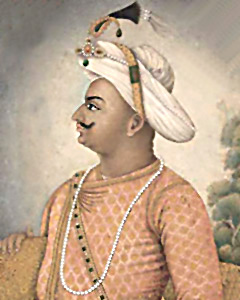
Tipu SultanThe Battle of Kharda took place in March 1795 between the Maratha Confederacy and the Nizam of Hyderabad. This battle brought the last joy to the Confederacy.

The culmination of a long rivalry between the expanding Confederacy and the long established kingdom of Hyderabad resulted in the battle of Kharda. At the Third Panipat Battle in 1761, the Confederacy reached its high tide. The process of its fall was initiated at its defeat. It was still probably the second strongest at the time of and certainly the most effective military power in India.

The Maratha power once again expanded to the north under the tutelage of Mohadji Sindhia, nephew to Dattaji Sindhia. Shah Alam`s chief protector Mahadji Sindia managed to crush all opposition in Delhi from Muslim chiefs namely Ismail Baig and the Rajputs. During these struggles Mahadji raised a force of European trained infantry under a remarkable European mercenary. The success of his forces created envy to the Maratha chieftains. Tukoji Holkar sought to prevent the attempts of Mohadji`s infantry based army. The war between Holkar and Mohadji bettered the relation between Poona and British. As a result of the alliance against Hyder and Tipu, the British were able to besiege Seringapatam in 1792 and imposed a crippling treaty on Tipu. The traditional rivalry between the Marathas and the Nizam of Hyderabad reappeared with the elimination of Tipu. Though the British attempted to intermediate, both sides opted for war. Sawai Madhav Rao by taking personal command of the Maratha army on 15th December 1794 issued a call to all the sardars to join him.

During this period, The Confederacy and the Nizam made alliance with the British against Tipu Sultan. The disagreement that caused the battle of Kharda started when the Maratha Peshwa demanded from the Nizam chauth, the one fourth tribute paid by a king to his overlord. The force of the Nizam and the Maratha confronted each other near the village of Kharda and the battle started on 11th March 1795. The refusal of the Nizam ushered his defeat and his surrender of his territory led him to pay an indemnity of thirty million rupees.

The battle of Kharda led to the reassertion of the superiority of the Marathas was established and this was the last great combined military attempt of the Maratha Confederacy.

(Last Updated on : 10/06/2011)
  More Articles in Maratha Empire
 
Maratha Administration under the Peshwa Anglo-Maratha War Shivaji
Maratha Confederacy Shambhuji Rajaram
Shahu Madhav Rao Balaji Baji Rao
Baji Rao Third Battle of Panipat Architecture of the Tanjavur Marathas
Gaekwads of Baroda The Peshwa Raj in Maharashtra History of Maratha Empire
Maratha Emperors Yashwant Rao Holkar Battle of Laswari
Battle of Kharda Decline Of Maratha Empire Marathas Under The British Rule
Pindaris Treaty of Bassein Serfoji II
Thanjavur Maratha kingdom Bhonsle Dynasty  
Recently Updated Articles in History of India
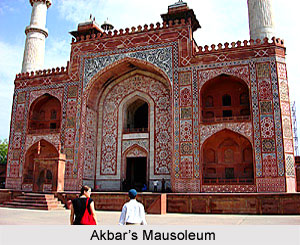
  • Mughal Architecture
    Mughal architecture is a combination of Islamic, Persian, Turkish and Indian architecture. It is a style that was developed under the Mughal dynasty in the sixteenth and seventeenth centuries.
  •  
  • Mansabdari System in Mughal Dynasty
    Akbar introduced the Mansabdari System in the Mughal army which primarily meant the ranking of officers on decimal system.
  •  
     
  • Deccan Policy of Mughal Dynasty
    Deccan Policy of the Mughal dynasty was weak during the reign of Babur and Humayun but after the accession of Akbar on the throne, the political situation changed and the Deccan policy was a success.
  •  
  • Coins of Pandyas
    Coins of Pandyas bear the legend of different Pandya ruler in different times.
  •  
  • Art and Architecture of Mughal Empire
    Art and architecture of Mughal Art offers an aesthetic degree to all art lovers. The subtlety of the finesse and the dazzle of the aura create huge amount of interest among tourist.
  •  
    E-mail this Article | Post a Comment
    RSS Feeds
    Forum
    Forum on History of India

    Free E-magazine
    Subscribe to Free
    E-Magazine on Indian Crafts
     
     
    Battle of Kharda, Maratha Empire - Informative & researched article on Battle of Kharda, Maratha Empire
    Sitemap
    Contact Us   |   RSS Feeds
    Copyright © 2008 Jupiter Infomedia Pvt. Ltd. All rights reserved including the right to reproduce the contents in whole or in part in any form or medium without the express written permission of Jupiter Infomedia Pvt. Ltd.