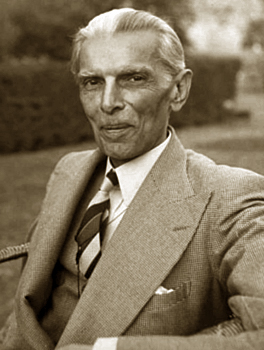
 The decision of accepting the Mountbatten Plan by the Indian leaders brought about a major change in the country. During that period, the country witnessed various diverse views among the leaders regarding the acceptance of the plan. The Congress and the Muslim League expressed opposed views. In addition to this Mohammed Ali Jinnah demanded for passage to link West and East Pakistan. However, all the Congress leaders strongly opposed Jinnah`s demand. Nehru posed serious doubts on Jinnah`s intention, if at all he desired any settlement for the problem. The Viceroy, Lord Mountbatten, took up the matter and dealt with it personally.
Apart from this problem, another issue created a stir in the political situation during the absence Lord Mountbatten. Gandhiji was in favour of a United India and desired that Cabinet Mission plan should be imposed by force. But Sir John Colville, the acting Viceroy, met Lord Mountbatten in this regard and failed to assure him of Gandhiji`s true intention and his request. On the other hand, Congress leaders, Nehru and Patel, requested Lord Mountbatten to invite B. Kripalani, the Congress President who held an equivalent post to Jinnah, to meet the Viceroy. But Lord Mountbatten invited Jinnah along with one or more League representatives to offer fairness. Consequently, on 2nd June the historic conference was held and it was attended by the seven leaders - Nehru, Patel and Kripalani on behalf of the Congress; Jinnah, Liaqat Ali Khan and Abdur Rab Nishtar on behalf of the League while Baldev Singh represented the Sikhs.
At the conference, Lord Mountbatten expressed his view on the political unrest in the country. He referred to groups who wanted an end to the present state of political uncertainty. He even desired to transfer powers as soon as possible. The viceroy also explained the uncertainty of the Cabinet Mission plan. He had reported to His Majesty`s Government that Jinnah and the Muslim League were unable to withdraw their rejection of the plan. According to the Viceroy he had met different parties and the plan was accepted by all. However, there were underlying differences between the two major parties. The Congress would not agree to the principle of the partition of India while Jinnah, who demanded the partition of India, would not agree to the principle of the partition of provinces. Lord Mountbatten during his visit to London discussed both the Cabinet Mission plan and the issue of partition. In addition to that, the Viceroy expressed his views about the troubled position of the Sikhs. He had repeatedly asked the Sikh leaders whether they desired the partition of Punjab. Although this decision of partition would divide the whole Sikh community yet they opted for partition. However the partition did not solve the purpose as no solution had been found to safeguard the interests of the Sikhs.
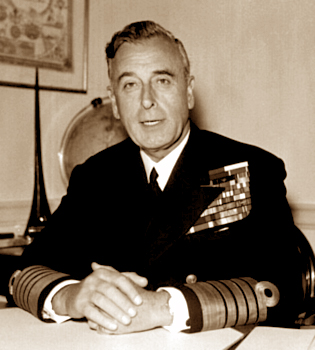 On the other hand, regarding the immediate transfer of power, the Indian leaders decided that this should take place soon after partition. Accordingly, the Viceroy requested His Majesty`s Government that the necessary legislation should be done depending on the present parliamentary session of the country. The Viceroy stated that power would be transferred on the basis of Dominion Status. Thus, the new Indian Government would be free to withdraw from the Commonwealth whenever they wished to.
The Congress accepted the Mountbatten plan, though did not give their complete. But the acceptance of the plan by the Muslim League came much later. The Congress Working Committee met on 2nd June to decide to accept the plan. Kripalani stated that the acceptance of the Mountbatten plan would be a settlement. He hoped that the situation in India and the problems arising, political and economic, as well as communal would be solved. On behalf of the Sikhs, Baldev Singh accepted the principle of partition as laid down in the plan. Jinnah put forth that he would try to make the plan accepted by his Working Committee. The Viceroy, thus, communicated to the Secretary of State the depending on the assurances given by Nehru, Jinnah and Baldev Singh regarding the acceptance of the Mountbatten plan. As a result, Attlee announced the plan in the House of Commons on 3rd June. Finally the plan came to be known as `the June 3rd Plan`. Soon after, the Prime Minister put forth, that as the Indian leaders have failed to agree on the Cabinet Mission`s plan for a united India, partition becomes the expected solution. According to him, there were twofold purpose of the plan; firstly, it was to make possible the maximum degree of co-operation and harmony between the political parties. Secondly, it would enable the British Government to hand over their responsibilities in an orderly and constitutional manner. The plan, thus, provided for the handing over of power that year to one or two governments, each having Dominion Status.
However, the proposed plan had its opponents as well. The Working Committee of the Hindu Mahasabha passed a resolution and pointed out that India is an indivisible country and there will never be peace unless and until the separated areas are brought back into the Indian Union and made integral parts thereof. The Mahasabha called for an `Anti-Pakistan Day`. Thus, after several changeable opinions there was the acceptance of the plan by all the main political parties of the country.
The primary reason behind Congress` acceptance of the Mountbatten was to end the communal fury between the Congress and the Muslim League leaders. The Congress leaders decided by June, 1947 that only an immediate transfer of power could prevent the spread of direct action and communal disturbances. According to Sardar Patel a partitioned India was better than a disorganised and troubled India. The Congress leaders were of the view that Muslim League was only concerned with their own interests. They were not concerned about the future of country. Moreover, they would act as an obstacle in the path of India`s progress. Furthermore, the Congress leaders also felt that the continuance of British rule could never serve the interest of Indians.