





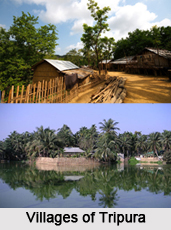
 Villages of Tripura comprise a major portion of the state’s total geographical area located in the hilly regions. The villages are rich in flora and fauna and craftsmanship. The rich tradition and cultural heritage of the villages attract many tourists from all over India every year. Villages of Tripura comprise a major portion of the state’s total geographical area located in the hilly regions. The villages are rich in flora and fauna and craftsmanship. The rich tradition and cultural heritage of the villages attract many tourists from all over India every year.
The principal religion in the villages is Hinduism. Some villagers in Tripura also follow animism. They worship many gods and goddesses on a regular basis. Goddess Tripura Sundari is the most widely worshipped deity in the villages of Tripura and the other goddesses like Tara, Kali, Bhuvaneshwari, Chhinnamasta, Bhairavi, Bagalamukhi, Dhumavati, Kamalatmika and Matangi are also worshipped in the villages. There are also many tribal communities living in the villages of Tripura that include Chaimal, Garo, Halam, Jamatia, Lepcha, Riang, Tippera, Tripuri, Chakma, Lusai, Darlong, Mog, Noatia, etc. Education in Villages of Tripura Villages of Tripura have a notable educational scenario. There are many government primary and secondary schools established in the villages of Tripura to provide primary and secondary education. Many colleges and universities are also established in the urban areas of Tripura that provide the students with a chance to pursue higher education. 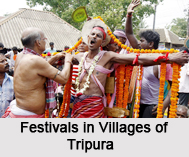
Occupation in Villages of Tripura The principal occupation of people in the villages of Tripura is agriculture. The state’s rural economy is primarily agrarian and agriculture provides employment to more than half the total population of Tripura. Most of the villages are located on the high hills and hillocks and are interspersed with rivers and valleys. They also have a moderately warm and humid climate and well distributed rainfall. All these factors contribute largely to the agricultural development of the villages. The soil and climate of Tripura are ideally suited for rain-fed horticulture. The villagers cultivate a variety of plantation crops throughout the year. The major crops and fruits cultivated in the villages of Tripura include pineapple, orange, jackfruit, litchi, banana, mango, lime or lemon, cashew nut, ginger, turmeric, chilli, potato, tapioca, coconut, areca-nut, aromatic paddy, cotton, tea, rubber, mesta, sugarcane, etc. Apart from agriculture, animal husbandry and fisheries are the other 2 major sources of employment to the people residing in the villages of Tripura. Tourism is one of the recently developed employment sectors for the villagers in Tripura. The industries like natural gas, fruit processing, rubber, tea, handicraft, handloom, etc. are also counted among the major occupations for villagers in Tripura. Another major source of employment in the villages of Tripura is handicrafts. The villagers are expert in making various handicraft products by using bamboo and cane. The most popular handicraft products produced in the villages of Tripura include room divider, decorated wall panels, attractive furniture of cane, different decorative pieces, dining table mats, floor mats, table mats, lamp shades, various other gift items, etc. Most of these cane and bamboo handicraft products are counted amongst the best in India. Festivals in Villages of Tripura The rich cultural diversity and heritage is one of the most important features of society in the villages of Tripura. Each of the communities living in the villages has its own customs and traditional music and dance forms. The major fairs and festivals celebrated in the villages of Tripura include Ashokashtami, Garia and Gajan Festival, Kharchi Festival, Boat Race, Manasa Mangal, Durga Puja, Diwali, Rasha Festival, Orange & Tourism Festival, Book Fair, Pous Sankranti Mela, etc. The other major religious festivals include Hojagiri, Ker, Bisu and Sena, Maikwtal and Mamta, Hangrai, Ama, etc. Art and Culture in Villages of Tripura Villagers in Tripura perform various folk music and dances during fairs and festivals. The most popular folk dance forms performed in the villages of Tripura include the Hozagiri dance of Reang community; the Garia, Jhum, Maimita, Masak Sumani and Lebang Boomani dances of Tripuri community; the Bizu dance of Chakma community; the Cheraw and Welcome dances of Lusai community; the Hai-Hak dance of Malsum community; the Wangala dance of Garo Community; the Sangraiaka, Chimithang, Padisha and Abhangma dances of Mog community; the Garia dances of Kalai and Jamatia communities; the Gajan, Dhamail, Sari and Rabindra dances of Bengali community; the Basanta Rash and Pung chalam dances of Manipuri community; etc. The dances are performed with accompaniment of the musical instruments like Khamb (Drum), Bamboo flute, Lebang, Sarinda, Do- Tara, Khengrong, etc. The extraordinary natural beauty and the colourful way of celebrating festivals are the best features of the villages of Tripura. Many people from different parts of India and abroad visit the villages to experience the rich cultural diversity. The tourists also like to feel the real essence of tribal culture by visiting the villages of Tripura. |
| ||||||||||||||||||||||||||||

