





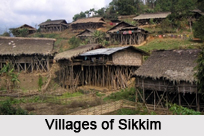
 Villages of Sikkim exhibit a wonderful scenic beauty and charming view as it is located in the lap of Kanchenjunga. Sikkim is a small state in the north-eastern India and a major portion of its total population lives in the villages, mostly located in the hilly regions. The villages of Sikkim have a rich tradition and cultural heritage and the people celebrate various fairs and festivals together. Their way of celebrating the festivals is distinct from other parts of the country and this unique style attracts many tourists from all over India every year. Villages of Sikkim exhibit a wonderful scenic beauty and charming view as it is located in the lap of Kanchenjunga. Sikkim is a small state in the north-eastern India and a major portion of its total population lives in the villages, mostly located in the hilly regions. The villages of Sikkim have a rich tradition and cultural heritage and the people celebrate various fairs and festivals together. Their way of celebrating the festivals is distinct from other parts of the country and this unique style attracts many tourists from all over India every year.
The predominant communities include the Lepchas, the Bhutias and the Nepalese. Buddhism is one of the major religions followed by the villagers in Sikkim. The different communities, cultures, religions and customs of different hues nicely intermingle in the villages of Sikkim and constitute a uniform blend. People in the villages of Sikkim speak in different languages out of which, Sikkimese, Lepcha (Rong), Limbu (Yakthung Pan), Tibetan, Nepali, English, etc. are the most widely spoken ones. Education in Villages of Sikkim 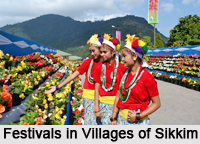 Villages of Sikkim have a good literacy rate. The villagers receive primary and secondary education from the government schools established in the villages of Sikkim. They can further opt for higher education in the colleges and universities, mostly located in the urban areas. Sikkim has one of the highest literacy rates among all states in India. The governmental authorities are establishing many more new educational institutions to further improve the educational scenario of the villages of Sikkim. Villages of Sikkim have a good literacy rate. The villagers receive primary and secondary education from the government schools established in the villages of Sikkim. They can further opt for higher education in the colleges and universities, mostly located in the urban areas. Sikkim has one of the highest literacy rates among all states in India. The governmental authorities are establishing many more new educational institutions to further improve the educational scenario of the villages of Sikkim.
Occupation in Villages of Sikkim Agriculture is the backbone of the state’s economy and provides employment to a major portion of the population. As most of the villages of Sikkim are located in the hilly region, the villagers follow their own method of cultivation that suits their needs. The villagers in Sikkim practise subsistence farming like rain fed agriculture, mixed farming, integration of agriculture and horticulture. The traditional crops like maize, millet, paddy, buckwheat, barley, mustard, potato, ginger, mandarin orange, large cardamom, etc. are cultivated in the villages of Sikkim throughout the year. Besides agriculture, various types of industries also provide employment to the people living in the villages of Sikkim. Tourism is one of the major sources of employment to the villagers. The villagers work as tourist guides, provide accommodation facilities to the tourists or run different kinds of businesses in the tourist spots. Apart from tourism, the other sources of employment for the villagers in Sikkim include mining, power and liquor industry, aqua culture, livestock, etc. The villages of Sikkim are also famous for various handicrafts products like woollen carpets and blankets, Thangkas, Choksee, sweaters and jackets, wall hangings and antics with Buddhist motifs, Tibetan and Sikkimese garments, etc. Festivals in Villages of Sikkim Various fairs and festivals are celebrated by the residents in the villages of Sikkim, round the year. The village culture in Sikkim is a composite of all the 3 prominent communities like Lepchas, Bhutias and Nepalese and the culture is also related to Tibetan religious and aesthetic traditions. The villagers in Sikkim celebrate the Buddhist festivals like Losar, Bumchu, Saga Dawa, Lhabab Dhuechen, Drukpa Tsheshi, Phang Lhabsol, Losoong, Kalcharka Puja, Guru Rimpoche’s Trungkar Tshechu, etc. with much pomp and cheerfulness. Apart from these, the other major festivals celebrated in the villages of Sikkim include Namsoong, Sakewa, Bhanu Jayanti, etc. The villagers perform the traditional dance forms like Kagyat dance; mask dances, etc. as part of celebrating the festivals. Gifted with amazing natural beauty, the villages of Sikkim are counted amongst the most pictorial villages in India. |
| ||||||||||||||||||||||||||||

