


 Tribal dance forms of Kerala reflect the tradition and rituals of the land and reveal all its cultural glory. Kerala has more than thirty five different types of tribal dances, like, Elelakkaradi, Paniyarkali, Mullakurumbar, Uralikurumbar, Paniya, and Mankali to name a few. Certain tribal dances are accompanied by songs. Either the dancers themselves sing or the on-lookers sing and thus participating in the performances. Special musical instruments are sometimes used but drum is almost an indispensable feature of the tribal dance forms in Kerala. Tribal dance forms of Kerala reflect the tradition and rituals of the land and reveal all its cultural glory. Kerala has more than thirty five different types of tribal dances, like, Elelakkaradi, Paniyarkali, Mullakurumbar, Uralikurumbar, Paniya, and Mankali to name a few. Certain tribal dances are accompanied by songs. Either the dancers themselves sing or the on-lookers sing and thus participating in the performances. Special musical instruments are sometimes used but drum is almost an indispensable feature of the tribal dance forms in Kerala.
 Kurumbar Nritham Dance
Kurumbar Nritham is among the most popular tribal dance forms of Kerala. The tribes of Wayanad district practice this special type of dance which is related to marriages. The dance is performed both before marriage and after marriage by the members of the families of both bride and bridegroom. In addition to that the newly wedded couple also performs this dance. Kaanikkar Nritham Dance Tribal dance forms of Kerala also include Kaanikkar Nritham. It is a group dance of the Kanikkar tribe in Kerala. The steps of the dancers beautifully coordinate with the waving of the hands and beating of drums. Elelakkaradi Dance Elelakkaradi is another common dance among the tribes of Kerala. It is a heroic group dance in which almost the whole Irular community of men, women and children participate. The dance resembles the fight of the people against the wild bears which often attack their tribal hamlets. Kaadar Nritham Dance Kaadar Nritham is one of the common tribal dance forms of Kerala where only women participate. This dance form is popular among the Kadar tribe of Cochin forests and is a primitive form. It is simple but a very elegant dance form. The performers arrange themselves in a semicircle. Paravalli Kali Dance Paravalli Kali is also recognised as among the popular tribal dance forms of Kerala. It is a mixed dance of the aboriginals of dense forest of Travancore area. Both men and women participate in this tribal form of dance. The dance develops into variety of pleasing pattern and the men and women change their positions with amazing speed. Koorankali Dance Koorankali is a tribal dance where one man takes the role of a wild bear with another enacting the role of hunting dog. The movements are perfectly timed to the rhythmic beats of primitive drums. During the performance, large number of onlookers forms a circle round the two dancers, with cries of joy and occasional clapping of hands and jerky dances. The whole dance drama is enacted with graceful movements. Paniyar Kali Dance Paniyar Kali is a masculine dance form performed by the men folks of Paniyar tribes of Wayanad district. Around eight or ten dancers take part in the dance and stand in a circle with hands linked together. They move around with rhythmic flexions of the body. As the dancers gather momentum, the circle is swiftly expanded and contracted and the dancers utter peculiar cries which gradually reach to a high pitch. Edaya Nritham Dance Edaya Nritham is the dance form of men and women from the tribal shepherds. In this dance form one of the shepherds sings. This is repeated in chorus by all the rest. As the singing continues, one of them imitates the special sounds of shepherds driving their sheep. The dance consists of someone of the group crying successively to imitate the wild animals while the other members of the group adeptly bring out the terror on their faces. 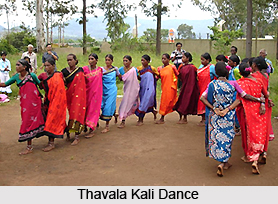 Thavala Kali Dance
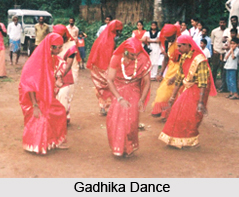
Thavala kali is a tribal dance in which a number of participants, usually boys, jump one above the other in succession, imitating the leaps of the frog. Man Kali Dance This tribal dance depicts the Ramayana episode in which Sita is being enchanted by Maricha in the guise of a golden deer. Mudiyattom Dance Mudiyattom is a tribal dance in which only women participate. The dancers stand on small wooden blocks and the dance begins with slow and simple movements of the body which culminate in graceful movements of the head. In another step the dance features the uncombed hair of the participants which flow down and swing in rhythmic waves. Naikar Kali Dance Tribal dance forms of Kerela also include Naikar Kali. This is a popular ritualistic dance practised among the tribes in Wayanad and Mallapuram district. Naikar Kali is performed as to offer prayers to the family deities during marriage ceremonies. Gadhika Dance Gadhika is another ritual dance which is performed by Adiya tribes of Wayanad district. This dance is meant to care ailments and for having a safe delivery of child. This dance form begins with the principal performer invoking Lord Siva for his help to cure the patients. Several legends are associated with this dance form. Both men and women participate in this dance form. Tribal Dance forms of Kerala are unique examples of communities that belong to isolated existence, but still preserving their life, customs and manners. Though their dialects and customs are adapted, yet artistic expression evidently reflects the distinct, secluded and primitive social structure and nature of the people. Kerala still witnesses survival in the tribal hamlets of the hilly tracts. Each of these aboriginal tribes presents their own distinct dance tradition and invariably all of them are interwoven with the life of the people. |
| |||



Tribal Dance forms of Kerala
| Tribal Dance Forms of Kerala are considered as direct expressions of the inner most spirit of the people. Some of the well known tribal dances of Kerala are Elelakkaradi, Kadarkali, Kurumbarkali, Paniyarkali, Edayarkali, Mudiyattam and Vedarkali. |
| ||||||||||||||||||||||||||||

