


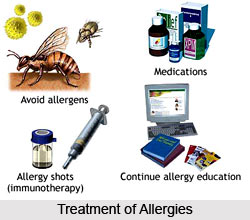
 There have been enormous improvements in the medical treatment of allergies with the passing decades. Traditionally treatment and management of allergies involved simply avoiding the allergen in question or otherwise reducing exposure. For instance, people with cat allergies were encouraged to avoid them. While avoidance may help to reduce symptoms and avoid life-threatening anaphylaxis, it is difficult to achieve for those with pollen or similar air-borne allergies. Strict avoidance still has a role in management though, and is often used in controlling food allergies. There have been enormous improvements in the medical treatment of allergies with the passing decades. Traditionally treatment and management of allergies involved simply avoiding the allergen in question or otherwise reducing exposure. For instance, people with cat allergies were encouraged to avoid them. While avoidance may help to reduce symptoms and avoid life-threatening anaphylaxis, it is difficult to achieve for those with pollen or similar air-borne allergies. Strict avoidance still has a role in management though, and is often used in controlling food allergies.
People with multiple allergies have to go through critical treatment procedure. Usually injections are the primary need, very fine needles are used for the injections, and the needle only goes just below the skin's surface. While the needle rarely causes discomfort, the solution being injected can be irritating and cause itchiness or a stronger reaction. Medicinal Treatment of Allergies Several antagonistic drugs are often used to check the action of allergic mediators, or to prevent activation of cells and de-granulation processes. These drugs include: These drugs help to lessen the symptoms of allergies and are crucial in the recovery of acute anaphylaxis, but play little task in chronic treatment of allergic disorders. Immunotherapy for the Treatment of Allergies Desensitization or hypo-sensitization is a treatment in which the patient is slowly vaccinated with increasingly larger doses of the allergen required. This can either condense the severity or eliminate hypersensitivity altogether. It relies on the progressive straightening of IgE antibody production, to block excessive IgE production seen in atopy. Studies have assured the long-term effectiveness and the preventive effect of immunotherapy in reducing the development of allergy. Meta-analyses have also confirmed efficacy of the treatment in allergic rhinitis in children and in asthma. A second form of immunotherapy involves the intravenous injection of monoclonal anti-IgE antibodies. While this form of immunotherapy is very effective in treating several types of atopic allergies, it should not be used in treating the majority of people with food allergies. A third type, Sublingual immunotherapy is an orally administered therapy, which takes advantage of oral immune tolerance to non-pathogenic antigens such as foods and resident bacteria. This therapy requires a long-term commitment. Enzyme Potentiated Desensitization An experimental treatment, enzyme potentiated desensitization (EPD), was tried for decades but is not normally accepted as effective. EPD uses diluted allergen and an enzyme, beta-glucuronidase, to which T-regulatory lymphocytes are supposed to respond by favouring desensitisation or down-regulation, rather than only sensitization. EPD has also been tried as the treatment of allergies and autoimmune diseases. In alternative medicine, its practitioners, particularly naturopathic, herbal medicine, homeopathy, traditional Chinese medicine and applied kinesiology, describe a number of allergy treatments. Treatment of allergies is very important and even more is their proper diagnosis for the appropriate treatment. |
| |||



Home > Health > Naturopathy > Nature Cure Treatments > Common Ailments > Allergies > Treatment of Allergies
Treatment of Allergies
| Treatment of allergies comprises of different methods, starting from avoidance of allergens to various medical drugs. |
| ||||||||||||||||||||||||||||

