Introduction
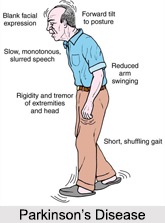 Parkinson`s disease is a serious chronic disease of the nervous system. It is characterised by stiffness of muscles and a continuous tremor or shake. It is a disease of the extra-pyramidal system. This disease is also known as `Paralysis Agitans` or `Shaking Palsy`. Patients with mild form of Parkinson`s disease continue this way for many years before any serious symptoms develop. In severe and advanced cases, however, the patient is not able to move, and presents a distressing spectacle, for his mind may be uninjured but still he cannot speak or write.
Symptoms of Parkinson`s Disease
 Several primary and secondary symptoms of Parkinson`s disease are not seen equally in everyone with the disease. Different people experience diverse symptoms and the progression of the disease is different from person to person. Most people who get Parkinson`s are above the age of 60, but recently there have been more recognised cases in younger men and women.
Parkinson disease affects movement or the motor symptoms of the individual. Other typical symptoms of Parkinson`s disease include disorders of mood, behavior, thinking, and sensation (non-motor symptoms). Patients` individual symptoms may be quite unlike and progression of the disease is also noticeably individual. Most of the symptoms of Parkinson`s disease involve disruption of motor functions (muscle and movement). However, lack of energy, mood and memory changes, and pain can also occur as part of the disease.
Some of the primary symptoms or motor symptoms of Parkinson`s disease are as follows -
•Bradykinesia or Akinesia is the slowness in voluntary movement such as standing up, walking, and sitting down. This happens because of delayed transmission signals from the brain to the muscles. This may direct to difficulty initiating walking, but when more harsh stages of this disease occurs, it may cause "freezing episodes" once walking has begun. Rapid, repetitive movements produce a dysrhythmic and decremental loss of amplitude.
• Tremors often occur in the hands, fingers, forearms, foot, mouth, or chin. Typically, tremors take place when the limbs are not moved as opposed to when there is movement. This is the most apparent and well-known symptom, though an estimated 30% of patients have little perceptible tremor; these are classified as akinetic-rigid.
• Rigidity otherwise known as stiff muscles, often create muscle pain that is increased during movement. In combination with a resting tremor, this produces a ratchety, "cogwheel" rigidity when the limb is passively moved.
• Poor balance happens because of the absence of reflexes that help posture and poise. This causes shaky balance, which oftentimes leads to falling.
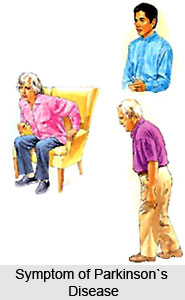
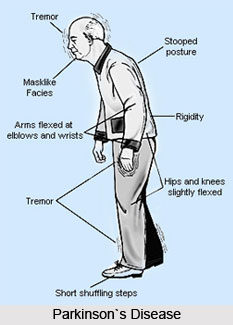
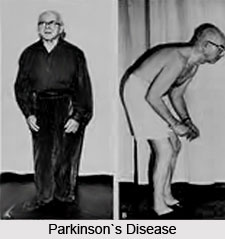
There are many more symptoms of Parkinson`s disease that includes gait and posture disturbances; shuffling, where gait is characterised by short steps, with feet barely leaving the ground, producing an audible shuffling noise. Small obstacles tend to cause the patient to trip off the platform very often. Decreased arm-swing and turning "en bloc", rather than the usual twisting of the neck and trunk and pivoting on the toes are quite normal with the Parkinson`s disease patients keep their neck and chest rigid, requiring multiple small steps to complete a turn. Stooped, forward-flexed posture in severe forms, where the head and upper shoulders may be bent at a right angle relative to the trunk (camptocormia) is often seen in such patients. Festination is a combination of stooped posture, imbalance, and short steps. It leads to a gait that gets progressively faster and faster, often ending in a fall.
Gait freezing or "freezing" is a manifestation of akinesia (an inability to move) and an important symptom of Parkinson`s disease. Gait freezing is characterised by an incapacity to move the feet which may worsen in tight, disorderly spaces or when trying to commence movement. Dystonia (in about 20% of cases of Parkinson`s disease) is an abnormal, sustained, painful twisting muscle contraction, often affecting the foot and ankle (mainly toe flexion and foot inversion), which often obstructs movement.
Speech and swallowing disturbances are also symptoms of Parkinson`s disease. Hypophonia or soft speech is where the speech quality tends to be soft, hoarse, and monotonous. Some people with Parkinson`s disease claim that their tongue is "heavy" or have cluttered speech and tends to sound like monotonic speech. Festinating speech refers to excessively rapid, soft, poorly intelligible speech. Drooling is most likely caused by a weak, infrequent swallow and stooped posture. Dysphagia is impaired ability to swallow and can lead to aspiration pneumonia.
Fatigue (up to 50% of cases of Parkinson`s disease); masked faces (a mask-like face also known as hypomimia), with infrequent blinking; difficulty rolling in bed or rising from a seated position are some of the symptoms of Parkinson`s disease. Micrographia (small, cramped handwriting); impaired gross motor coordination; impaired fine motor agility and motor coordination and Akathisia, the inability to sit still are also seen to occur during Parkinson`s disease.
Parkinson`s disease also causes cognitive and mood disturbances and is quite a frequent symptom of the disease. Reviews of depression approximate its occurrence in anywhere from 20-80% of cases. Most studies offer self-report questionnaires such as the Beck Depression Inventory, which clearly analyse physical symptoms. Studies using diagnostic interviews by trained psychiatrists also report lower rates of depression in case of Parkinson`s disease. Often, there is an increased risk for any individual with depression to go on to develop Parkinson`s disease at a later stage. Seventy percent of individuals with Parkinson`s disease diagnosed with pre-existing depressing symptoms go on to develop anxiety. Ninety percent of Parkinson`s disease patients with pre-existing anxiety subsequently develop apathy or abulia.
Cognitive disturbances or symptoms of Parkinson`s disease include slowed reaction time; both voluntary and involuntary motor responses are significantly slowed. Executive dysfunction, characterised by difficulties in allocation of attention, impulse control, set shifting, prioritizing, evaluating the salience of ambient data, interpreting social cues, and subjective time awareness also occurs. Dementia is a later development in approximately 20-40% of all patients, typically initial with slowing of thought and succeeding to difficulties with conceptual thought, memory, and behavioral regulation. Hallucinations, delusions and paranoia may also develop in the patients. Short term memory loss; procedural memory is more common in Parkinson`s disease than declarative memory. However, some of the above cognitive disturbances are improved by dopaminergic medications, while others are actually deteriorated.
Excessive daytime somnolence, initial, intermediate, and terminal insomnia with disturbances in sleep can occur years prior to diagnosis. Perception is also disturbed in Parkinson`s disease. Impaired visual contrast sensitivity, spatial reasoning, color discrimination, convergence insufficiency (characterized by double vision) and oculomotor control. Dizziness and fainting are usually attributable orthostatic hypotension, which is a failure of the autonomic nervous system to regulate blood pressure in response to changes in body position. Reduction or loss of sense of smell (hyposmia or anosmia) is also symptoms of Parkinson`s disease.
The autonomic symptoms of Parkinson`s disease include oily skin and seborrheic dermatitis, urinary incontinence, typically during later disease progression. Nocturia (getting up in the night to pass urine), constipation and gastric dysmotility that are severe enough to endanger comfort and even health are also seen. Altered sexual function, characterised by profound impairment of sexual behavior, orgasm, and drive is found in mid and late Parkinson disease and lastly, weight loss is significant over a period of seven years. The symptoms of Parkinson`s disease are noticeably prevalent among the sufferers, however the extension and severity may differ. These symptoms largely help in diagnosing the disease.
Causes of Parkinson`s Disease
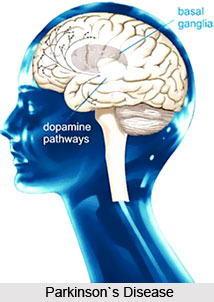
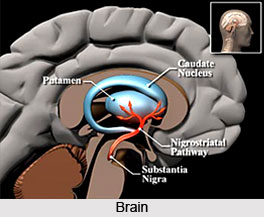
 Parkinson`s disease is caused by the progressive mutilation or deterioration of neurons (nerve cells) in an area of the brain known as the substantia nigra. When functioning normally, these neurons create a vital brain chemical known as dopamine. Dopamine serves as a chemical messenger thus allowing communication between the substantia nigra and another area of the brain called the corpus striatum. This communication coordinates smooth and balanced muscle movement. Absence of dopamine results in abnormal nerve functioning, causing a loss in the ability to control body movements.
Low levels of dopamine, a brain chemical (neurotransmitter) concerned with the controlling movement, cause symptoms of Parkinson`s disease. The shortage of this brain chemical occurs when nerve cells in a part of the brain (substantia nigra) that produces dopamine collapse or deteriorate. The exact cause of this deterioration is not known till date. The connections between Parkinson`s disease and factors such as genetics, ageing, toxins in the environment, and free radicals are all under study. Although these studies are beginning to provide some answers, experts do not know the particular cause of the disease. Studies are continuing to examine whether there is a genetic cause of Parkinson`s disease. Only a small percentage of people with Parkinson`s disease have a parent, brother, or sister who has the disease; however, strange genes do seem to be a cause in a few families where early-onset Parkinson`s disease is very common.
Although, the reason of Parkinson`s disease occurrence and how the neurons become impaired is not known, there is increasing evidence that Parkinson`s disease may be inherited (passed on genetically from family members). There is considerable argument surrounding the prospect of a genetic cause of Parkinson`s disease. In a small number of families, exact genetic abnormalities leading to the illness have been recognised. However, the enormous majority of people with Parkinson`s disease do not have one of these recognised genetic abnormalities. It is probable that in people who develop Parkinson`s disease early in life (young-onset Parkinson`s disease) there is a genetic factor. It is not yet understood about how Parkinson`s disease is inherited; the implications for children of people with Parkinson`s disease are vague.
 There is also some proof that certain toxins in the environment may cause Parkinson`s disease. Scientists have suggested that external or internal toxins may particularly destroy the dopaminergic neurons, causing Parkinson`s disease. Toxins that may cause Parkinson`s include manganese, carbon monoxide, carbon disulfide and some other pesticides. Also, it is believed that oxidative stress can cause Parkinson`s disease. Oxidation is a process in which free radicals (unstable molecules lacking one electron), in an attempt to replace the missing electron, react with other molecules (such as iron). Free radicals are normally formed in the brain and body, but usually the brain and body have mechanisms to get rid of free radicals. In people with Parkinson`s disease, the mechanisms may not be effectual or they may create too many free radicals. It is also probable that environmental toxins may donate to abnormal free radical formation and lead to Parkinson`s disease. Oxidation is believed to cause damage to tissues, including neurons. In most cases, antioxidants protect cells from free radical damage.
While the causes of Parkinson`s disease are not apparent, the abnormal nerve functions linked to Parkinson`s disease are associated with certain conditions and medications that can cause Parkinson`s disease-like symptoms. Certain drugs such as antipsychotics used to treat severe paranoia and schizophrenia can cause a person to experience symptoms that resemble Parkinson`s disease (Parkinsonism). Street drugs MPTP, a synthetic heroin contaminant, can cause severe Parkinson`s disease-like symptoms as well. Blood vessel disorders, although rare, stroke and atherosclerosis (hardening of the arteries) can cause symptoms similar to Parkinson`s disease. Shy-Drager syndrome is an uncommon degenerative condition that produces symptoms similar to Parkinson`s disease. Most researchers suggest that a combination of these factors may be the causes of Parkinson`s disease.
Treatments of Parkinson`s disease
 Parkinson`s disease is a chronic disorder that requires broad-based treatment including patient and family education, support group services, general wellness maintenance, physiotherapy, exercise, and nutrition. Till date, no cure has been found for Parkinson`s disease, but medications or surgery can provide relief the patient.
Levodopa is the most widely used form of treatment, available in various forms. L-dopa is transformed into dopamine in the dopaminergic neurons by L-aromatic amino acid decarboxylase (often known by its former name dopa-decarboxylase). However, only 1-5% of L-dopa enters the dopaminergic neurons. The remaining L-dopa is often metabolised to dopamine somewhere else, thus causing a wide variety of side effects. Due to feedback inhibition, L-dopa results in a decrease in the endogenous formation of L-dopa, and thus ultimately becomes counterproductive.
Carbidopa and benserazide are dopa decarboxylase inhibitors that help to prevent the metabolism of L-dopa before it reaches the dopaminergic neurons and are generally given as combination preparations of carbidopa or levodopa. There are also controlled release versions of Sinemet and Madopar that extend out the effect of the L-dopa. Duodopa is a combination of levodopa and carbidopa, isolated as a thick gel. Using a patient-operated transportable pump, the drug is constantly delivered through a tube directly into the upper small intestine, where it is speedily absorbed.
Tolcapone inhibits the COMT enzyme, thus prolonging the effects of L-dopa, and so has been used to harmonize L-dopa. However, due to its probable side effects such as liver failure, it is restricted in its availability. A similar drug, entacapone has not been shown to cause noteworthy alterations of liver function and maintains adequate inhibition of COMT over time. The dopamine agonists bromocriptine, pramipexole, pergolide, ropinirole, apomorphine, cabergoline, and lisuride are fairly effective in the treatment of Parkinson`s disease. These have their own side effects including those mentioned above in addition to somnolence, hallucinations or insomnia.
Dopamine agonists can be useful for patients experiencing on-off fluctuations and dyskinesias as a result of high doses of L-dopa. Apomorphine can be administered via subcutaneous injection using a small pump, which is carried by the patient. A low dose is automatically administered throughout the day that reduces the fluctuations of motor symptoms by providing a steady dose of dopaminergic stimulation. After an initial "apomorphine challenge" in hospital to test its efficiency and brief patient and primary caregiver (often a spouse or partner), the latter of whom takes over safeguarding of the pump. The injection point must be changed daily and rotated around the body to avoid the development of nodules. Apomorphine is also available in a more acute dose as an autoinjector pen for crisis doses such as after a fall or first thing in the morning. Nausea and vomiting are common after effects of this kind of treatment of Parkinson`s disease, and may require domperidone (an antiemetic).
Selegiline and rasagiline reduce the symptoms of Parkinson`s disease by reducing monoamine oxidase-B (MAO-B), thus inhibiting the breakdown of dopamine secreted by the dopaminergic neurons. Metabolites of selegiline include levoamphetamine and levomethamphetamine. This might result in side effects such as insomnia. A side effect of selegiline in combination with L-dopa can be stomatitis.
Surgery and deep brain stimulation is also a form of treatment of Parkinson`s disease. Treating Parkinson`s disease with surgery was once a common practice, but after the discovery of levodopa, surgery was restricted to only the severe cases. Studies in the past few decades have led to great improvements in surgical techniques of Parkinson`s disease, and surgery is again being used in people with advanced Parkinson`s disease for whom drug therapy is no longer sufficient. Deep brain stimulation is presently the most used surgical means of treatment of Parkinson`s disease, but other surgical therapies that have shown betterment including surgical lesion of the subthalamic nucleus and of the internal segment of the globus pallidus, a procedure known as pallidotomy.
Neurorehabilitation is carried out as treatment when there is partial evidence that speech or mobility problems can improve with rehabilitation although studies are still scarce and of low quality. Regular physical exercise or therapy can be beneficial to the patient for maintaining and improving mobility, strength, flexibility, movement speed, and quality of life; and speech therapy may improve voice and speech function. One of the most widely practiced treatments for the speech disorders associated with Parkinson`s disease is the Lee Silverman Voice Treatment (LSVT). LSVT focuses on increasing vocal loudness.
Through a combination of intensive research, Ayurvedic theory and the clinical experiences, many relieving processes have come up with formulas and drugs to cure Parkinson`s disease. The herbal medicines of Ayurveda have very minor effects like occasional constipation, and mild dizzy spells in the early phase of treatment. Unlike western medicine, Ayurvedic medicines have cured patients from this disease. These medicines can also be taken along with western medicines, with gradual phasing out of western medicine. First improvements in Parkinson`s disease are usually seen within 8 to 10 months and 1 to 4 years later, the disease disappears 90% to 99%.