


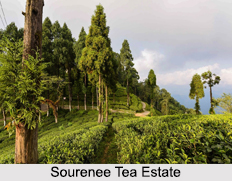
 Located at a high altitude between 2,500 ft to 5,000 ft, the Sourenee Tea Estate covers an area of 99 hectares. The estate is under tea plantation and produces about 65,000 kg of top quality flavour orthodox Darjeeling tea, which is known to be the finest in the world. The tea estate is more than 100 years old and has over the years yielded quality teas which have in turn have awarded them its own Geographical Indication. The estate is very popular amongst tea lovers all over the world. Located at a high altitude between 2,500 ft to 5,000 ft, the Sourenee Tea Estate covers an area of 99 hectares. The estate is under tea plantation and produces about 65,000 kg of top quality flavour orthodox Darjeeling tea, which is known to be the finest in the world. The tea estate is more than 100 years old and has over the years yielded quality teas which have in turn have awarded them its own Geographical Indication. The estate is very popular amongst tea lovers all over the world.
Etymology of Sourenee Tea Estate Situated in the picturesque Mirik Valley, the name Sourenee is a combination of two words: Soar, which is a kind of tree that grew in abundance in the valley region and has some medicinal value. The other word Rani, literally means the Queen of the Valley. History of Sourenee Tea Estate The history of Sourenee Tea Estate dates back to the pre-independence era in the 1900s. The British Empire ruling the country, wanted to expand the new found trade potential of Darjeeling hills. The British personnel in charge of administering the region wanted to set up an army base in the beautiful Darjeeling hills due to its strategic location. Thus, they took the help of the local Nepali resident to get labourers for clearing the forest area for the army base camp. In return for the favour, the local residents were rewarded with an area in Mirik which is now the Sourenee Tea Estate. The ownership of the tea estate changed hands after the founders, the Tiwari brothers, sold it off in the year 1990. And in 2007, the tea estate was taken over by the Titagarh Wagons Ltd and has been under their management currently. To improve the productivity and enhance the quality of the teas, the old tea shrubs are systematically replaced by new clone plants in stages. Darjeeling Tea cannot be grown in any other part of the world because of its optimum favourable climate and the indigenous character of its soil and environment. It is this equity that was sought to be protected by the Tea Board and the Ministry of Commerce, Government of India and under the TRIPS Agreement of the WTO. Visiting Information on Sourenee Tea Estate The nearest railway station to the tea estate is the New Jalpaiguri station at a distance of about 45 km, while the Bagdogra Airport is the closest at a driving distance of an hour. |
| |||



Home > Travel > States of India > West Bengal > Districts of West Bengal > Darjeeling District > Darjeeling > Tourist Places in Darjeeling > Darjeeling Tea Estates > Sourenee Tea Estate
Sourenee Tea Estate
| Set in the quaint Mirik Valley of Darjeeling district, the Sourenee Tea Estate is another ancient estate dating back to the British era. |
| ||||||||||||||||||||||||||||

