


 The 16th and the 17th centuries brought immense changes in India. By then it was the turn of the Mughal Empire to rule over India and they brought with them the Oriental charm of Persian art, Islamic architecture and an impressive ethos that was going to be a part of the sub-continent forever. Their reign was marked by several beneficial administrative policies and unprecedented development in the fields of art and culture. One of the greatest gifts of the Mughal dynasty to India was the architecture that flourished under the secured framework of this empire. In fact, the primary sources of Mughal architecture lay in the Islamic and native Hindu styles. Mughal architectural taste and idiom evolved from the center outwards. It was prompted by imperial predilection, rarely arbitrary but embedded in political and cultural ideology. The 16th and the 17th centuries brought immense changes in India. By then it was the turn of the Mughal Empire to rule over India and they brought with them the Oriental charm of Persian art, Islamic architecture and an impressive ethos that was going to be a part of the sub-continent forever. Their reign was marked by several beneficial administrative policies and unprecedented development in the fields of art and culture. One of the greatest gifts of the Mughal dynasty to India was the architecture that flourished under the secured framework of this empire. In fact, the primary sources of Mughal architecture lay in the Islamic and native Hindu styles. Mughal architectural taste and idiom evolved from the center outwards. It was prompted by imperial predilection, rarely arbitrary but embedded in political and cultural ideology.
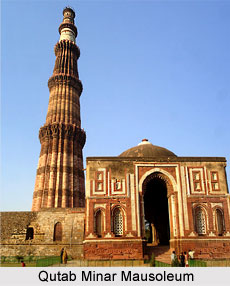
Unlike the other dominant Islamic rulers of Iran and Turkey, the Safavids and Ottomans, the Mughals ruled a land dominated by non-Muslims, largely Hindus. They adopted a policy of tolerance towards the indigenous religions and traditions. In many cases these were even respected by the Mughal rulers. This fact becomes more evident from their patronage of the arts, literature and music that comprised many indigenous elements. Over their 300-year rule, Mughal attitudes toward the native Indian population - Hindu and Muslim - varied; so did Mughal adaptation of earlier Indian art forms. During the earliest days of the Mughal patronage, little attention was paid to India's non-Islamic architectural traditions; however, during the reign of the third Mughal ruler, Akbar (1556-1605), indigenous Indian elements, both Hindu and Muslim, were incorporated into the Mughal structures. Mughal architecture was, thus, the result of innovative genius that borrowed from Indian, Timurid and even European sources. The Mughal artists interpreted these borrowed forms, both in terms of symbolism and style, to their own purposes. However, it goes without saying that the Mughal architecture owes its Islamic sources to the other Muslim dynasties as well: the Delhi Sultanate, the Khaljis, the Tughlaqs, the Lodhis, the Sayyids and the Surs. The Slave Dynasty laid the foundation of Islamic architecture in India. The initial monuments that were built by following the Islamic style were primarily mosques. In 1192, Qutb ud-Din Aibak, a military commander of the Afghan Ghori dynasty, defeated the last Hindu ruler of Delhi. Within a few years, a great deal of north India was under Ghori control, and in 1206 Aibak asserted his independence from the Ghoris, declaring himself sultan of India. He and his successors built architecture that served as one foundation of Mughal art. 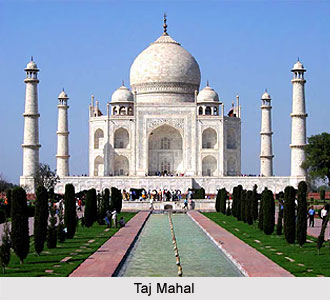 Aibak's first mosque, significantly now called the Quwwat al-Islam or Might of Islam, was erected in Delhi, the capital of the new Muslim. Calligraphy and verses from the Quran were used to embellish the prayer chambers. Later the Mughal architecture also followed this style. Mughal monuments like the Jama mosques and the Taj Mahal display these characteristics. With passing time the architectural motifs used in Islamic architecture were chosen from the indigenous culture. Motifs, such as the parrot, mangoes and flowers only found in India to supplement Persianate imagery, such as cedars and tulips, alien to the subcontinent. Many motifs - architectural and literary - had no strictly sectarian connotation. To call a motif Hindu or Muslim has little meaning, for elements such as the lotus or even trabeated architecture, still found in parts of Ala ud-Din's extension to the Quwwat al-Islam mosque, are now part of a well-established architectural tradition developed under the Indian sultans. Apart from these the tombs were also erected by following the Persian and Islamic idioms. Aibak's first mosque, significantly now called the Quwwat al-Islam or Might of Islam, was erected in Delhi, the capital of the new Muslim. Calligraphy and verses from the Quran were used to embellish the prayer chambers. Later the Mughal architecture also followed this style. Mughal monuments like the Jama mosques and the Taj Mahal display these characteristics. With passing time the architectural motifs used in Islamic architecture were chosen from the indigenous culture. Motifs, such as the parrot, mangoes and flowers only found in India to supplement Persianate imagery, such as cedars and tulips, alien to the subcontinent. Many motifs - architectural and literary - had no strictly sectarian connotation. To call a motif Hindu or Muslim has little meaning, for elements such as the lotus or even trabeated architecture, still found in parts of Ala ud-Din's extension to the Quwwat al-Islam mosque, are now part of a well-established architectural tradition developed under the Indian sultans. Apart from these the tombs were also erected by following the Persian and Islamic idioms.
However, Mughal architecture also owes its sources to the native Indian style. The handsome uses of jharokhas, chhatris, chajjas, torana motifs, etc mirror a direct influence of the indigenous architectural style. These elements are regular features of Rajput buildings. Mughal buildings, such as the palaces built by Akbar, the Red Fort and others reflect the Hindu influence despite the use of Islamic architectural prototypes. Such amalgamations were one of the obvious reasons why the Mughal Architecture was also known as the Indo-Islamic architecture. The recurrent Hindu features in the Mughal constructions included the balconies, half domed double portals, decorative brackets, ornate decorations, minars, etc. Although the Mughal architecture borrowed heavily from different styles but it was successful in reshaping the art and architecture of India. In fact, come of the most grandiose and magnificent Indian monuments were built under the Mughal reign. Moreover, with such incorporation of different sources, the Mughal style eventually came to represent not Mughal authority, but the cultural and social values established under the Mughals. |
| |||



Home > Reference > History of India > Medieval History of India > Islamic Architecture > Mughal Architecture > Sources Of Mughal Architecture
Sources Of Mughal Architecture
| Sources of Mughal Architecture can be found predominantly rooted in Islamic and indigenous Hindu styles. |
| ||||||||||||||||||||||||||||

