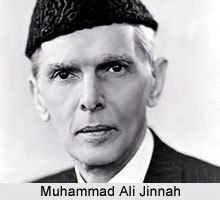
 Interim Government was the first democratic effort made in the pre-independence which could represent the entire major as well as minority group in India. Jinnah`s decision to remain out of the membership of Constituent Assembly, followed by his Direct Action Day and Great Calcutta Killing together, alarmed both the British as well as Congress which now insisted on the inclusion of the League in the Interim government. In a way to appease Jinnah, Gandhi accepted the formula of Nawab of Bhopal through which the Muslim League will be accepted as the authoritative representative of an overwhelming majority of Muslim population without giving up its right to choose any representative it thought proper for the interim government or representative. Jinnah on his reply agreed to participate in the interim government with his 9 points. When he communicated these points to Nehru he did not agree to some of them but later Jinnah got it accepted by Lord Wavell.
Jinnah entered the Interim Government with his 9 conditions which is popularly known as the Nine Points of Jinnah. These were mainly drafted keeping in mind the growing communal violence, his presidential status as well as the interest of the minorities.
As decided, the Interim Government was formed at the Centre on September 2, 1946 and the Congress took over the charge. The armed forces were predominantly Hindu and Sikh and the other Indian members of the services were also largely Hindu. Consequently, the formation of an Interim Government consisting only of the Indian National Congress nominees also initiated communal inferno. According to the Muslims, the formation of the Interim Government was an unconditional surrender of power to the Hindus, and moreover, the Muslims feared that the Governor General would be unable to prevent the Hindus from using their newly acquired power of suppressing Muslims all over India.
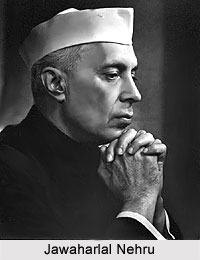
 The Viceroy and Jawaharlal Nehru proceeded with further discussions in regard to the strength and personnel of the interim Government. Nehru wanted to increase the strength to fifteen by the inclusion of an Anglo-Indian, but the Viceroy was disinclined to any increase that would make it difficult for the Muslim League to join the government. It was ultimately decided to keep the strength at fourteen. The names of six Congressmen, a Sikh, an Indian Christian and a Parsi, as well as three out of five Muslims, were agreed upon.
The Interim government was mainly used as a weapon by the Indian National Congress which included majority of Hindus as its members. Even Lord Wavell was also not happy with the composition of the Interim government. As such he insisted on the Jinnah`s participation along with Congress. He even made efforts to persuade Gandhi and Nehru but could not succeed .This alarmed Muhammad Ali Jinnah who now chose to participate on his own conditions with members like Liaqat Ali Khan, I.I. Chundrigar, Abdur Rab Nishtar, Ghazanfar Ali Khan and Jogendra Nath Mandal. Mandal belonged to the Scheduled Castes and was a minister in the Muslim League ministry of Bengal.
Interim Government portfolios were announced on October 25, 1946. Members from the Muslim League were thus sworn in on October 26, 1946. The League though entered the interim government yet Jinnah refrained from accepting office for himself.
Along with the Muslim League the Sikhs too expressed their disagreement with the proposal of Cabinet Mission for the creation of an Interim Government which got infuriated with the composition of the Interim government that mainly included Hindus and later Muslims as their members. The Congress High Command called upon the Congress Sikhs to file their nominations for elections to the Constituent Assembly. In this regard, Baldev Singh wrote to Prime Minister Attlee seeking his personal intervention.
On a reply to the grievances placed by the Sikh community on the Interim government, the Congress Working Committee, noting all these factors, passed a resolution assuring the Sikhs that the Congress would give them all possible support in removing their legitimate grievances and in securing adequate safeguards for the protection of their just interests in the Punjab.
Thus, all efforts were made to make the interim government as representative as possible. As the complexion of the interim government and successful working of the executive council will decide the fate of the future India, it as a result became very necessary to run this Interim Coalition Government as smoothly as possible.