|
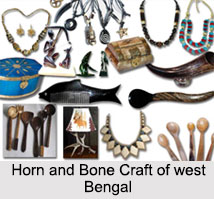 The craftsmen of West Bengal has gained the admiration of the nation with their fine works of artistry but their main piece of artefact was the making of horn and bone crafts. The horn craft of West Bengal portrays the traditional affluence of the past reign. It is known that from the ancient ages of the Indian civilisation, horn combs were shining black and had translucent shades of grey. These pieces of art adorned the tresses of women in those times. Back in the day, in West Bengal, the artisans of a village called Baishnabchak in Midnapore did a flourishing business in horn combs. Combs made out of horn were trusted to be excellent for the hair and scalp. But soon after, the horn combs began to lose ground in the market because of its appearance and the availability of cheaper plastic combs. To overcome the crisis, the State Government introduced different measures for diversification and today, the craftsmen are engaged in the production of a wide range of horn products like walking sticks, pen stands, napkin rings, spoons, knobs and handles etc. The craftsmen of West Bengal has gained the admiration of the nation with their fine works of artistry but their main piece of artefact was the making of horn and bone crafts. The horn craft of West Bengal portrays the traditional affluence of the past reign. It is known that from the ancient ages of the Indian civilisation, horn combs were shining black and had translucent shades of grey. These pieces of art adorned the tresses of women in those times. Back in the day, in West Bengal, the artisans of a village called Baishnabchak in Midnapore did a flourishing business in horn combs. Combs made out of horn were trusted to be excellent for the hair and scalp. But soon after, the horn combs began to lose ground in the market because of its appearance and the availability of cheaper plastic combs. To overcome the crisis, the State Government introduced different measures for diversification and today, the craftsmen are engaged in the production of a wide range of horn products like walking sticks, pen stands, napkin rings, spoons, knobs and handles etc.
Bengal horn is still a fascinating craft, the villages of Baishnabchak and Joleghanshyanof, Gupiganj, Baruipur, Malda and some other areas around Kolkata are engaged in horn handicraft. There are over 400 skilled artisans from in and around these places, who are still the bearer of this ancient tradition. The chief centres of horn comb used to be in erstwhile undivided Bengal, the roots of it go back to Dacca and Bakhargunj, also known as Barisal in Bangladesh. These handicrafts of horn and bone are most commonly made from animals like the buffalo, camel, elephant and cow. In West Bengal, buffalo horn is the most common one, where the horn is heated, flattened and then cut and shaped or carved accordingly. In some states, like Uttar Pradesh and Rajasthan, the use of camel bone is very common in the inlay while making jewellery.
Horn bone crafts in West Bengal include making exotic pieces like bullock carts, trail of elephants, patterns carved on the complete tusk, engraved jewellery boxes, chariots with horses and many more with immense dexterity. The craftsmen are skilled in creating holy figures and deities like Goddess Lakshmi, Goddess Durga and Lord Ganesh out of horn bones. Some places of West Bengal were greatly admired as the artisans used to create gorgeous ivory panels which were part of the beds, ‘simhasans’ or the royal chairs, palanquins, thrones. Moreover, artisans of Midnapur still make combs from horns which are meticulously embellished in varied shapes and fashions.
The horn bone crafts stand unique because of the fusion of different motifs while still upholding the past traditions of Bengal with a tinge of contemporary touch. The present market scenario of these object show that the artisans have the potentiality to adapt to understand the demand of the mass and modify accordingly.
|





