
 Originally performed at Sufi shrines throughout what is now India and Pakistan, it has also gained mainstream popularity. Qawwali music received international exposure through the work of the late Nusrat Fateh Ali Khan of Pakistan, who was picked up by the Real World label and also collaborated with many non-Sufi musicians in crossover efforts.
Qawwali - Islamic Music
This is a traditional form of Islamic music usually found in India and Pakistan. Qawwali is a vibrant musical tradition of India, which dates back to more than 700 years and is still a surviving art of music today.
Introduction
Originally performed at Sufi shrines throughout what is now India and Pakistan, it has also gained mainstream popularity. Qawwali music received international exposure through the work of the late Nusrat Fateh Ali Khan of Pakistan, who was picked up by the Real World label and also collaborated with many non-Sufi musicians in crossover efforts.Origin of Qawwali
Qawwali has its root back to 8th century Persia, however Amir Khusrau created the form of today in the late 13th century in India. He fused the Persian and South Asian musical traditions to create Qawwali. In Central Asia and Turkey, it is known as Sama and even in India and Pakistan, Mehfil-e-Sama is the formal term used for Qawwali. The Qawwali songs are mostly heard in Urdu and Punjabi, but they are also available in Persian, Brajbhasha and Siraiki. The fascination of Qawwali can be enjoyed in some regional languages also but the sound of it is quite different from the conventional counterpart. For example, Chhote Babu Qawwal sings in Bengali whose tune is much like Baul music than the Qawwali of Nusrat Fateh Ali Khan.
In the Indian subcontinent four major Sufi Tariqas (orders) have formed a strong base, these are: Chistiya, Qadiriya, Suhrawardiyya and Naqshbandiya. Amongst these four, the Chistiya order has contributed the most to the patronisation and proliferation of qawwali in the subcontinent. As Sufism spread through this region imbibing its local flavours, languages, customs and cultural practices, qawwali too has undergone several changes. One can find Marathi, Dakhini and Bangla qawwali adding to the already existing repertoire of Indic qawwali performances.
In the Indian subcontinent four major Sufi Tariqas (orders) have formed a strong base, these are: Chistiya, Qadiriya, Suhrawardiyya and Naqshbandiya. Amongst these four, the Chistiya order has contributed the most to the patronisation and proliferation of qawwali in the subcontinent. As Sufism spread through this region imbibing its local flavours, languages, customs and cultural practices, qawwali too has undergone several changes. One can find Marathi, Dakhini and Bangla qawwali adding to the already existing repertoire of Indic qawwali performances.
History of Qawwali
 Qawwali is a form of Sufi devotional music popular in South Asia and the history of Qawwali stretches back more than 700 years, particularly in areas with a historically strong Muslim presence, like southern Pakistan, and parts of North India. The style is rare, though not entirely obscure, in North and West Pakistan, Bangladesh, and Kashmir. Qawwali is a vibrant musical tradition, where often listeners, and even artists themselves, are transported to a state of wajad, a trance-like state where they feel at one with God, generally considered to be the height of spiritual elation in Sufism, and the ultimate goal of the practice.
Qawwali is originally performed at Sufi shrines or dargahs throughout the subcontinent; it has also gained mainstream popularity. Qawwali music received international popularity through the work of the late Pakistani singer Nusrat Fateh Ali Khan, largely owing to several releases on the Real World label, followed by live appearances at Womad festivals. Other famous Qawwali singers include Pakistan`s Sabri Brothers.
Although famous throughout the world, the haven for Qawwali music remains the Punjab province of Pakistan from where it gained entry into the mainstream commercial music industry and international fame. The roots of Qawwali can be traced back to 8th century Persia. During the first major migration from Persia, in the 11th century, the musical tradition of Sema migrated to the Indian subcontinent, Turkey and Uzbekistan. Amir Khusro Dehelvi of the Chisti order of Sufis is credited with fusing the Persian and Indian musical traditions to create Qawwali. The word Sama is often still used in Central Asia and Turkey to refer to forms very close to Qawwali, and in India, Pakistan and Bangladesh, the formal name used for a session of Qawwali is Mehfil-e-Sama.
Qawwali is the style of singing of Qaww?ls, Qaul (Arabic) is an "utterance (of the prophet)" and Qaww?l is someone who often repeats (sings) a Qaul. The songs, which constitute the qawwali repertoire, are mostly in Urdu and Punjabi, almost equally divided between the two, although there are several songs in Persian, Brajbhasha and Siraiki. There is also qawwali in some regional languages like Chhote Babu Qawwal sings in Bengali, but the regional language tradition is somewhat ambiguous. Also, the sound of the regional language qawwali can be completely different from that of the real qawwali. This is certainly true of Chhote Babu Qawwal, whose sound is much similar to Baul music than to the qawwali of Nusrat Fateh Ali Khan.
The poetry of the Qawali song is implicitly understood to be spiritual in its meaning, even though the lyrics can sometimes sound passionately secular, or outright hedonistic. The prime themes of qawwali are love, devotion and longing (of man for the Divine). Since the origin of Qaww?li, the songs are classified by their content into several categories. A hamd (arabic for praise) is a song in praise of Allah. Qaww?li is categorized into various forms according to its purpose and ways of singing. This form of singing have become immensely popular in present days, not only in functions like weddings and parties but also in Bollywood movies.
Lyrics of Qawwali
The songs, which constitute the qawwali range, are mostly in Urdu and Punjabi, though there are several songs in Persian, Brajbhasha and Siraiki. The central themes of qawwali are love, devotion and longing (of man for the Divine).
Lyrics of Qawwalis are classified by their content into several categories, they are Hamd or praise of allah, Naat or praise of Muhammad, Manaqib or praise of either Imam Ali or one of the Sufi saints, Marsiya or lamentation for a dead person, Ghazal or love song, Kafi or Punjabi poems, Munajaat or conversation in the night or a form of prayer.
Lyrics of Qawwalis are classified by their content into several categories, they are Hamd or praise of allah, Naat or praise of Muhammad, Manaqib or praise of either Imam Ali or one of the Sufi saints, Marsiya or lamentation for a dead person, Ghazal or love song, Kafi or Punjabi poems, Munajaat or conversation in the night or a form of prayer.
Features of Qawwali Songs
 Songs in Qawwali are usually between 15 to 30 minutes long. However, the longest commercially released Qawwali runs slightly over 115 minutes. The qawwali maestro Nusrat Fateh Ali Khan has at least two songs that are more than 60 minutes long. Qawwalis tend to begin gently and build steadily to a very high energy level in order to induce hypnotic states both among the musicians and within the audience.
Composition of Qawwali Group
A Qawwali group consists of eight or nine men including a lead singer, one or two side singers, one or two harmoniums and percussion. There is also a chorus group of four or five men who repeat key verses, and who help and back up percussion by continuous and rhythmic hand clapping. The performers generally sit in two rows with the lead singer, side singers and harmonium players in the front row, and the chorus and percussionists in the back row. The harmonium got preferred in Qawwalis as the earlier used sarangi needed to be retuned between songs.
They start with an instrumental prelude where the main melody is played on the harmonium, accompanied by the tabla, and which may include improvised variations of the melody. Then comes the alap, a long tonal improvised melody during which the singers intone different long notes, in the raag of the song to be played. The lead singer begins to sing some preamble verses, which are typically not part of the main song, although thematically related to it. These are sung not rhythmically, but improvised following the raag, and accompanied only by the harmonium. After the lead singer sings a verse, one of the side singers will repeat the verse, perhaps with his own improvisation. A few or many verses will be sung in this way, leading into the main song.
As the main song begins, the tabla, dholak and clapping begins. All members join in the singing of the verses that constitute the refrain. Normally neither the lyrics of the main verses nor the melodies that go with them are improvised. In fact, these are often traditional songs sung by many groups, especially within the same lineage. As the song proceeds, the lead singer or one of the side singers may break out into an alap. Nusrat Fateh Ali Khan also popularized the interjection of sargam singing at this point. The song usually builds in tempo and passion, with each singer trying to outdo the other in terms of vocal acrobatics. Some singers may do long periods of sargam improvisation, especially alternating improvisations with a student singer.
They start with an instrumental prelude where the main melody is played on the harmonium, accompanied by the tabla, and which may include improvised variations of the melody. Then comes the alap, a long tonal improvised melody during which the singers intone different long notes, in the raag of the song to be played. The lead singer begins to sing some preamble verses, which are typically not part of the main song, although thematically related to it. These are sung not rhythmically, but improvised following the raag, and accompanied only by the harmonium. After the lead singer sings a verse, one of the side singers will repeat the verse, perhaps with his own improvisation. A few or many verses will be sung in this way, leading into the main song.
As the main song begins, the tabla, dholak and clapping begins. All members join in the singing of the verses that constitute the refrain. Normally neither the lyrics of the main verses nor the melodies that go with them are improvised. In fact, these are often traditional songs sung by many groups, especially within the same lineage. As the song proceeds, the lead singer or one of the side singers may break out into an alap. Nusrat Fateh Ali Khan also popularized the interjection of sargam singing at this point. The song usually builds in tempo and passion, with each singer trying to outdo the other in terms of vocal acrobatics. Some singers may do long periods of sargam improvisation, especially alternating improvisations with a student singer.
Types of Qawwali
 Qawwali is a form of Sufi devotional music popular in South Asia, particularly in Muslim presence, such as southern Pakistan, and parts of North India. The style is rare, though not entirely absent, in North India and West Pakistan, Bangladesh, and Kashmir.
Types of Qawwali songs are categorised according to the timings of their singing and lyrics of the song. Traditionally, a qawwali performance starts with a hamd. A Naat is the Arabic term for description and is a song in praise of the Prophet Muhammad. The opening hamd is traditionally followed by a naat. A manqabat is a song in praise of either Imam Ali or one of the Sufi saints. Interestingly, manqabats in praise of Ali are sung at both Sunni and Shi`a gatherings. If one is sung, it will follow right after the naat. There is usually at least one manqabat in a traditional programme. A marsiya or lamentation for a dead person is sung over the death of much of Imam Husayn`s family in the Battle of Karbala. Once again, this would typically be sung only at a Shia concert.
A ghazal or love song is a song that sounds secular on the face of it. There are two extended metaphors that run through ghazals -- the joys of drinking and the agony of separation from the beloved. These songs feature exquisite poetry and can certainly be taken at face value and enjoyed at that level. In fact, in Pakistan and India, ghazal is also a separate, distinct musical genre in which many of the same songs are performed in a different musical style, and in a secular context. In the context of that genre, the songs are usually taken at face value, and no deeper meaning is necessarily implied. But in the context of qawwali, Qawwali songs of intoxication and yearning use secular metaphors to poignantly express the souls longing for union with the Divine, and its joy in loving the Divine.
In the songs of intoxication, "wine" represents "knowledge of the Divine", the "cupbearer" (saaqi) is God or a spiritual guide, the "tavern" is the metaphorical place where the soul may (or may not) be fortunate enough to attain spiritual enlightenment. (The "tavern" is emphatically not a conventional house of worship. Rather, it is taken to be the spiritual context within which the soul exists.) Intoxication is attaining spiritual knowledge, or being filled with the joy of loving the Divine. In the songs of yearning, the soul, having been abandoned in this world by that cruel and cavalier lover, God, sings of the agony of separation, and the depth of its yearning for reunion. A kafi is a poem in Punjabi, Seraiki or Sindhi, which is in the unique style of poets such as Shah Hussain, Bulle zh Shah and Sachal Sarmast. Two of the better - known Kafis include Ni Main Jana Jogi De Naal and Mera Piya Ghar Aaya. A munadjaat or conversation in the night is a song where the singer displays his thanks to Allah through a variety of linguistic techniques. It is often sung in Persian, with Mawlana Jal?l-ad-D?n Rumi credited as its inventor.
A group of qawwali musicians, called a party, typically consists of eight or nine men. The women were usually excluded from traditional Muslim music as respectable women are traditionally prohibited from singing in the presence of men, though these traditions are changing and women also participate in different types of Qawwalis. A lead singer, one or two side singers, one or two harmoniums, which may be played by the lead singer, side singer or someone else and percussion makes the complete group for Qawwali. If there is only one percussionist, he plays the tabla and dholak, usually the tabla with the dominant hand and the dholak with the other one, i.e. a left-handed percussionist would play the table with his left hand. Often there will be two percussionists, in which one might play the tabla and the other the dholak. There is also a chorus of four or five men who keep on repeating key verses, and who aid and support percussion by hand clapping.
The performers of Qawwali sit cross-legged on the ground in two rows and the lead singer, side singers and harmonium players in the front row, and the chorus and percussionists in the back row. Before the fairly recent introduction of the harmonium, qawwalis were usually accompanied by the sarangi. The sarangi had to be played in between songs; the harmonium was soon preferred in Qawwalis.
Famous Qawwali Singers
Chanchal Bharati is one of the eminent singers from the qawwal group from India. Zaki Taji Qawwal along with his elder son Mohammad Zaman Zaki Taji lead the male team of this group. It has always been a fight between love and beauty, which ends in compromise. Some famous qawwals are Aziz Mian, Badar Ali Khan, aka Badar Miandad, Bahauddin Qutbuddin, Fateh Ali Khan, Habib Painter, Iqbal Hussain Khan Bandanawazi, Munshi Raziuddin, Nizami Bandhu, Nusrat Fateh Ali Khan, Sabri Brothers, Wadali Brothers, Warsi Brothers, Qutbi Brothers etc.
Women used to be excluded from traditional Muslim music, since they are traditionally prohibited from singing in the presence of men. These traditions have changed, as is evident by the popularity and acceptance of female singers such as Abida Parveen. However, qawwali has remained an exclusively male business. There are still no mainstream female qawwals. Although kafi singer Abida Parveen has increasingly incorporated qawwali techniques into her performances, she is still not considered a qawwali singer.
People have always lapped up Qawwalis, especially those with two groups, each trying to outwit the other with poetry and innovative style of rendition. Qawwali has entered the big fat Indian weddings too. It is in danger of being upstaged by qawwali nights, now a regular feature in weddings, where budgets are not an issue.
Women used to be excluded from traditional Muslim music, since they are traditionally prohibited from singing in the presence of men. These traditions have changed, as is evident by the popularity and acceptance of female singers such as Abida Parveen. However, qawwali has remained an exclusively male business. There are still no mainstream female qawwals. Although kafi singer Abida Parveen has increasingly incorporated qawwali techniques into her performances, she is still not considered a qawwali singer.
People have always lapped up Qawwalis, especially those with two groups, each trying to outwit the other with poetry and innovative style of rendition. Qawwali has entered the big fat Indian weddings too. It is in danger of being upstaged by qawwali nights, now a regular feature in weddings, where budgets are not an issue.
Recently updated articles in Music in India
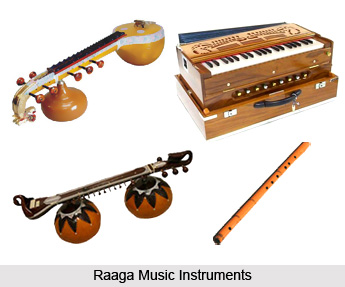
Classification of Raagas in Carnatic Music
Classification of Raagas in Carnatic music is based on scale type, devised as a system for raagas that existed as well as those that were in the proce...
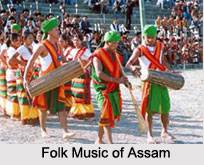
Folk Music of Assam
Folk Music of Assam reflects the outdoor and indoor life of the folk people and it does not follow any strict rule of composition and performance. Fol...
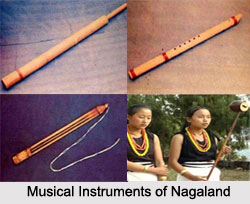
Musical Instruments of Nagaland
Musical Instruments of Nagaland reflect its rich tribal heritage and deep cultural roots. Crafted from natural materials like bamboo, wood, and animal...

Rasa, Hindustani Music
Rasa is an important part of Hindustani Music. Here the creative experience of the artist i.e. musician and the aesthetic response of the connoisseurs...
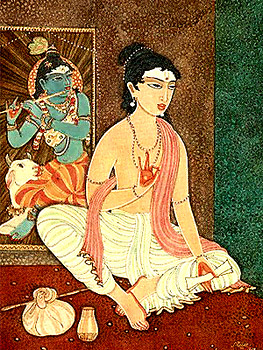
Kshetrajna, Telugu Poet and Composer
Kshetrajna (1600 - 1680) was a creative Telugu poet and composer of Carnatic music. He composed several padams and keertanas.
Related articles in Music in India
Kriti Carnatic Music
Kriti refers to one of the most widely used genres of Carnatic music. It originated from the kirtanas of the bhaktas, i.e., musicians who expressed th...
Indian Folk Music
Indian Folk Music is full of rustic charm. The appeal of Indian folk music lies in the simplicity of its style and lyrics. Most of the folk songs are...
Haryanvi Music
Haryanvi music is the folk music of the state of Haryana and is sung in western Uttar Pradesh along with the neighbouring districts of Rajasthan and P...
Carnatic Music
Carnatic music, also known as `Karnataka Sangitam`, is one of the two styles of Indian classical music.