|
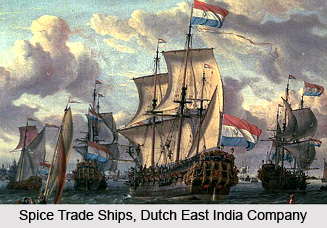 History of Indian spices is recorded from the time of inception before the invasion of Arabs in the year 711 AD. The story of Indian spices is more than 7000 years old. Centuries before Greece and Rome had been discovered, sailing ships were carrying Indian spices, perfumes and textiles to Mesopotamia, Arabia and Egypt. It was the lure of these that brought many seafarers to the shores of India. History of Indian spices is recorded from the time of inception before the invasion of Arabs in the year 711 AD. The story of Indian spices is more than 7000 years old. Centuries before Greece and Rome had been discovered, sailing ships were carrying Indian spices, perfumes and textiles to Mesopotamia, Arabia and Egypt. It was the lure of these that brought many seafarers to the shores of India.
In the ancient era, the Greek merchants thronged the markets of south India, buying several expensive items including the spices. Epicurean Rome was spending a fortune on Indian spices, silks, brocades, Dhaka muslin and cloth of gold, etc. It is believed that the Parthian wars were being fought by Rome largely to keep open the trade route to India. It is also said that Indian spices and her famed products were the main lure for crusades and expeditions to the East.
With the arrival of the Muslims the scenario altered further. An assortment of spices was used in Muslim preparations and the usage of such spices was popularised throughout the nation under the Muslim rule. As a result such spices gradually became a part of the Indian cuisines. Indian spice trading underwent changes once again during the colonial rule. As far as trading is concerned the Arabian traders were quite instrumental in popularising the Indian spices in the different corners of the world. In India, Arabian traders got the rare and exotic spices of the Far East from local spice merchants. India had spent the previous two millennia spreading its culture to the Spice Islands of the east. Arabian traders were able to make a considerable amount of money supplying these spices, even with the high prices paid to the Indian middle men, not only to their countrymen back home, but to Europe as well.
It was in the year 1492 A.D., that Christopher Columbus discovered the New World. Five years later, four tiny ships sailed southward from the port of Lisbon, Portugal, under the guidance of Captain Vasco Da Gama. Like Columbus, Vasco Da Gama too was searching for a new route to the spice lands of Asia. While Columbus failed to achieve the goal, Da Gama succeeded. In a two year, 24,000 miles round trip, he took his ships around the continent of Africa to India and back to Lisbon. Only two of the four ships survived to reach their homeport. These two ships brought back a cargo of spices and other products worth 60 times the cost of the said voyage. Even under the Dutch rule spice trading in India was encouraged. However a combination of spices spread throughout the world as currys powder with the coming of the British.
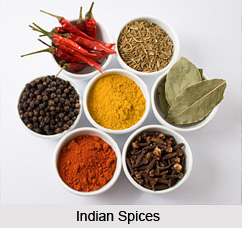
The British reign in modern India encouraged the spice trading in India. Sandalwood, turmeric, saffron, coriander and a host of other Indian spices were exported from India to other parts of the world. Post independence the trade of Indian spices kept flourishing and a Board of Spices was established to look after the industry. The history of Indian spices depicts that these ingredients were also used in alternative medicines. For instance Ayurveda makes use of several herbs that are also used for culinary purposes. Aloe Vera, cloves, cinnamon, turmeric, black pepper, etc had been extensively used in Ayurvedic medicines.
|





