


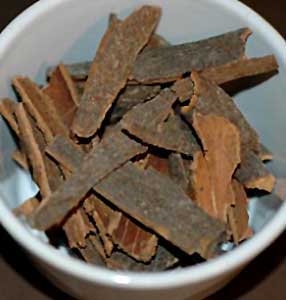
 History of Cinnamon starts in India with the Dutch trade routes. Cinnamon has been known from distant antiquity, and it was so highly treasured among primeval nations that it was regarded as a gift fit for monarchs and other great potentates. History of Cinnamon starts in India with the Dutch trade routes. Cinnamon has been known from distant antiquity, and it was so highly treasured among primeval nations that it was regarded as a gift fit for monarchs and other great potentates.
Later, Cinnamon was imported to Egypt from China as early as 2000 BC, and is mentioned in the Bible in Exodus 30:23, where Moses is known to use both sweet cinnamon and cassia. In their mythology it is stated that the lover's bed is perfumed with myrrh, aloe and cinnamon. Herodotus and other classical writers also write about it. Cinnamon was commonly used on funeral pyres in Rome, and the Emperor Nero is said to have burned a year's supply of cinnamon at the funeral for his wife Poppaea Sabina, in 65 AD. In the Middle Ages, the history of cinnamon was a mystery to the western world. Arab traders brought the spice of Cinnamon via overland trade routes to Alexandria in Egypt, where Venetian traders from Italy who held a monopoly on the spice trade in Europe bought it. The disorder of this trade by the rise of other Mediterranean powers such as the Mameluk Dynasties and the Ottoman Empire was one of several factors that forced Europeans to search more widely for other routes to Asia. Portuguese traders finally discovered Ceylon (Sri Lanka) at the end of the fifteenth century, and modernised the traditional production of cinnamon by the salagama caste. The Portuguese established a fort on the island in 1518, and faultlessly protected their own monopoly for over a hundred years. Dutch traders finally extricated the Portuguese by making treaty with the inland Ceylon kingdom of Kandy. They established a trading post in 1638 and took control of the factories by 1640. Finally, they expelled all remaining Portuguese by 1658. The Dutch East India Company continued to renovate the methods of harvesting Cinnamon in the wild, and eventually began to cultivate its own Cinnamon trees. The British took control of the island from the Dutch in 1796. However, the importance of the monopoly of Ceylon was already declining, as cultivation of the cinnamon tree spread to other areas and also into India, the more common cassia bark became more acceptable to consumers, and coffee, tea, sugar and chocolate began to outstrip the popularity of traditional spices. Since the British era, various uses of Cinnamon were noticed and the usage spread rapidly all across the nation. Eventually, Cinnamon was used as an important ingredient in Ayurvedic mixtures and is still used in various foods and medicinal mixtures. The history of Cinnamon has a strong influence in its contemporary importance and this spice is noticeably used in south India. |
| |||



Home > Society > Indian Food > Indian Spices > Types of Spices > Bark Type Spices > Cinnamon > History of Cinnamon
History of Cinnamon
| History of Cinnamon in India states this spice to be first introduced in India through trade with Dutch traders. |
| ||||||||||||||||||||||||||||

