


 Embroidery of Punjab has an age long tradition and the major centres of this traditional art of embroidery are located in different parts of Punjab. The well-known embroidery of Punjab is the Phulkari embroidery. The artisans involved in embroidery work in Punjab are deft in creating several kinds of embroidery stitches on shawls, cardigans, scarves, table covers, cushion and bedspreads. Embroidery of Punjab has an age long tradition and the major centres of this traditional art of embroidery are located in different parts of Punjab. The well-known embroidery of Punjab is the Phulkari embroidery. The artisans involved in embroidery work in Punjab are deft in creating several kinds of embroidery stitches on shawls, cardigans, scarves, table covers, cushion and bedspreads.
History of Embroidery in Punjab As per the historical background of the embroidery of Punjab, it has been traced that the art form has a tradition of almost 2000 years. In fact, references to Phulkari embroidery is found in the ancient scriptures like the Vedas as well. In addition to that, the famous poet Waris Shah had mentioned about the art of Phulkari in the popular Punjabi legends of Heer-Ranjha. It has also been traced that the embroidery of Punjab, especially the Phulkari embroidery had attained its present form way back in the 15th century in the reign of Maharaja Ranjit Singh. It was practiced in many different forms and separate designs were prevalent in separate occasions. Techniques of Embroidery in Punjab Following the tradition, the embroidery of Punjab is done on handspun khadi cloth. Simple darning stitches are made using un-spun silk floss thread which is called 'pat'. This particular design needs intricacy and delicacy and due to this certain fact, the Punjabi embroidery has become one of the most sought-after forms of embroideries. Depending on the variation of the embroidery of Punjab, the stitches vary from vertical, horizontal to diagonal. The artisans create salwar-kameez, shawls, heavy dupattas, stoles, sarees, etc. using Phulkari and other embroideries that are hugely practiced in Punjab. Tradition of Embroidery in Punjab The most common and beautiful motif used in the embroidery of Punjab is based on the wheat and barley stalks that grow all over Punjab. The Phulkari embroidery is used in creating attires and clothes for different occasions. The communities of the artisans who are engaged in embroidery of Punjab create Chope which is a red coloured cloth that has Phulkari on the borders and edges. This type of cloth is presented to a bride by her grandmother, just before the wedding. Vari-da-bagh which is basically a red coloured cloth that has embroidery in small patterns all over in yellow, is the connotation of fertility and happiness. Apart from these clothes the artisans create Ghunghat Bagh also known as sari-pallau, Darshan Dwar, Suber, Chamba which is embroidered with the inspiration received from the vicinity including fauna like chilies, peacocks, diamonds, sunflowers, etc. 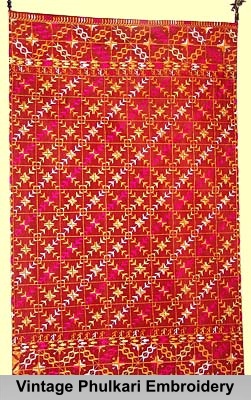 Types of Embroidery in Punjab Types of Embroidery in Punjab
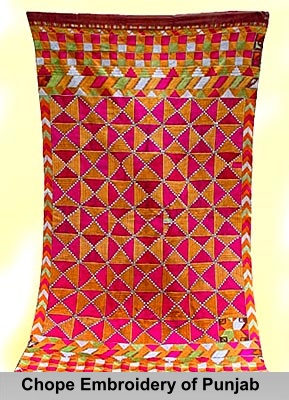
Embroidery of Punjab is the art of creating intricate designs on fabrics with different coloured threads. The Phulkari embroidery, the most popular form of embroidery in the state is the connotation of growing of flowers. Others forms of embroidery in Punjab includes practicing one of the well-known crotchet work, called Chetipani. Another form of embroidery is Athakupani or joint attachment where different kinds of flower designs are fluxed to form the patterns. Another very useful item made by the artisans of Punjab is 'khes' which is made of coarse yarn. Phulkari Embroidery Phulkari, the folk embroidery of Punjab, goes beyond its literal translation of "floral work". Thus, the motifs and patterns of Phulkari essentially contain floral designs and motifs. The artisans use bright and vibrant colours to accentuate the floral patterns and these patterns are found in almost all traditional attires. Executed primarily by Punjabi women, this intricate craft of Punjab involves the meticulous use of darn stitch on the reverse side of coarse cotton cloth, embellished with vibrant silken threads. The skilled manipulation of the darn stitch by these artisans results in a plethora of alluring designs and patterns. Traditional Phulkaris, characterized by their expansive size, exhibit various styles, each with its unique charm. Bagh Embroidery The embroidery of Punjab, predominantly the Phulkari embroidery was done on the 'odhnis' in the past eras. Over the years this ancient form of embroidery of Punjab became heavy and intricate. The heavily embroidered 'odhnis' came to be known as 'bagh' which means garden. In this style the embroidery covered every inch of the entire base material so that the cloth was completely invisible. This embroidery uses vibrant colours like white, dark blue, red, black and brown. Imported floss silk yarn from China or Afghanistan was also used after dyeing the materials. The embroidering is now done from the reverse side of the fabric with the silk yarn which gives a shaded effect to the fabric. The embroidered material gets the intricate work of colours and the finished item stands as the creative exuberance of the artisan. The motifs used in the embroidery are 'karela bagh', 'gobhi bagh', 'dhaniya bagh' and 'mirchi bagh' which are based on motifs inspired by vegetables. On the flip side of it, 'shalimar charbagh 'and 'chaurasia bagh' are motifs based on the renowned gardens. The artisans use a few motifs like Satrangas which are seven-coloured motifs and panchrangas that are five-coloured motifs in the embroidery works. Athakupani embroidery Athakupani or joint attachment is a form of folk embroidery in Punjab where different kinds of flower designs are fluxed to form the patterns. These patterns and designs are basically inspired from floral, nosegay, almond and date motifs. The colours of the threads are black and brown and the designs are created to bring white weaves in the coloured designs. These embroideries of Punjab include items like curtains, bedspreads, furniture covers and dress material. Aari Embroidery Aari embroidery, renowned for its intricate and delicate thread work, holds a distinct place as a form of hand embroidery, particularly in Punjab. Originating from the Mughal era, Aari artistry primarily employs the chain stitch to create exquisite motifs inspired by leaves, vines, flowers, trees, birds, and animals. This embroidery style has seamlessly transitioned into contemporary fashion, adding a timeless charm to ethnic wear. Aari embroidery is unique for its incorporation of beads and stones, skillfully arranged to produce a dazzling effect, forming intricate web-like patterns that enhance the overall aesthetic. While Aari work primarily involves thread and needle techniques, the addition of stones and embellishments imparts a luxurious touch. Versatile in nature, Aari embroidery is done on various fabrics like velvet, silk, cotton, cotton silk, and chanderi, making it suitable for all seasons and appealing to a diverse demographic. Chope Embroidery Chope embroidery is a significant feature in Punjab's wedding rituals. It introduces a splendid and reversible phulkari known as a chope. This ceremonial wrap is a large red chaddar adorned with elaborate embroidery in yellow and gold threads. The chope's distinctive design is characterized by geometric shapes, particularly triangles and lattice formations, occasionally featuring peacock or cow motifs. Noteworthy are the thin lines within the pattern, embroidered in colors other than yellow or red, serving as nazarbuti motifs believed to ward off misfortune and malevolent stares from the bride. Executed with a double running stitch, the embroidery is visible on both sides of the chope, creating a visually stunning piece. The density of decoration varies, with the longer sides adorned more lavishly than the middle, and the absence of borders on the short sides results in a red stripe running lengthwise through the chaddar. This design element symbolizes endless fortune for the bride who dons the chope, adding a touch of cultural significance to this exquisite form of Punjab's textile art. Darshan Dwar Embroidery Darshan Dwar embroidery, a distinctive type of phulkari with spiritual significance, is typically donated to temples and gurudwaras. The red base fabric serves as a canvas for the vibrant threads, predominantly in yellow hues, creating a textile known as darshan dwar phulkari, meaning "the gateway (dwar) for beholding the divine (darshan)." The embroidery features columns along the fabric's sides, adorned with arches pointing away from the center, resembling a pathway. The central space is animated with depictions of human and animal figures, creating the ambiance of a bustling street. Geometric shapes, predominantly diamonds, stars, and triangles, embellish the borders. The embroidery of Punjab has gained recognition in all over India. The items made following the designs of the embroidery of Punjab are most coveted items in the local market and in the Indian market as well. Keeping in mind the modern fashion, the embroidery of Punjab is made on items like saris, bedcovers and home furnishing in bright and vivid colours. |
| |||



Home > Art & Culture > Indian Crafts > Crafts of Indian States > Crafts of Punjab > Embroidery of Punjab
Embroidery of Punjab
| Embroidery of Punjab has a distinguishable character and the items mirror the exemplary artistic tradition. Embroidery works like Phulkari, Aari, Chope, and Darshan Dwar showcase the region`s rich heritage, making Punjab`s textile art an expression of craftsmanship and tradition. |
| ||||||||||||||||||||||||||||

