
 The Indian traditional costumes are as varied and diverse as the culture of the country. The many beautiful, bright and unique attires of the country vary even from state to state due to the great geographical diversity of the country. The traditional costumes in India are also worn depending on the natural fibres that are popularly grown in that particular area. Despite the current prevalence of western style of dresses, when festivities and other occasions are in vogue, Indian traditional costumes are the preferred forms of attire. An outstanding feature of the Indian traditional costumes is the bright hues and fine textures of the clothes. Every region in India is distinct in its language, lifestyle and food and this diversity is reflected in its traditional dressing as well.
Indian Traditional Costumes
Known for its elegance, the traditional Indian costume is diverse and greatly varied.
Introduction
The Indian traditional costumes are as varied and diverse as the culture of the country. The many beautiful, bright and unique attires of the country vary even from state to state due to the great geographical diversity of the country. The traditional costumes in India are also worn depending on the natural fibres that are popularly grown in that particular area. Despite the current prevalence of western style of dresses, when festivities and other occasions are in vogue, Indian traditional costumes are the preferred forms of attire. An outstanding feature of the Indian traditional costumes is the bright hues and fine textures of the clothes. Every region in India is distinct in its language, lifestyle and food and this diversity is reflected in its traditional dressing as well.History of Indian Traditional Costume
A variety of weaving techniques were employed in ancient India, many of which survive to the present day. Silk and cotton were woven into various designs and motifs, each region developing its distinct style and technique. Famous among these weaving styles were the Jamdani, butidar and the Ilkal saree. Inspired by Persian designs, brocades of silk were woven with gold and silver threads. Integral to the history of the Indian traditional costume is the Kashmiri shawl, which includes the varieties of Shahtoosh, popularly known as the "ring shawl" and the pashmina wool shawls. The most prized Kashmiri shawl was the Jamavar and the Kanika Jamavar. Eventually with changing times and eras, came forth the tyrannical rule of the British Empire, after which India promoted the movement to attain self sufficiency and endorsed Indian goods while actively boycotting British products in the market. This was idealised in the production of Khadi, whose products were encouraged by the nationalist leaders over British goods, while also being seen as a means to empower the rural artisans.
Types of Indian Traditional Costume
Having evolved over time, the Indian traditional costume is not only used in daily wear but also on festive occasions as well as rituals and dance performances. The Indian traditional costume encompasses the wide variety of Indian embroidery, prints, handiwork and embellishment. Discussed elaborately below are the myriad types of Indian traditional costumes.
Saree: Ostensibly, the simplest item of clothing possible, the saree is a single length of fabric stretching up to 9m long and can be draped in a dozen of ways. The saree spans all of Indian society, from simple cotton versions that are woven in the street throughout the villages of India to extremely glamorous contemporary styles. Every region of India has its own unique saree style, with difference in terms of fabric and weaving styles. In the states of Rajasthan and Gujarat, the Bandhani Saree is a classic which involves the method of tie and dye. Then the silk sarees of Banarasi and Kanjeevaram are the quite popular among the women and are widely appreciated as an exclusively silk saree. The Banarasi Saree is the typical of Varanasi while the Kanjeevaram Silk is one of the finest silk sarees of Tamil Nadu. Other than these, there are the cotton printed and handloom sarees like the Tant, Jamdani, and Baluchari, which are common in West Bengal. These sarees are known for their lightness and are very comfortable. There are also embroidered sarees made using fabrics like georgette, chiffon, crepe and silks which gives the sarees a contemporary designer look.
Other than sarees, the other two wrap around Indian traditional clothing are Mundum Neriyathum and the Mekhela Chador. The Mundum Neriyathum is traditional Indian costume for both the men and women in Kerala and is an oldest remnant of the ancient form of saree. The conventional piece is the Mundu which is the lower garment and it consists of two cotton cloth pieces. The Mundu is worn around the hips and beneath the navel. The cloth is creamy or white in colour and possesses a coloured strip called border or Kara. The Neriyathum is the name of the upper garment which is put over the blouse having one of its ends tucked in the Mundu and the other long end worn over the front torso. This is worn in a diagonal way, from the right hips to the left shoulder and resembles a saree. While for Malayali men, they wrap the Mundu around their waist and carry the Neriyathum over their shoulder. Then there is the Mekhela Chador, which is the traditional Assamese dress worn by women of all ages. There are three main pieces of cloth that are draped around the body. The bottom portion, draped from the waist downwards is called the Mekhela, then the top portion of the three-piece dress, called the Chador. It is a long length of cloth that has one end tucked into the upper portion of the Mekhela and the rest draped over and around the rest of the body. And the third and final piece is the Riha, which is basically an odhni and is worn over the Chador.
 Salwar Kameez: Thesalwar kameez garment is essentially three- piece attire consisting of the Salwar, which is the bottom or the pants of the dress. Then there is the Kameez, which is the top or kurta and finally the duppata or the scarf. The salwar kameez is generally long and goes below the knees and has two slits on either side. The salwar is flared and narrow at the ankles and women generally wear a duppata or a scarf with it. The salwar kameez has its own various styles like the Churidar Kurta and the Anarkali. These types of attire are the traditional Indian costume of the states of Punjab and Haryana but have now spread all over the country.
Lehenga Choli: The original traditional Indian costume of Rajasthan, the Lehenga Choli has become the main costume for all festivities and parties. The women"s ethnic wear is known by varied names like Ghagra Choli, Sharara and Chaniya Choli. It is a combination of lehenga, a tight choli and an odhani. A lehenga is a form of a long skirt which is pleated and is usually embroidered or has a thick border at the bottom. A choli is a blouse shell garment, which is cut to fit to the body and has short sleeves and a low neckline. Different styles of ghagra cholis are worn by the women, ranging from a simple cotton lehenga choli as a daily wear, a traditional ghagra with mirrors embellished usually worn during Navaratri for the garba dance or a fully embroidered lehenga worn during marriage ceremonies by the bride.
 Dhoti: Known to be the national dress of India, the dhoti is white or coloured strip of fabric stretching for about 4 to 6 feet. This traditional Indian costume is mainly worn by men, it is held in place by a style of wrapping and sometimes with the help of a belt, ornamental and embroidered or a flat and simple one, around the waist.
Lungi: The lungi is a traditional Indian costume worn by men like a wrap around garment. There are generally two types of lungis, the open lungi and the stitched lungi. The open lungi is a plain sheet of cotton or silk, whereas the stitched one has both of its open ends stitched together to form a tube like structure. The plain white lungi is actually a Mundu and can be worn during ceremonial occasions as well as the Mundus often bear golden embroidery known as Kasavu.
 Sherwani: The Sherwani is a long coat or jacket that usually sports exposed buttons through the length of the jacket. The length of the jacket is usually just below the knees and it is known to have a Nehru collar, which is basically a collar that stands up. It is worn with tight fitted pants known as churidars. This type of traditional Indian costume is usually worn during the wedding ceremonies by the groom and is cream, light ivory or gold coloured.
The variety of traditional Indian costumes is immense, and gracefully portrays an individual"s ethnicity, region, religion and sub-culture.
Saree: Ostensibly, the simplest item of clothing possible, the saree is a single length of fabric stretching up to 9m long and can be draped in a dozen of ways. The saree spans all of Indian society, from simple cotton versions that are woven in the street throughout the villages of India to extremely glamorous contemporary styles. Every region of India has its own unique saree style, with difference in terms of fabric and weaving styles. In the states of Rajasthan and Gujarat, the Bandhani Saree is a classic which involves the method of tie and dye. Then the silk sarees of Banarasi and Kanjeevaram are the quite popular among the women and are widely appreciated as an exclusively silk saree. The Banarasi Saree is the typical of Varanasi while the Kanjeevaram Silk is one of the finest silk sarees of Tamil Nadu. Other than these, there are the cotton printed and handloom sarees like the Tant, Jamdani, and Baluchari, which are common in West Bengal. These sarees are known for their lightness and are very comfortable. There are also embroidered sarees made using fabrics like georgette, chiffon, crepe and silks which gives the sarees a contemporary designer look.
Other than sarees, the other two wrap around Indian traditional clothing are Mundum Neriyathum and the Mekhela Chador. The Mundum Neriyathum is traditional Indian costume for both the men and women in Kerala and is an oldest remnant of the ancient form of saree. The conventional piece is the Mundu which is the lower garment and it consists of two cotton cloth pieces. The Mundu is worn around the hips and beneath the navel. The cloth is creamy or white in colour and possesses a coloured strip called border or Kara. The Neriyathum is the name of the upper garment which is put over the blouse having one of its ends tucked in the Mundu and the other long end worn over the front torso. This is worn in a diagonal way, from the right hips to the left shoulder and resembles a saree. While for Malayali men, they wrap the Mundu around their waist and carry the Neriyathum over their shoulder. Then there is the Mekhela Chador, which is the traditional Assamese dress worn by women of all ages. There are three main pieces of cloth that are draped around the body. The bottom portion, draped from the waist downwards is called the Mekhela, then the top portion of the three-piece dress, called the Chador. It is a long length of cloth that has one end tucked into the upper portion of the Mekhela and the rest draped over and around the rest of the body. And the third and final piece is the Riha, which is basically an odhni and is worn over the Chador.
Salwar Kameez: Thesalwar kameez garment is essentially three- piece attire consisting of the Salwar, which is the bottom or the pants of the dress. Then there is the Kameez, which is the top or kurta and finally the duppata or the scarf. The salwar kameez is generally long and goes below the knees and has two slits on either side. The salwar is flared and narrow at the ankles and women generally wear a duppata or a scarf with it. The salwar kameez has its own various styles like the Churidar Kurta and the Anarkali. These types of attire are the traditional Indian costume of the states of Punjab and Haryana but have now spread all over the country.
Lehenga Choli: The original traditional Indian costume of Rajasthan, the Lehenga Choli has become the main costume for all festivities and parties. The women"s ethnic wear is known by varied names like Ghagra Choli, Sharara and Chaniya Choli. It is a combination of lehenga, a tight choli and an odhani. A lehenga is a form of a long skirt which is pleated and is usually embroidered or has a thick border at the bottom. A choli is a blouse shell garment, which is cut to fit to the body and has short sleeves and a low neckline. Different styles of ghagra cholis are worn by the women, ranging from a simple cotton lehenga choli as a daily wear, a traditional ghagra with mirrors embellished usually worn during Navaratri for the garba dance or a fully embroidered lehenga worn during marriage ceremonies by the bride.
Dhoti: Known to be the national dress of India, the dhoti is white or coloured strip of fabric stretching for about 4 to 6 feet. This traditional Indian costume is mainly worn by men, it is held in place by a style of wrapping and sometimes with the help of a belt, ornamental and embroidered or a flat and simple one, around the waist.
Lungi: The lungi is a traditional Indian costume worn by men like a wrap around garment. There are generally two types of lungis, the open lungi and the stitched lungi. The open lungi is a plain sheet of cotton or silk, whereas the stitched one has both of its open ends stitched together to form a tube like structure. The plain white lungi is actually a Mundu and can be worn during ceremonial occasions as well as the Mundus often bear golden embroidery known as Kasavu.
Sherwani: The Sherwani is a long coat or jacket that usually sports exposed buttons through the length of the jacket. The length of the jacket is usually just below the knees and it is known to have a Nehru collar, which is basically a collar that stands up. It is worn with tight fitted pants known as churidars. This type of traditional Indian costume is usually worn during the wedding ceremonies by the groom and is cream, light ivory or gold coloured.
The variety of traditional Indian costumes is immense, and gracefully portrays an individual"s ethnicity, region, religion and sub-culture.
Evolution of Indian Costumes
 Evolution of Indian costumes involves the gradual but firm transition from traditional styles of clothing to contemporary fashion, inspired by Western styles of attires and modern trends communicated through various forums in the country. Innumerable variations can be observed in Indian costumes, with the Indian clothing varying between different portions of India according to the region, climate and culture of certain states, villages or districts of the nation. The multiple kinds of Indian dresses have been born in the ancient ages, dating back to Indus Valley Civilisation.
Indian clothing is an old as the ancient Harappa and Mohenjodaro Civilisation. This was the very first time when the fabric of cotton was spun and woven, since historical records bear testimony to the fact the cotton industry flourished greatly during this period. Rock paintings in Ellora and other places prove the popularity of dhoti and saree as regular garments of India. Indian upper castes used to be clad in fine muslin attires, along with gold ornaments. Existence of silk fibres belonging to Harappan Age portrays the presence of silk production during that time. Indians used to be clad in unstitched costume, which was generally a three-piece, during the regime of the Mauryas and the Guptas. The `antariya`, which was made from muslin or white cloth was tied to the waist with the aide of a sash termed as `kayabandh`. A scarf referred to as `uttariya` was utilized to cover the upper portion of the body.
 Various kinds of weaving processes were used in India, most of which have survived till date. Some of the renowned weaving styles were the `kasika vastra` of Varanasi, `Jamdani`, `butidar` and `Ilkal saree`. Persian designs were adopted by Indian clothing which involved brocades of silk interwoven with silver and golden threads. Paisley and `latifa buti` are instances of Mughal influence in Indian costumes. Kalamkari and resist dyeing were popular techniques with which Indian garments were embellished in olden days. Kashmiri shawls, including Pashmina and Shahtoosh were in high demand throughout Indian history. Woollen textiles used to be worn ever since the age of the Vedas. Kashmiri shawls known as `Jamovar` and `Kanika Jamovar`, which utilized coloured threads called `kani` were quite favourable. Printed calicos, muslins, chintz and patterned silk manufactured in India were immensely popular in English markets. Khadi and Khadi products were used all over India, especially during the Swadeshi movement following the Partition of Bengal.
 Gyanadanandini Devi, the wife of Satyendranath Tagore invented the modern manner of draping saree. The womenfolk of Tagore household refused to wear Western outfits, therefore decided to impart a classical or modernized appeal to the Indian saree. So, despite wearing just a single one-piece saree, she introduced the blouse and `shameez` to accompany the attire of the saree. The modern method of wearing the saree, therefore was actually discovered by this lady. Sarees can be draped in innovative styles over the bodies if Indian women and was born as early as the Aryan period. Nowadays, Indian ladies are constantly experimenting with new manners of wrapping this long piece of Indian cloth. The `choli` or blouse has also undergone transformations with time. Today, traditional cholis are replaced by tube tops, halters and numerous other types of blouses which are popular among Indian womenfolk.
 Dhotis form a standard Indian costume, which have been worn by Indian men since ancient times. Turbans were utilized to accompany these dhotis which usually covered the legs and were tucked to the waist, after passing it between the legs. Though dhotis are seldom used as modern Indian attire, they still rule several fashion ramps and design houses. `Churidars` and salwar kameez were introduced in the country, possibly by the Mughals, though these costumes were believed to be influenced by Persian fashion. Salwars are basically loose trousers, which possess a wide variety of stitching styles, patterns and colours. These dresses complimented the long tunics called kameez which evolved into various types of fashionable, contemporary garments of India.
Gold jewelleries are eternal favourites of Indians as this precious metal is considered to bring good luck and purify which comes in its contact. Gold was utilized even in the Indus Valley Civilizations. Indian ladies are fond of decorating their hair with flowers, beautiful hair clips and other accessories. `Bindi`, which originated as a red dot on the forehead and was worn only by married Indian women, has metamorphosed into modern fashion trends and is worn even by unmarried ladies in this country. `Kajal` or other forms of eye makeup also forms a significant portion of Indian costumes which have evolved, ever since ancient periods.
Contemporary Indian costumes involve shirts, trousers, jeans, sherwanis, kurta-pyjamas, tees, sarees, salwar kameez, `lehengas` or `ghaghara cholis`, fancy tops and innumerable other types of attires. Indian costumes are diverse, attractive and differ according to the region, cultural traditions and numerous types of local festive or social occasions. Today globalization has influenced the style of a majority of Indian costumes, which have donned a cosmopolitan appearance, texture and attitude. Western trends are visible in different Indian outfits like salwar kameez, saree, kurta-pyjama, dhoti, lungi, sherwani, headgear and several other types of indigenous costumes of the country.
Costumes for Indian Men
 Costumes for Indian men have traditionally comprised the Dhoti and Kurta. However the most unique feature of the Indian culture is that every state of the country has its own distinct traditional clothing for men and women. Thus in keeping with this diversity, the traditional costumes for men include Sherwani- Churidar, Kurta- Pajamas, Dhoti, Jodhpuris, Angarkha, Angavastram and Turbans. These traditional costumes have always been a distinct part of India, and everyone identified each other from the costumes they used to wear.
Dhoti
The dhoti is the typically traditional style of Indian men"s wear. It is essentially a rectangular piece of cloth which is wrapped in a rather complex manner around the waist and the legs. As regards the way of wearing a dhoti, there are more than 60 different ways of wearing it. The dhoti is white or cream in colour most of the times. However, black and other darker hues may also be resorted to at times in order to create more vivid and vibrant ensembles. In northern India, it is worn with a Kurta on top, the combination known simply as "Dhoti Kurta".
Churidar
 A Churidar is a baggy drawstring trouser that bunches up tightly along the lower calf. Worn traditionally with Kameez or Kurta, its name comes from the word "Choori" meaning bangles. The bunched folds along the bottom half of the calf gives the effect of several bangles worn together. It is essentially a long-fitting pyjama worn by the North Indian groom. Churidars are usually fine muslins or cottons, in white colour. The traditional churidar is tied with a Nara at the waist. A Churidar is a perfect accompaniment to sherwanis as well.
Angavastram
Angavastram is pieces of cloth worn during festivals and auspicious events by men in India. This piece was generally wrapped round the waist, more or less in the manner observed on the sculptures of Sanchi, Amaravati and Nagarjuni Konda by Brahmin classes when within the temple or when actually bowing to the deities therein installed. Angavastram is available in pure silk. It can be worn quite well by itself, or along with the matching Angavastram draped over the shoulder, one can wear the cotton handloom dhoti with a zari border.
Jodhpuris
Jodhpuris are one of the most elegant of Indian men"s wear. These traditional men"s wears are designed with lot of embroidery work like Phulkari, Zardoji and other heavy embroidery works. Thus embroidery has passed on from the female arena to men"s wear as well.
Sherwani
Sherwani has a timeless appeal, revealing its elegance as wedding attire. Sherwani is a long coat-like garment worn by men, very similar to an Achkan. It is worn over the Salwar-Kameez. The Sherwani coat fits close to the body, fastened in the front with buttons, and extends to slightly below knee-length. Sherwanis are usually embroidered or detailed in some way. It attains perfection with the superb fits and rich fabrics, embellished with embroidery that has been inspired by the diverse cultures of India.

Angarkha
Angarkha is a variation of the kurta, which ties in the front and is worn with a Churidar- kurta. There are Angarkhas with hand embroidery too. A trend that was started from the royal wearing of Mughals and is always had been a style of India.
Pagdi
In the Hindi Language, the turban is called a "Pagdi". The turban is a headdress, of Asian origin, consisting of a long scarf wound round the head or an inner hat. The turban comes in many shapes and sizes and the colour of turbans vary, with the cloth`s length being up to 45 meters. Early Persians wore a conical cap sometimes encircled by bands of cloth, which may be considered one of the origins of the modern turban.
Pyjama Kurta
The Pajama Kurta is another commonly worn traditional dress. The kurta is a long, loose garment which almost reaches the knees. The pyjama is like a drawstring trouser which is light in weight. Materials with a soft fabric are used to make the kurta and pyjama. Though traditionally cotton is used to make the garments, occasionally silk and satin may also be used. The pyjama kurta is an all-rounder, worn both on formal occasions such as Holi, religious ceremonies etc, as well as casually.
Fashion in India has undergone a constant process of evolution down the ages, from the Angarkhas, Choga, Achkan, Sherwani and much more. With the passage of time, the handloom fabric, plain look and simple dressing styles of men have changed vastly. Today men are becoming very fashion conscious especially in urban areas. In rural and semi-urban areas men are still adhered to the custom of Dhotis whereas in the urban areas, men prefer wearing shirts along with trousers made of various materials. Thus the Indian fashion scene for men has managed to retain its traditional roots while also adopting a modern outlook.
Costumes for Indian Women
 Costumes for Indian women have seen a wide range of changes in forms, patterns, colours and ways of draping. Although the traditional wear of Indian women are sarees, today Indian women wear designer dress adorned with urban styles. Out of all the various ranges of costumes for the Indian women, Salwar Kameez is definitely an all time favourite. Another competitor is Chaniya Choli popularly known as Ghagra Lehanga Choli. New arrivals include Sharara, Garara and Lancha with tight fitting tops rather than usual Choli with deep side cuts, which give a chic look. Such costumes are the latest Indian trends, which give a choice for the Indian women to experiment with a complete variety of looks.
The saree is a costume par excellence among the costumes of the entire world and the innumerable modes of wearing it offers to its wearer are really amazing. On first thought, it may seem that fashions in the sari style of dress have not much scope-it is basically a covering garment or a drape-and that there has been hardly any change in the mode of wear, but a closer observation would reveal that changes in fabrics, woven designs, embroidery, printing and dyeing have provided scope for unlimited fashions in saris. A Sari is not an anatomic costume; all can wear it and fold it according to their preferences, by adjusting its length and breadth to suit the wearers` dimension. The development of the sari-style in India and the factors that have influenced the woman`s wardrobe tell a story of aesthetic and socio-economic progress resulting in the simplification and standardization of woman`s dress to a large extent.
Sarees were very much in fashion in a traditional Indian wedding. Even In today`s wedding functions woman prefers to wear saris in different styles. Fashion designers have come up with new ways to drape wedding sarees, which are quite popular among today`s woman. Saris always had a sensuous and elegant look at the same time. The wedding sari or Bridal sari is given a lot of importance in India. Indian Saris come in different fabrics from cotton to silk, from georgettes to crapes, from traditional like Banaras9+i to Kanjeevaram Saree or a silk. Wedding saris are given a lot of emphasis in Indian family. It ranges from few thousands to few lakhs of rupees.
 Saris today have a lot of work done on them. They come in various varieties and styles. Zari, embroidery, organza, zardosi, sequence, cut work, mirror work, patchwork, pearl work, kasab, kundan, are all different kinds of work, which are found in sari. Earlier it was compulsory for Indian brides to wear heavy Benarasi sari for her wedding but now it is not so but still brides are preferring to wear saris for their wedding, however the styles and embroidery has changed. Earlier it was lot more heavy work and rich now it is lot more sleek and light in fabric.
Salwar kameez is the traditional dress worn by various peoples of south-central Asia. It is also popular among women in India. Some versions are sometimes called a Punjabi suit, after the Indus Valley Civilization area called the Punjab. Salwar are sort of loose pyjama-like trousers. The legs are wide at the top, and narrow at the bottom. The legs are pleated or gathered into a waistband. There is a drawstring at the top of the waistband to hold up the Salwar. The pants can be wide and baggy, or they can be cut quite narrow, on the bias. In the latter case, they are known as churidar. The Kameez is a long shirt or tunic. The side seams (known as the chaak) are left open below the navel, which gives the wearer greater freedom of movement. The Kameez is usually cut straight and flat; older kameez use traditional cuts. Modern Kameez are more likely to have European-inspired set-in sleeves. The tailors taste and skill are usually displayed not in the overall cut, but in the shape of the neckline and the decoration of the Kameez.
When women wear the Salwar Kameez, they usually wear a long scarf or shawl called a dupatta around the head or neck. For Muslim women, the dupatta is a less stringent alternative to the chador or burqa. For Hindu women (especially those from northern India, where the salwar-kameez-dupatta is most popular), is useful when the head must be covered, as in a temple or the presence of elders. For other women, the dupatta is simply a stylish accessory that can be worn over one shoulder or draped around the chest and over both shoulders.
The modern women also wear jeans and other kinds of westernized dresses like gowns and frocks in varied designs and patterns. Indian costume for women has an unimaginable ground of creativity and innovation, where one can dress according to her taste and preference. Starting from sari to the modern dresses, Indian women portray elegance and smartness in every form and costumes for Indian women today has reached the zenith of artistry. Various fashion shows and exhibitions are best evidences to prove the art of costumes for Indian women.
Costumes of North Indian States
 In the Indian states of Punjab, Jammu and Kashmir, Himachal Pradesh and Haryana and Gujarat, traditional dress is "Salwar Kameez". In the states of Rajasthan, Uttar Pradesh, Bihar and southern Haryana and Gujarat, it is "Ghagra Choli". Pagri is worn in various region styles and is symbol which shows one"s status and the respect in which one is held. In urban centres and as well as rural areas western influence can easily be seen nowadays.
Women in North India traditionally wear Salwar Kameez, Ghagra Choli, Saree and Phiran. Dupatta is worn to complete the outfit. Men traditionally wear Kurta, Achkan, Kameez and Sherwani for upper garment, lower garment includes Dhoti, Churidar, Salwar and Lungi. Pagri is usually worn around head to complete the outfit, especially in rural areas.

Phulkari, Salwar Kameez
Phulkari is a popular Indian form of embroidery where there is flower work embroidery in multiple colours. It is the rural traditional Punjabi dress for women of this region. It is a custom in Punjab to make a Phulkari known as “bagh†(garden) on every ceremonial purpose. It is made in such a way that the entire cloth is covered with embroidery that the base cloth cannot be seen at all. The salwar kameez is the most common Punjabi dress for women. A dupatta or a churni about 2.5 metres long generally completes the ensemble. It"s a matter of pride for every Punjabi women to have a good collection of Woollen Shawls.
Damaan, Kurti and Chunder
Like Punjab, the costumes of Haryana are also very vibrant and colourful. The simplicity of the people of Haryana and their spirited enthusiasm for life is visible in their way of dressing up. The basic traditional dress of Haryani women is the Damaan, Kurti and Chunder. The Damaan is the ankle length, flairy long skirt, available in bright colours. Kurti is a waist length shirt or blouse, usually in light colours. Chunder is actually the long, coloured piece of cloth like the churni. The highlight of the Chunder is usually the shiny laces all among the border and is used to cover the head and is drawn in the front like the "pallu" of a saree.
Phiran
The most popular attire of women in Jammu and Kashmir is the Phiran. Kashmiri Phiran is long, loose gowns that cover the physique of the women. These gowns are decorated with colourful floral motifs and designs. Whereas a Muslim woman wears a Phiran that is knee-length, loose and embroidered in front and on the ends, a Hindu woman wear their Phirans long, stretching up to their feet with narrowed down sleeves. Phirans are tied at the waist with folded material called "Lhungi". Hindu women wear a "Taranga", a headdress, stitched to a suspended cap and it narrows down at the back, towards the heels. On the other hand, Muslim Kashmiri women wear a red headgear known as the "Kasaba". The kasaba is stitched in the form of a turban and is pinned together by brooches. A pin-scarf suspended from the kasaba descends towards the shoulder. Elaborate embroideries or floral patterns are a prominent feature of a Kashmiri woman`s Phiran.
Ghaghra Choli
The traditional dress of a Rajasthani woman is the Ghagra-Choli and Odhani. It is said that the width and the number of pleats in the "Ghagra" or the long ankle length skirt symbolize one"s prosperity. The dress is available in many colours and styles. Rajasthan is famous for tie and dye prints or Bandhani prints. The traditional dresses of Rajasthani women display a colourful look with their colourful motifs and prints in tie dye. Rajasthan traditional dresses of women are vibrant and extremely well-suited to the climatic conditions of the desert region.
Though the modern influence and urbanization is also reflected in the changing attire of the state, the traditional dress continues to exist in perfect harmony with modern ways of dressing.
Costumes of East Indian States
 Saree is a common dress for women in eastern states of India. Salwar Kameez is also popular among females in Bengal. In Bihar, most of the people wear traditional clothing. Men consider Dhoti and Kurta and women go for Sarees. There is another type of Dhoti known as Lungi popular among men in this state.
Traditional Dress of West Bengal
Costumes of West Bengal show the cosmopolitan culture of the state. Saree is the traditional dress of women in West Bengal. In West Bengal, sarees are primarily woven in cotton and silk. The traditional weavers of West Bengal are reputed all over because of the quality of fabric spun and their fine thread work. Different varieties of sarees are woven in the various districts of West Bengal. Bengal silk is famous for its sophisticated quality and texture. The only difference is in the way of wearing it. The Bengali style of wearing a saree has no pleats and is elegantly draped around the body and the pallu has a bunch of keys that falls over the shoulder. Baluchari, Jamdani are famous traditional sarees of West Bengal. Traditional dress for men in West Bengal is the Punjabi and the Dhoti.

Traditional Dress of Orissa
Women in Odisha wear the Oriya Saree, which is often draped with a 5 yard cotton ikat cloth. Traditionally, the women of Odisha dress in sarees of blue, red and magenta and other deep colours, with ikat patterning. Odisha is recognized for its handlooms, especially the Odisha sarees. In Odisha, there are many different motifs and designs woven in cotton and silk to create the distinctive sarees of Odisha like Bomkai, Sambalpuri which are also famous in the international markets.
Traditional Dress of Bihar
The state of Bihar has inculcated traditional old values to the core. It is known for its hand woven textiles in the field of costume. The village crowd of Bihar adheres to the traditional pattern of dresses and jewellery. The costume of the women folk of Bihar is chosen carefully in keeping with tradition. Saree remains the traditional dress of women in Bihar.
Traditional Dress of Jharkhand
The most common dress of the men of Jharkhand is a single piece of cloth known as "Bhagwan". However the non tribal people of the state generally opt for Kurta and pyjamas. The non-tribal women just like the men opt for modern costumes and most commonly wear a saree and a blouse.
Costumes of Central Indian States
 Costumes of Central Indian States depict diversity in a lot of aspects. Handicrafts and distinct textile techniques have given rise to a rich variety of costumes of central Indian states. The various techniques and patterns of cloth include tie and dye, batik and weaving. Maheshwari Sarees and Chanderi Sarees are delicates of Madhya Pradesh made from hand-woven.
Costumes of Central Indian States for Men
Most of the men stick with Dhoti made from cotton or other light garment as their traditional clothing. They wear a specific kind of turban called as "Safa" which is a headgear worn in the eastern part of the state, and "Pagri" is being worn in the western part. A piece of cloth known as "Orni" or "Lugra" is used to cover the head and the shoulders.
Costumes of Central Indian States for Women
Women wear Lehenga and Choli in Central India. Bandhani cloth is another specialty of the state which is also called as "Bandhej". This is largely produced in Ujjain, Indore and Maundsar. The fabric is painted with molten wax and is dyed with cold dyes to produce a cloth type called Batik. Contrast patterns on Batik cloth are quite famous. The delicate Chanderi and Maheshwari sarees produced in Madhya Pradesh are hand-woven, and they are quite famous all over India. Some of the favourite and traditional colours among the women of Central India are red and black.
Tribal Costumes of Central Indian States
The tribal costumes of Central India are truly distinct. They have developed an interesting pattern of costumes for several occasions. Ornaments made of beads, cowries and feathers are an integral part of the tribal costumes. Colourful costumes are worn by the tribes during dance festivals, religious festivals and other important occasions. Peacock feathers, chunky ornaments, bright headgears, etc. all constitute the tribal costumes on festive occasions. Ghungroos are attached to the costumes to give them a tinkling effect.
Costumes of West Indian States
 Traditional Indian clothing varies with community, religion and region, all across the nation. Festivals are one of the best ways to get into the depth of Indian culture. Goa, Maharashtra and Gujarat are the states which lie in the western part of India. The Maharashtrian women wear famous Paithani saree during festivals and religious functions. Clothes are an important part of the Goa lifestyle making it essential to dress well at the innumerable social occasions and parties. In Goa, women prefer Western dresses like skirts and tops, trousers and shirts etc. The traditional dress of women in Gujarat is the colourful Ghagra-choli. Saree is also a cultural dress of Gujarat.
The traditional dresses of the West Indian states can be grouped as follows:
Traditional Dress of Gujarat
The colourful Ghagra-choli is the traditional dress of Indian women in Gujarat. Ghagras or lehengas are gathered ankle-length skirts secured around the waist. The choli is brightly embroidered, waist-length bare-backed blouses. The attire is completed by an Odhni or dupatta draped across the neck or over the head. Saree is also another traditional dress of Gujarat but here the pallu is draped in front rather than over the shoulders.
Traditional Dress of Maharashtra
Costumes of Maharashtra comprise a Saree as traditional attire for women and a Dhoti and a Shirt for men. Saree is the traditional garment but worn in a distinctive Maharashtrian style. In Maharashtra, the saree is 9 metre long and is worn tucked between the legs. This saree does not require a petticoat or a slip. The famous Paithani saree is worn by Maharashtrian women during festivals and religious functions.
Traditional Dress of Goa
Goans are very much fashion aware. Clothes form an important part of the Goan lifestyle making it essential to dress well at the innumerable social occasions that occur around the year. Western dresses like skirts and tops, trousers and shirts, wrap-arounds are preferred by women in Goa. Goan Christian women still wear sarees rather than dresses. There is a visible presence of western, particularly Portuguese influence is evident in the style of houses, churches, dress and cuisine in Goa.
Recently updated articles in Costumes in India
Costumes of Union Territories of India
Costumes of the Union Territories are as different as their culture. These eight union territories are equally vibrant in their dressing as compared t...
Costumes of Delhi
Costumes of Delhi embody the rich cultural heritage of the city while showcasing a unique fusion of traditional elements and modern trends. From the p...
Traditional Dresses of Odisha
Traditional Dresses of Odisha reflects the unique culture of the state. Odisha has an ancient culture and popular for classical dance. It is also home...
Traditional Dresses of Tripura
Traditional Dresses of Tripura have their own traditional ethnicity. The traditional costumes of Tripura, such as Risa, Rignai, and Rikutu Gamcha, ref...
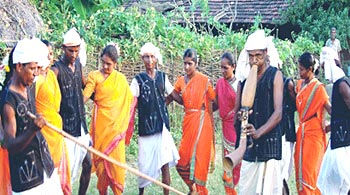
Traditional Dresses of Dadra and Nagar Haveli
The traditional dresses of Dadra and Nagar Haveli reflect the region’s tribal heritage. Women often wear saris, chaniyas (skirts) with blouses, or dra...
Related articles in Costumes in India
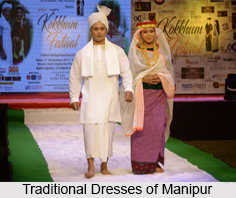
Traditional Dresses of Manipur
Traditional Dresses of Manipur are simple and easy to wear. The patterns and designs on the costumes are very unique and colourful. Manipuris are sett...
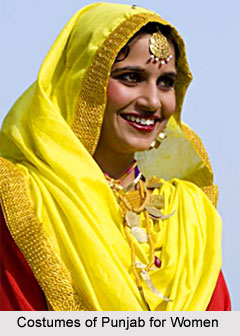
Costumes of Punjab
Costumes of Punjab breathe vibrancy. Tradition marks the dress of the women:; colourful Salwar Kameez while Kurta-Pyjama or Lungi is worn by men.
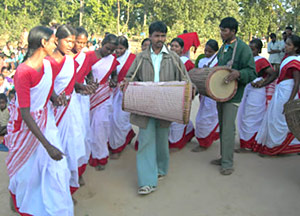
Traditional Dresses of Jharkhand
Traditional Dresses of Jharkhand embody the simplicity and elegance of its inhabitants. From the one-piece Bhagwan worn by men to the sarees and Tussa...
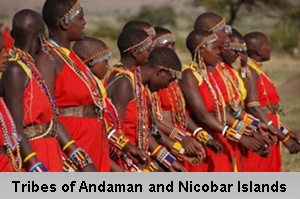
Costumes of Andaman and Nicobar Islands
The costumes of Andaman and Nicobar Islands showcase a fascinating blend of indigenous tribal traditions and influences from modern settlers. While th...
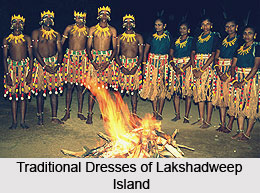
Costumes of Lakshadweep
Costumes of Lakshadweep reflect a blend of tradition and cultural identity. Women typically wear the Kachi with a Thattam and embroidered jacket, whil...