


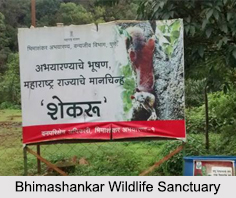
 Established in the year 1984, the Bhimashankar Wildlife Sanctuary is one of the wildlife sanctuaries of western India that was created in order to protect the habitat of the Indian Giant Squirrel. Created in the Ambegaon and Khed talukas of Pune district, the Bhimashankar Wildlife Sanctuary spreads over an area of 131 sq. km and is located in the state of Maharashtra. Established in the year 1984, the Bhimashankar Wildlife Sanctuary is one of the wildlife sanctuaries of western India that was created in order to protect the habitat of the Indian Giant Squirrel. Created in the Ambegaon and Khed talukas of Pune district, the Bhimashankar Wildlife Sanctuary spreads over an area of 131 sq. km and is located in the state of Maharashtra.
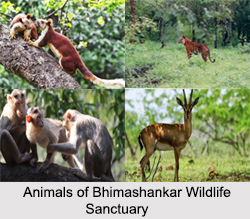
Overview of Bhimashankar Wildlife Sanctuary The Bhimashankar Wildlife Sanctuary is a part of the Western Ghats and is among the 12 bio- diversity hotspots in the world. The sanctuary includes nine tribal villages and harbours a large diversity of endemic flora and fauna. For generations, the cluster of sacred groves is preserved in the sanctuary and its bio- diversity is maintained. Seeds are dispersed from these sacred groves, which act as gene pools of the area. The Indian Giant Squirrel is the largest species of tree squirrel, endemic to evergreen forests of peninsular India. Its sub specie called the ‘Rafuta Indica Elphistonii’, which is also the state animal of Maharashtra, is endemic to the Bhimashankar Wildlife Sanctuary. Some of the other mammals reported in the sanctuary are mainly carnivorous animals, reptiles, amphibians and insects like the leopard, striped hyena, golden jackal, sambar, barking deer, wild boar, common langur, rhesus macaque, mouse deer and the Indian Pangolin. Other than these, mainly during the monsoon season, various species of mosses and epiphytes including bioluminescent fungi can be seen on the trees.
 Tourism around Bhimashankar Wildlife Sanctuary Tourism around Bhimashankar Wildlife Sanctuary
The Bhimashankar’s abundant collection of vegetation and wildlife is a real asset for any wildlife sanctuary, and hence, attracts numerous tourists from around the world, on a regular basis. The tourists like to visit the place to enjoy its extraordinary scenic beauty and great variety of wildlife, which are both factors for adventure and trekking. There are also several other tourist attractions located adjacent to the Bhimashankar Wildlife Sanctuary like the Lord Shiva shrine, which is the 6th Jyotirlinga. Few of the other famous tourist attractions around the sanctuary include the Bombay Point, Nagphani Point, Hanuman Tank, Vanaspati Point, Gupt Bhimashankar, etc. The Dimbhe dam is another popular picnic spot located about 40 km away from the Bhimashankar Wildlife Sanctuary. Visiting Information on Bhimashankar Wildlife Sanctuary The nearest railway station is the Pune Junction, which is located at a distance of about 140 km from the wildlife sanctuary. The Pune International Airport is the closest at a distance of 146 km from the Bhimashankar Wildlife Sanctuary. |
| |||



Home > Reference > Flora & Fauna > Indian National Parks > Wildlife Sanctuaries of Western India > Bhimashankar Wildlife Sanctuary
Bhimashankar Wildlife Sanctuary
| Home to the largest species of tree squirrel called the Indian Giant Squirrel; the Bhimashankar Wildlife Sanctuary in Maharashtra is known to be amongst the 12 bio- diversity hotspots in the world. |
| ||||||||||||||||||||||||||||

