


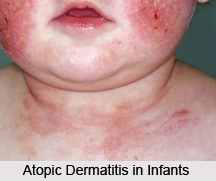
 Atopic dermatitis is a type of eczema and an inflammatory, chronically relapsing, non-contagious and pruritic skin disease. This skin disease is also called by names like "prurigo besnier," "neurodermitis," "endogenous eczema," "flexural eczema," "infantile eczema," and "prurigo diathsique". Atopic dermatitis is a type of eczema and an inflammatory, chronically relapsing, non-contagious and pruritic skin disease. This skin disease is also called by names like "prurigo besnier," "neurodermitis," "endogenous eczema," "flexural eczema," "infantile eczema," and "prurigo diathsique".
Atopic dermatitis often occurs in combination with other atopic diseases like hay fever, asthma and conjunctivitis. Atopic dermatitis in older children and adults is often confused with psoriasis. Atopic dermatitis affects humans' severely, particularly young children. It is also a commonly seen disease in domestic dogs. Since the beginning of the twentieth century, many mucosal inflammatory disorders have become dramatically more common and atopic eczema is one of them. Symptoms of Atopic Dermatitis It is a familial and chronic disease and its symptoms can increase or disappear over time. The skin of a patient with atopic dermatitis reacts abnormally and easily to irritants, food, and environmental allergens and becomes red, flaky and very itchy. It also becomes susceptible to surface infections caused by bacteria. Causes of Atopic Dermatitis Atopic dermatitis is an inherited disease; eczema is primarily aggravated by contact with or intake of allergens. It can also be influenced by other "hidden" factors like stress or fatigue. Atopic eczema consists of chronic inflammation and it often occurs in people with a history of allergy disorders like asthma or hay fever. There is no certain cause of atopic dermatitis. While atopic eczema is associated with allergic asthma and allergic rhinitis, the connection between the diseases has not been established. Twin studies have constantly shown that the disease has a higher rate of concordance in identical as compared to fraternal twins, which also indicates that genetics play a role in its development. However, the rate of possibility between identical twins is far from 100% and the changing frequency of the disease over time points to the environmental factors like nutrition or hygiene. Precaution of Atopic Dermatitis Since there is no cure for Atopic dermatitis, treatment should mainly involve discovering the triggers of allergic reactions and avoiding them. One can avoid Atopic dermatitis through diet. Many common food allergens can aggravate an allergic reaction: such as milk, nuts, wheat, cheese, tomatoes, yeast, soy, and corn. Most of these allergens are common ingredients in Indian diet. Specialty health food stores often carry products that do not contain common allergens. If a child avoids these allergens from childhood, the frequency of reactions to these later in lives is decreased significantly. Breastfeeding is the best way to avoid these problems, but if that is unavailable, then hydrolysed formulas are preferred to cow's milk. 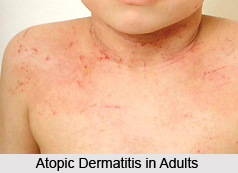
Since dust is a very common allergen and irritant, adults with Atopic dermatitis should avoid smoking, as well as the inhalation of dust in general. The dander from the fur of dogs and cats may also trigger an inflammatory response. It is a common misconception that simply removing an animal from a room will prevent an allergic reaction from occurring. A room must be completely free of animal dander in order to prevent an allergic reaction. Anger, stress, and lack of sleep are also factors that are known to aggravate eczema. An allergy skin patch given by an allergist, can often diagnosis the triggers of allergic reactions. Once the causes of the allergic reactions are discovered, the allergens should be eliminated from the diet, lifestyle, and environment. If the eczema is severe, it may take some time for the body's immune system to begin to settle down after the irritants are withdrawn. Treatment of Atopic Dermatitis The primary treatment of Atopic dermatitis involves prevention, which includes avoiding or minimizing contact with known allergens. Once that has been established, topical ointments can be used. Topical treatments focus on reducing both the dryness and inflammation of the skin. To combat the severe dryness connected with eczema, a high quality, dermatologist approved moisturizer should be used daily. Moisturizers should not have any ingredients that can further aggravate the condition. Moisturizers are especially effective if applied within 5-10 minutes after bathing. A doctor might also prescribe lotion containing sodium hyaluronate to improve the skin dryness. Most commercial soaps wash away all the oils secreted by the skin that normally serve to prevent drying. Using a soap substitute such as aqueous cream that keep the skin moisturized can be used. A non-soap cleanser can be purchased usually at a local drug store. Showers should be kept short and at a lukewarm or moderate temperature. Only moisturizers do not help when the Atopic dermatitis is severe, a doctor may prescribe topical corticosteroid ointments, creams, or injections. Corticosteroids have traditionally been considered the most effective method of treating severe eczema. Steroid creams may create stretch marks and thinning of the skin. Higher-potency steroid creams must not be used on the face or other areas where the skin is naturally thin; typically a lower-potency steroid is prescribed for sensitive areas. If the Atopic dermatitis is especially severe, a doctor may prescribe prednisone or direct a shot of cortisone or triamcinolone. If the eczema is mild, over-the-counter hydrocortisone can be applied. If complications include infections, antibiotics may be employed. A more novel form of Atopic dermatitis treatment involves exposure to broad or narrow-band ultraviolet light. It does not necessarily have to be administered in a hospital; it can be done at a tanning salon or in natural sunlight, so as long as it's done under the supervision of a dermatologist. Atopic dermatitis can get painful if not treated as soon as possible. |
| |||



Home > Health > Naturopathy > Nature Cure Treatments > Common Ailments > Allergies > Allergic Diseases > Atopic Dermatitis
Atopic Dermatitis
| Atopic dermatitis also called "prurigo besnier," "neurodermitis," "endogenous eczema," "flexural eczema," "infantile eczema," and "prurigo diathsique" is a type of eczema and an inflammatory, chronically relapsing, non-contagious and pruritic skin disease. |
| ||||||||||||||||||||||||||||

