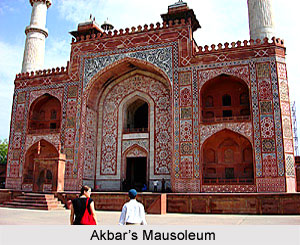
Best known and still legendary for his construction of the Taj Mahal, Shah Jahan was the greatest patron of Mughal architecture. Just as the literary and painted image of Shah Jahan became increasingly ceremonial and formal, so his architecture, much of it meant to serve as an imperial setting, adopted an air of formality unprecedented in earlier Mughal structures. The use of white marble inlaid with stones, noted during the later portion of Jahangir`s reign, very much characterises bulk of Shah Jahan`s architectural production, growing to full bloom. His buildings appear increasingly refined, establishing a style that became an Indian classic. As such, during his later ruling period, when Shah Jahan did not much move from Agra, the time had come for him to appoint men who would be regally and imperially patronaged by him, to create artistic wonders in places quite far from Agra or Delhi. As such, architecture of Gujarat during Shah Jahan was also passionately looked after by his courtiers, nobles, or high-ranking men prestigiously holding positions under Mughal Empire. Gujarat`s architecture during Shah Jahan was also basically based in Ahmedabad.
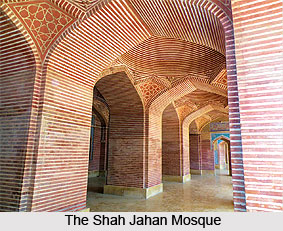 Under Shah Jahan, Ahmedabad continued to be the major city of Gujarat, which was kind of a following of tradition since Akbar and Jahangir. The new buildings, both religious and secular, generally were designed in the Mughal style, not a local idiom, as one notices in monuments provided by Azam Khan. Among his many works is the serai built in 1637-38. Azam Khan had been appointed governor of Gujarat in 1636, a position he held for six successive years. The serai was located conveniently adjacent to the main entrance of the city`s citadel. It has undergone alterations, although enough of the seventeenth-century structure remains to determine its original appearance to this date. This quadrangular building, measuring nearly 64 by 73 metres, is entered through a high two-storied central portal. The stellate and net vaulting of the interior chambers is typically Mughal. Neither this serai nor the similar nearby Shahi Bagh palace belongs to local building traditions, but rather to the Timurid-inspired Mughal tradition, reminiscent of Babur by Shah Jahan. The choice of such a style is hardly surprising, since Azam Khan was not only a high-ranking Mughal amir, but also was extremely proud of his Iranian heritage, maintaining the customs of his homeland throughout his life.
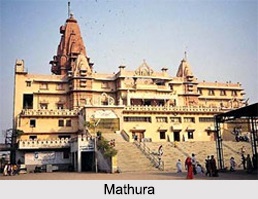
Azam Khan was indeed an enthusiastic builder. His structures are noted in Mathura and Jaunpur, among other places, but the greatest number is concentrated in Gujarat. These include three forts, one of which, Shahpur Fort in Ranpur, still survives; but his mosques, a well and baths are known only from written references to contemporary researchers scouting on Shah Jahan`s architectural endorsing in Ahmedabad, Gujarat.