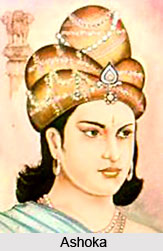
Jalaluddin Muhammad Akbar or as he was unanimously acknowledged as Akbar the Great, perhaps needs not any more further introduction as to his capabilities and ability to stretch himself towards pinnacle heights just keeping in mind the welfare of his subjects. Indeed, Emperor Akbar was that man of each season, with whom the Mughal Empire is identified the most. Essentially governing the whole of India from his seat of power, Delhi, Akbar had quite astutely divided his time amongst the major four directions in the country. Leaving north India and western India, it comes rather as a surprise that Akbar`s distinctive creations in eastern and south India cannot be much noticed as can be witnessed, for instance in Delhi or Agra. It might possess its own reasons, but architecture of eastern India during Akbar is not much illustriously acknowledged in contemporary times. And herein, in the context of eastern Indian Mughal architecture under Akbar, comes the theorem of "sub-imperial patronage" prevalent under the emperor and also during Mughal times.
Once Akbar had departed from Fatehpur Sikri, his stronghold and bastion where he had led a major portion of his prime time, he indeed had built but little. In the emperor`s stead, his amirs ("commander" or "general", also "prince", amir was a high title of nobility or office, used throughout the Arab World and historically in 19th century Afghanistan and also in the medieval Muslim World) had served as architectural patrons, particularly in the development of Mughal hinterlands. Some nobles also had provided buildings long before Akbar`s departure from Fatehpur Sikri, to some extent to gain imperial favour. But especially in the later phases of Akbar`s reign, patronage by nobles became increasingly significant. Much of this reflected the rather `complex relationship` between the emperor and his nobility. While the Mughal emperor was the highest authority, Akbar`s power depended upon carefully balanced and constantly vacillating relationships with his own nobles and local rulers, irrespective of them being Hindu or Muslim. By extension, these non-imperial works often aided the spreading of styles favoured by the central administration. As such, sub-imperial patronage had become a significant cause in Akbar`s ripened period of rule, during which his sponsorship and affirmative backing was all that could be witnessed, with the major works being executed by his amirs and noblemen from Mughal court. As has been the case with architecture of either western or northern India, eastern Indian architecture during Akbar was also grossly maintained and looked over by such imperially patronaged menfolk. Architecture of eastern India under Akbar was partially also to emphasize and underline Mughal supremacy and beneficial intentions towards citizens of that region, comprising Bihar, Bengal, Orissa and parts of Uttar Pradesh.
Mughal authority and presence all through India was thus imposed with much difficulty upon eastern Uttar Pradesh, Bihar, Bengal and Orissa. When the Mughals were undertaking to consolidate their power in areas closer to Delhi and Agra, it is known that Afghan clans and nobles had reasserted themselves majestically in eastern India. Gradually and slowly however, this region fell to the Mughals, a man as Akbar was present to look deep into this. Eastern Uttar Pradesh had come under Mughal control early during Akbar`s reign; the Gangetic valley of Bihar also was tentatively taken by Akbar in 1574. It was secured by him after a serious uprising in 1580, instigated by a number of dissatisfied Mughal amirs and Afghans under the leadership of Masura Khan Kabuli; then this territory, as well as much of Orissa, was successfully integrated and merged into the Mughal domain. While Bengal was claimed by Akbar in 1575, Mughal consolidation there was not fully achieved until Jahangir`s reign. This prolonged effort to assert Mughal authority in eastern India was accompanied by vigorous architectural construction on the part of Mughal governors and other officials, an attempt to underscore a permanent Mughal presence there. It becomes quite evident that architecture of eastern India during Akbar was one of immense challenge and spirit, which was achieved to its utmost and paramount limit.