
The Riti kal or the Scholastic period in Hindi literature spans the period beginning from 1600 A.D. and culminating in 1850 A.D. Riti kal emulated the Sanskrit rhetorical convention and religiously undertook different aspects of poetics like rasa, alankara and nayika bheda through Saviyas and Kavithas. The poets of Riti kal or the Scholastic period can be fundamentally classed into two groups on the basis of their subject, comprising: Ritibaddha (those zealously going by rhetorical style) and Ritimukta (free from rhetorical patterns). The poets falling in the former category basically composed their literature based on definitional and (Lakshana) and illustrative (Lakshya) themes. The essential nature of Rasa, Alankara, Nayikabheda were illustrated by them with the help of Saviyas and Kavithas. Poets like Chintamani, Keshav, Mati Ram, Deva, Kulpati Misra and Bhikari Das were pioneers of the Ritibaddha style. The second group consists of free-minded poets like Alam, Ghananand, Bodha and Thakur. They wrote in an unplanned and spontaneous manner with powerful feelings of Love, quite unlike the rhetorical form of poetry. This age witnessed two more poetic trends of didactic poetry in stray verses composed by Vrinda, Vaital and Giridhar and Heroic Poetry by Bhushan, Sudan, Lal and umpteen others.
However, this emphasis on poetic theory in the Scholastic period in Hindi literature greatly had reduced the Emotive Aspects of Poetry, which was the prime aspect of the Bhakti movement of the Devotional period. Poetry content as a consequence, gradually started to degenerate. The Saguna School of the Bhakti kal had in fact split into two schools (Rama bhakti and Krishna bhakti) somewhere in the interim of the Bhakti and the Riti Kalas. The Riti kal witnessed most of its work being accomplished under the Krishna Bhakti banner, which sadly had seriously degenerated in philosophical content. The degeneration had ranged from the pure forms of total Devotion to the Dualistic Supreme Being and was inclined more towards the erotic depiction of Shringar aspects of Krishna`s life, his Leela, his pranks with the Gopis in Braj, the description of the carnal aspects of the beauty of Radha (Krishna`s consort). The poetry of Bihari and Ghananand Das absolutely abide by this category. The most well-known book from this age of Hindi literature is Bihari Satsai by Bihari, which is in fact a collection of Doha`s (couplets), associated with Bhakti (devotion), Neeti (Moral policies) and Shringar (love).
Riti kal
The Riti Kal in Hindi literature began from the 1600 AD.
Recently updated articles in Indian Literature
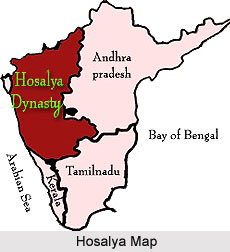
Gadyakarnamrita
Gadyakarnamrita is a 13th-century Sanskrit literary work written mainly in prose. It describes the ninety-day battle at Srirangam between the Hoysala...
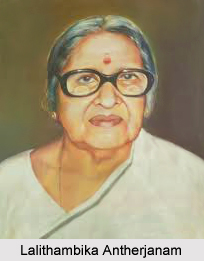
Women Writers in Malayalam Literature
Women writers in Malayalam literature have worked incessantly to make a place for their literary works. In the earlier periods, they were completely o...
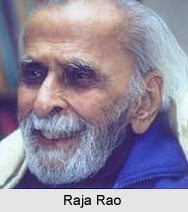
Comrade Kirillov, Novel by Raja Rao
Comrade Kirillov, a distinctive creation of Raja Rao, is presented as a brief yet incisive novelette that offers an ironic portrayal of the self-contr...
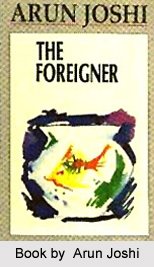
The Foreigner, Novel by Arun Joshi
“The Foreigner” is a book authored by Arun Joshi and published by Vision. It is an illustrious creation in the entire career of Arun Joshi, the famous...
Short Story in Telugu Literature
Short Story in twentieth century Telugu Literature was extremely popular and growing in and developing in a major way. Their popularity was greatly fa...