Introduction
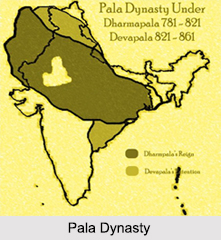 Pala Dynasty of India originated after the death of Shashanka in Bengal. This ruling dynasty reined the Indian states of Bihar and Bengal from 8th to the 12th century. At that period of time Bengal was suffering from a great political turmoil. According to the medieval history of India, the Palas rescued Bengal from this disorder. The founder of the Pala dynasty was Gopala who ruled from 750-770. His successor, Dharmapala ruled from 770-781 and made the dynasty a dominant power of northern India. This dynasty is acknowledged as the Palas because all the rulers had their last names as “Pala†which means protector.
Origin and Rise to power of Pala Dynasty
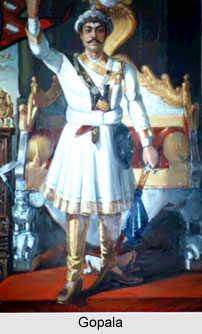 The Pala dynasty rose to prominence after the death of Sasanka and continued to be in power in the extended regions of Bengal and Bihar, from 8th to 12th century. The Palas appeared in the political scenario after the death of Sasanka, when there was great political upheaval in Bengal. The Palas protected the kingdom from breaking down completely and ensured consolidation of the Empire under their own supremacy. The founder of the dynasty was Gopala. Gopala reigned from 750-770, and strengthened his position by extending his control over all Bengal. His successor Dharmapala ruled from 770-781 and made the Palas a dominant power of northern India, by installing his own dominion on the once-prestigious throne in Kanauj. But the Palas were soon threatened by the Pratiharas of central India. However, they gained respite from the Pratihara attacks only because of the danger the Pratiharas faced from another foreign power, Rashtrakutas of Deccan. However the Pala rulers constituted a significant epoch in the history of ancient India.
There are no clear evidences of the origin and early history of the Palas. Epigraphic sources of the contemporary era and official Pala records are generally silent about the caste, origin and early history of the Palas. Since no clear evidence is available, historians had to depend on indirect evidences, which shed light on the reign of the Palas in Bengal. Hence there are enough controversies among historians about the origin and ancestry of the Palas. From official records of the Palas it is known that Gopala`s father was Vapyata and his grandfather was Dayita Vishnu. They are mentioned in a very general tone without referring to any royal or exalted status. On the basis of facts provided by poet Baribhadra, contemporary to the second Pala king Dharmapala, some scholars have suggested that the Pala kings were connected to king Rajabhata of the Buddhist Khadga of eastern Bengal. Again some scholars have provided other views about the origin of the Palas. They have opined on the basis of evidences from Khalimpur Copper Plate that the Palas were originally descendants of the Bhadra Dynasty. Moreover controversy lies in the fact that the Palas themselves claimed to be solar descendants. Though the early Palas did not declare themselves any mythical ancestry, yet the later Palas claimed themselves as solar descendants or "Surya Kula". Sandhyakara Nandi in "Rama Charita", Ghanarama in "Dharma Mangala" and other chronicles of the Age referred to Samudra Kula, or the `origin of the Palas from Ocean`.
Although there are no conclusive evidences about the origin and ancestry of the Palas, yet it has been opined by historians that the Palas were Kshatriya by caste. Evidences supplied by "Ramcharita" and Taranatha corroborates the above theory. This was further supported by their matrimonial relationship with the Rashtrakutas and the Kalachuriyas. Again according to another group of historians the Palas did not belong to any higher caste. In "Arya-manjusri-mula-kalpa", the Palas were described as "Dasajivina" or Sudra by occupation. A medieval Muslim writer, Abul Fazal, depending on this tradition had described the Palas as "kayasthas". But modern scholars have opined that the Palas were staunch Buddhists, depending on official records of the Palas. Their court had become the stronghold of Buddhism. Copper plates of the Pala kings bore a clear mark of their Buddhist affiliation. Though it is not known whether the founder of the Pala dynasty in Bengal was originally of Buddhist origin, yet there is evidence that the Pala kings held an important position in the international Buddhist world.
The original homeland of the Pala kings or the actual extent of the kingdom of Gopala, the founder king, cannot exactly be determined. Since most records of the early Pala kings were issued from Magadha, therefore historians presume that Magadha was the original homeland of the Palas. They subsequently conquered Bengal and became a part of it.
The century that followed the death of Sasanka was marked with political upheavals, extreme chaos and foreign invasion. Peace within the province was horribly disturbed. Moreover after the death of Sasanka, Harshavardhana and the Kamrupa king Bhaskarvarmana had annexed Bengal or Gauda. Later a strong wave of the Tibetan invasion swept away remnants of the political stability of Bengal. The ultimate result was that, the entire province of Bengal was divided into several small provincial units, who unfurled the flag of independence. Each one struggled for the mastery of land. The absence of any central authority or Government made the situation even more anarchic, which vitally affected the situation. Ultimately the state of anarchy in Bengal came to an end when Gopala ascended the throne. It is known from facts of the Khalimpur Copper Plate that Gopala was made emperor by popular support. The people in order to put an end to this lawlessness, established him as the central authority and thus Gopala appeared in the political scenario of Bengal. Gopala was an eminent chief and a competent military general. It is presumed that Gopala did not possess royal blood because he was not born in a high and distinguished family. But it was just because of his martial and exceptional leadership qualities that he was chosen the leader of the lawless country. The main achievement of Gopala was that he had established durable peace within Bengal by removing the prevailing state of anarchy. Gopala became the king of Bengal and supremacy of the Pala kings was established in 8th century, which continued uninterrupted till 12th century.
Social Life during the Pala Period
The long reign of the Palas formed a glorious period in the history of ancient Bengal. The dynasty had ruled for about four hundred years, a rarity in chronicles of dynastic history. Credits of achievements of Bengal during this long period indeed can be attributed to the glories of the Palas. Widespread empire, organised administrative system, ruling policy oriented towards welfare of the people, unprecedented excellence in fields of art and cultivation of knowledge and literature were the achievements and resplendencies of the Pala Empire in Bengal. In all, the Palas were the founders of Bengali nationalism, which was evident from social structure and life of the people during the Pala period.
Social life during the Pala period was marked by the emergence of feudalism in Bengal. With the emergence of feudalism, hero cult and bravery in warfare also was developed. This hero cult reverberated in the "Nalanda inscription" of Bala Varmana, in the legend of bravery of Hari, the general of Bhima, in the folk songs. Sacrificing one`s life in the battlefield was considered a sacred duty and was highly praised during the reign of the Pala kings in Bengal.
In spite of the Buddhist inclination of the Pala kings, social structure represented the essence of Brahmanism in its organisation according to the caste basis. The Varna or caste system though was not rigid like the preceding eras, yet was deeply rooted within the society and Buddhists had to adjust themselves with that. Though caste system prevailed, the orthodox Brahmanical division had undergone a massive change. The supremacy of the Brahmins and the Kshatriyas was no more important in the socio-political life. Though Sandhyakara Nandi describes the Pala kings of Kshatriya origin, yet they did not actually belong to the Kshatriya caste, as later evidences record. The Brahmins were first mentioned in the land grants, which they use to receive predominately. Though Brahmins were accorded first place in the social hierarchy, but in practice, neither Brahmins, nor the Kshatriyas had portrayed any significant part in the public life during the Pala period. Their place was taken by the Karana Kayasthas. Even some Brahmins during the Pala period had chosen the profession of the Karanas. Though "Vyasa Smriti" describes the Kayasthas as Sudras, yet they had ascendancy in the social hierarchy during Pala period. The Ambastha Vaidyas also had dominance during this age. The Kaivartas also possessed control during the Pala realm. The Kaivartas for the first time appeared in pages of history right from the time of the Pala supremacy in Bengal. The liberal social policy of the Palas opened the way for superiority of the Kaivartas during the period. Pala records also mention lower castes like Andhras, Chandalas, Madas, Doms, Savaras etc. They pursued their occupation and also served in the Pala army.
As a whole, though the social structure was based on the rules laid by Brahmanical Hinduism, yet the Pala kings were staunch Buddhists. During this period Buddhism had earned enormous patronage of the Palas. They had restored Buddhism from being completely worsened in 7th century A.D. Though the Palas respected the Brahmanas and their status and theoretically had accepted the Varna system, yet in practice they had granted higher status to the middle Varnas and Sudras.
From the inscriptions and epigraphic evidences of the Pala period, it is known that though the caste system was not so rigid, yet people of the lower castes were considered untouchables. Bhaba-Deva Bhatta in his "Law book" has described the Chandalas, Medas, Savaras, Kapalis as untouchables. They were considered outcasts and lived on the outskirts of villages. The "Charya Padas" refer to the lax sexuality of this class of people, which gradually penetrated into the life of the upper castes. The trading and merchant classes, as also the Kshatriyas had lost their importance in society. This happened probably due to the decline of trade in 7th century A.D. The Varna or caste regulation during the Pala age was extremely flexible. The rigidity in the Varna system did not affect the society of Bengal during the Pala Age, probably due to the absence of `Smritis` or law books in Bengal. In the Sena period, Bhaba-Deva Bhatta and other Smriti writers had introduced rigidity in the Varna system and the concept of untouchability.
So far as religion was concerned during the societal life of the Pala Age, Brahmanical Hinduism had gained wider acceptance. But Hinduism was transformed throughout the Palas, due to extreme popularity of Vaishnavism and Shakti cult. Puranic themes and legends dominated religious beliefs of the people. Most of the inscriptions, temples and images of deities during that time depict the essence of Puranic Hinduism. Vedic Hinduism and Vedic gods had passed into oblivion during the Pala era. Vedic procedures of "homa" and "Yajna" were still continuing in diminished glory. The Puranic kings and heroes, who had inspired the lifestyle of the upper classes, became widely popular in the Pala phase. These included- Sagara, Nala, Bali, Rama etc. The concept of Vishnu became more humanised all through the Pala period, which gave way to the cult of Krishna. Krishna was regarded more humane among the emotional Bengalees during that time, compared to Vishnu. Due to the influence of Puranic Hinduism, the concept of Siva underwent a massive change. Lord Siva became a generous, powerful god, oblivious to his own material interests, but always kind towards his devotees. The concept of Siddhidata Ganesha came into vogue, which was much popular among the merchant community. The cult of Saraswati developed as the goddess of learning. Puranic themes were added to the faculties of Vishnu. Lakshmi and Saraswati were considered wives to Lord Vishnu. Worship of phallus (manifestation of Lord Shiva) was popular widely during the Pala period. Images of dancing Shiva or `Nataraja` that had evolved during the Pala period indicated the other faculties of Shiva. The joint relics of Shiva Parvati indicated that Shiva had a great impact in the socio-religious life of the period.
Buddhism received a massive impetus during the Palas. However Mahayana Buddhism was further transformed during the Pala period. Philosophical aspects of Mahayana Buddhism were discarded and gradually Tantric practices infiltrated through the Mahayana cult and it came to be known as "Vajrayana". It was said that salvation could be attained by performing `Bodhichitta`. Another school of Buddhism also had flourished during this period, called "Sahajayana". While the Vajrayanists believed in Mantra Tantra, gods and goddesses, the Sahajayanists discarded all these things. They completely denied the efficacy of worship, rituals, sacrifices, penance and sufferings for the attainment of salvation. According to them, body is a temple, which could alone bring salvation. Thus both the concept of "Vajrayana" and "Sahajayana" had influenced the socio-religious life of the Pala Age.
Apart from Vajrayanas and Sahajayanas, there also developed some other sects, which had attained much popularity during the Pala period. These sects comprised the Nathas, Sahajiya cult etc. According to historians, the bauls of Bengal owe their origin to the Sahajiya cult. Since socio-religious codes during the Pala period was widely flexible, various religious sects apart from Brahmanical Hinduism and Buddhism had flourished with thriving prosperity.
The most glorious aspect of Pala rule was their policy of public-welfare. The Pala rulers were Buddhists, but majority of their subjects were Hindus. Dharmapala had adopted the policy of religious toleration as their state policy. He had declared that he is `conversant with the precepts of Shastras and he made `the castes conform to their proper tenets`. This policy was followed by his successors. There is no doubt that Hindu gods and goddesses and Brahmins use to receive liberal patronage from the Pala rulers, though they themselves were devout Buddhists. The Brahmins occupied high official posts. Except one or two, all the Pala copperplates record grant of land to temples of Hindu gods and goddesses or to Brahmins. There is no evidence of any religious discord between the Buddhists and Hindus in the society. Religious toleration and mutual coexistence can be identified as the characteristic of social life of the people during the Pala period.
The everyday lifestyle of the Bengalees during the Pala period pinpoints to one of the significant aspects of social life. People led a very simple life and staple food of the Bengalees comprised rice, lentil, fish, milk and milk products, gur or sugar, meat and wheat etc. People used to chew betel leaves mixed with spices after meals. Populace during the Pala Age devoted their leisure in different pastimes. The ruling and upper class people were fond of hunting. But lower class people took hunting as their livelihood. The Paharpur and Moynamoti inscriptions depict such various hunting expeditions. While common men were fond of wrestling, horse racing and chariot racing were the favourite pursuits of higher or aristocratic class. Upper class women spent their leisure in gardening, water sports, dancing, singing etc. A class of courtesans and temple dancing girls were called `Devdasis`. The Devdasi system was widely prevalent during the Pala society. Garments used by individuals of the Pala period depict the simplicity of lifestyle during that era. Men folk generally wore dhoti and chaddar. Seldom they used stitched garments for the upper part of the body, resembling fashion of the northwestern community. Women used to wear sarees and scarf. Aristocratic women also used cholis. Jimutavahana had recommended special dress for festive occasions. Dancing girls used to wear special decorative garments. Workers and common men used to wear very short dhoti or a very short cloth, just to cover the waist.
The condition of women in the Pala social order was no better than that of the previous periods. According to Vatsayana, women of Gauda loved luxury. They used to apply vermilion dots on their foreheads and fragrant sandal powder and sandal paste on their body, flower on their hair knots. Upper class ladies living in towns lived in enough pomp and lavishness. But the village women lived a simple, unsophisticated life. Poor women also had to participate in domestic duties with their male partners. Polygamy was still widely prevalent during the Palas. Dowry system was the general practice. Even a groom of the upper class did not hesitate to marry a lower caste bride, if he could draw a good amount from her. Widows were highly detested in the Pala society and they were forced to live a life of penance. The idea of womanhood prevalent throughout the Pala society, was to be a good and devoted wife, a caring mother and to be able to suffer the sins committed by her husband. Women from lower caste suffered the most. Self-respect and freedom of women were curtailed in a male predominated society.
On a whole, the Pala period in ancient India had witnessed a period of lingering peace and security in their societal life. Caste system became more flexible and people belonging to different caste and creed were given due respect and status. In spite of the deplorable condition of the fair sex and the poor, social life during the Palas left its mark in the history of ancient India as an era of absolute peace and prosperity. This social peace during the Palas contributed to the prosperity of ancient India in all fields over a long period of time.
Administration of Pala Dynasty
Pala Dynasty ruled ancient Bengal and Bihar for over a longer period. The supremacy era of this dynasty witnessed a glorious period in the history of these two states. The dynasty ruled for about four hundred years, the Palas spread their empire far and wide and furthermore their ruling policy oriented towards matchless superiority in the field of arts and literature. The Administration of Pala Dynasty was quite organised system. They always thought about the welfare of the people. In addition to that the Pala dynasty extended their power towards Kanauj in the beginning of the ninth century. It is in the period of the Pala dynasty, that Bengal successfully got involved in politics of northern India.
The system of Administration of Pala Dynasty was monarchial. The king or monarch was the centre of all power. The Pala kings were offered the title of Parameshwar, paramvattaraka or Maharajadhiraja. The structure of Pala administration followed the appointment of the Prime Ministers. Furthermore, the Pala Empire was divided into separate Vuktis (Provinces). These Vuktis were segmented into Vishaya (Divisions) and then Mandala (Districts). Other smaller units were Khandala, Bhaga, Avritti, Chaturaka, and Pattaka.
Administration of Pala Dynasty covered a widespread area from. The Pala kings managed the whole society from the proletariat to the royal court. Their achievements were experienced all throughout. The village level to the central government level was introduced to an exceptional planned structure. According to the history of Pala Dynasty, they inherited an administrative structure from the Guptas. Nevertheless, the administrative system of the Palas was far more efficiently practised. The system introduced arrangement for revenue collection. The administration over all took care of every sphere of public life. During their long period of influence, the Pala Dynasty developed the ferry ghats to the river ways, land routes, trade and commerce, towns and ports, as well as skillfully managed the law and order in the country.
The Pala system of government had a long record of state-officials. The copperplates of the Pala dynasty indicate about the efficient administrative system. Moreover, these copperplates announced the laudable achievement of Administration of Pala Dynasty. The Pala dynasty had the assigned position such as the Raja, or the Mahasamanta (Vassal kings), Mahasandhi-vigrahika (Foreign minister), Duta (Head ambassador), Rajasthaniya (Deputy), Sasthadhikrta (Tax collector). Other important positions in the royal court included Mahaksapatalika (Accountant), Jyesthakayastha (Dealing documents), the Ksetrapa (Head of land use division) and Pramatr (Head of land measurements).
The Administration of Pala Dynasty also featured the Mahadandanayaka or Dharmadhikara (Chief justice), the Mahapratihara (Police forces), Khola (Secret service). Agricultural posts were also allocated and the positions in the society included Gavadhakshya (Head of dairy farms), Chhagadhyakshya (Head of goat farms), Meshadyakshya (Head of sheep farms), Mahishadyakshya (Head of Buffalo farms) and Nakadhyakshya (Aviation ministry). This extensive system of administration and management glorified the power and strength of the Pala rule and allowed them to possess supremacy in northern India till 10th and 11th centuries AD.
Economic Life during the Pala period
The Pala period constituted one of the significant eons in the history of ancient India. Under the majestic Palas Bengal had witnessed a protracted period of social peace and material prosperity. Though there is dearth of ample information regarding the economical structure during the Pala period, yet sources available till date state that the Pala period was marked by economic and material prosperity. The main source of economy during the Pala period was agriculture. The Pala kings usually granted land to the farmers. The chief source of income of the common people was derived from agricultural products of the land granted to them. Rice, sugarcane, mango, bamboo, coconut etc. were the important agricultural products produced during the Pala period. During the Palas, paddy production had become the chief source of economy in Bengal. The "Monghyr inscription" of Devapala refers to mango and fish as the products of land granted by him. "Bhagalpur inscription" of Narayanapala also refers to the production of rice and mango, betel nut etc. as the important agricultural products produced in lands allowed by them.
Salt production also shared a significant position in the agricultural economy during the Pala period. The "Irda inscription" of Nayapala refers to the production of salt. South Midnapore or Danton was famous for the production of salt in seawater. North Bengal was famous for the production of Pundri Sugarcane, from which good quality sugar was produced. Various fruits, like jackfruit, date palm, betelnut, coconut, mango and useful articles like bamboo were also grown. The "Paharpur terracotta plate" also refers to banana. Betel leaf was cultivated in a wide scale. Cocoa leaf, long pepper, cardamom, clove were grown and exported to west Asia. High quality cotton was also grown in Bengal. The Chinese traveller of 13th century and the Venetian traveller Marco Polo also referred to the production of fine quality cotton in Bengal. The "Charya Padas" refer to cotton production as the important part of Bengal`s economy during the Pala period. Silkworm cultivation was also very popular in Bengal. As a whole, agriculture shared a significant part of the economy during the Pala period.
Apart from agriculture, mineral resources also played an important part in the economy during the Pala period. Mineral resources were abundant during the Palas. Iron ores existed in plenty, in Radha`s Jangalkhand and in Bankura and Birbhum districts. Though the use of iron ore was not very extensive, yet the process of smelting ore was well known to the people. Bengal, heart of the Pala Empire, was famous for producing the double-edged sword from the ore. These swords were highly in demand during the Pala period. Copper deposits were found in the Suvarnarekha valley. Diamond ores were available in the Pundravardhana and Tippera Valleys. Kautilya had mentioned about this in his accounts. Pearl was also found in the confluence of the Ganges according to Periplus, though not in plenty.
Historians have opined that Bengal was prosperous and economically affluent during the Pala period. Bengal became a flourishing country, abounding in agriculture and mineral resources. Land grants of the Pala kings referred to the various products grown on the granted land and bamboo groves that grew on that soil as well as tanks full of fishes.
Not only agriculture and mineral resources, Bengal during the Pala period also had witnessed thriving prosperity in the field of industry. Since agricultural products were grown in plenty, industries therefore were mainly agro-based. Textile industry was in high requirement during the Pala period. Cotton was the principal industry in Bengal. Bengal became the harbour of fine quality cotton fabrics, which made brisk trade of cotton goods with distant countries, like Arab and China. Apart from the production of fine cotton, creation of coarse cotton goods for daily use was also manufactured on a daily basis. Many people had adopted weaving as a profession during the Pala era. Literary evidences during the Pala period recorded the profession of weaving that had become a source of economy for the commons. Silk industry was very popular in Bengal, because it not only owned a domestic market, but foreign market as well. Economy during the Pala period had flourished both in inland and foreign countries. Bengal was also famous for the Sugar industry, next only to the textile industry. Gur (molasses) and sugar was produced in plenty from the sugarcane industry. Gur, being one of the important foods in Bengal, had a huge inland market. According to some scholars, the name `Gauda` is derived from "Gur". Gur produced in Bengal, during the Pala period was exported to foreign countries like Ceylon, Arabia and Persia. The 13th century Portuguese traveller Barbossa had stated that Bengal during the Pala kings was in huge competition with Southern India in the export of sugar to foreign countries.
Apart from these two major industries, other industries like gold smithy also produced silver and gold ornaments and plates. Black smithy, carpentry, and the brass metal industry also had played an important part in the industrial economy of the Pala period.
Though trade had flourished during the Pala phase, yet it could not attain the thriving popularity like Gupta period. The decline of standard of trade is evident from the debased coins of the Pala period. The scarcity of gold and the silver coins led to the dependence on copper coins. Hence foreign trade had received a great blow during the Palas. Moreover the brisk trade from port of Tamralipta had declined from the time when the course of river Saraswati was altered. During 8th century A.D., trade of the Palas had declined considerably, with the descent of the Tamralipta port. As a result the economic system became entirely dependent on agriculture. Since Bengal had an agrarian climate, therefore agriculture flourished on a huge scale. The flowering agrarian economy gave rise to feudalism in society. Agricultural economy and feudalism had developed simultaneously by crushing the peasants ruthlessly. Hence the Pala epoch though had witnessed material and economic prosperity and affluence, yet it was concentrated within a limited group of the upper class or aristocratic society. Common men were cut-off from financial prosperity during the Palas.
Art and Architecture of Pala Dynasty
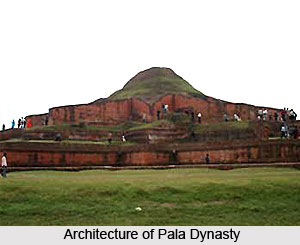 In India, during the rule of Palas, art and architecture witnessed a phenomenal development in the states of Bengal and Bihar. The matchless tradition of sculptural art had attained a new position under the reign of Palas. The exclusive development of Art and Architecture of Pala Dynasty demonstrated the emergence of `Pala School of Sculptural Art`. The characteristic of art and architecture of that period included lot of local phenomena of the Bengali society. Consequently, the most distinctive achievements during the age of the Palas were in the field of art and sculptures.
Art and Architecture of Pala Dynasty furnished the accomplishment in the field of terracotta, sculpture and painting. One of the finest instances of architecture of the Pala period is a creation of Dhamapala, the Somapura Mahavihara at Paharpur. In addition to that several enormous structures of Vikramshila Vihar, Odantpuri Vihar, and Jagaddal Vihar proclaim to be the masterpieces of the Palas. The architectural style of the Pala Empire influenced the whole of the country and its neighbouring countries. Their approach was followed throughout south-eastern Asia, China, Japan, and Tibet.
The matchless examples of the Art and Architecture of Pala Dynasty find their significance in the museums in Bangladesh and West Bengal as the remarkable display. The museums play abode to the innumerable beautiful sculptures on Rajmahal black basalt stone. The sculptures beautifully carved in the Pala period demonstrate the mastery of Pala dynasty. The age saw an upsurge of perfect carving and Bronze sculptures. Furthermore, it has been recognized by the historians that the specimens of bronzes influenced the art in south-east Asian countries.
Art and Architecture of Pala Dynasty also involved the art of painting also excelled in that period. Though, no exact examples of paintings have been found of that period yet various illustrations of beautiful paintings of the Buddhist gods and goddesses, appearing in the Vajrayana and Tantrayana Buddhist manuscripts corroborate the subsistence of paintings in the Pala Empire. Moreover, with advanced stage of architectural expansion several Buddhist Viharas came originated. The plan of central shrine in the Buddhist Vihara evolved in Bengal during the Pala rule. Other instances demonstrating the brilliance of the art in the Pala period include the terracotta plaques. These plaques are used as the surface decoration of the walls and are recognised as unique creation of the Bengal artists.
Literature under Pala Dynasty
Pala Dynasty had influenced the Indian subcontinent as a whole and also the neighbouring countries. They had introduced a legacy in Bengal which is followed till the present days. In addition to that the modern culture and religion of Tibet is highly influenced by the Palas. The contribution of Palas in every sphere of life of the countrymen is innumerable. Besides, architecture and art, Literature under Pala Dynasty also flourished. The literature offered by the Palas have gained popularity in many Buddhist countries
It is in the period of Pala, Proto-Bangla language was born. Literature under Pala Dynasty included a range of Buddhist texts. The Buddhist texts of the Charyapada were the earliest form of Bangla language. Many books on every aspect of knowledge were compiled during the Pala Rule. Different books including on various subjects such as on philosophy, the books existed Agaman Shastra by Gaudapada, Nyay Kundali by Sridhar Bhatta, Karmanushthan Paddhati by Bhatta Bhavadeva. Other books comprise of medicinal books such as Chikitsa Sangraha, Ayurvedidwipika, Bhanumati, Shabdachandrika, Dravya Gunasangraha. Moreover, Atisha compiled more than 200 books. The great epic Ramacharitam was written by Sandhyakar Nandi the court poet of Madanpala , in the 9th century and it was regarded as a masterpiece of the Pala literature.
The examples regarding the expansion of Literature under Pala Dynasty are found in the copperplate inscriptions. The texts composed during the Pala rule were of extreme literary value. These distinctive inscriptions later came to be known as Gaudiya Style. However, the development of literature during the Pala period is hard to assess, yet, a few literary works have been found. The numerous Pala copperplates indicate the development of Sanskrit language and poetry. Sandhyakara Nandi was a poet who had acclaimed a marvellous position for his poetic work and exclusive poetic style.
Literature under Pala Dynasty encompasses works in different shastras. Besides, in the 12th century a medical treatise Shabda Pradipa was written by the royal physician Sureshvara. Other literary works of the Sureshvara embrace Vrksayurveda and Lohapaddhati. Jimutavahana contributed to the Dharmashastra literature through his Dayabhaga, Vyavaharamatrka and Kalaviveka. Pala dynast thus bestows to the modern society several outstanding forms of writing.
Religion during Pala Dynasty
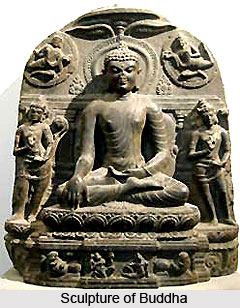 The Palas were the followers of Mahayana Buddhism. Their popular beliefs have resulted in the creation of several temples and works of art. Buddhism suffered a possibility of extinction after the reign of King Harsha Vardhana. But the coming of the Palas again popularised Buddhism as a religion in the Indian subcontinent. Religion during Pala Dynasty was characterized by Buddhism and Hinduism. The Palas were the devotees of Buddha and also worshipped the avatars of Vishnu. Various temples emerged during the Pala rule in Bengal, Bihar and Assam. According to history, the Hayagriva avatar temple in Assam was built by the Pala Dynasty. The Palas were constructed to have constructed a temple of the god Janardana (Krishna- Vishnu) also.
Religion during Pala Dynasty thus saw the emergence of Buddhism and they patronized Mahayana Buddhism. Mahayana is one of the major branches of Buddhism. Apart from India, this particular belief existed in the areas of China, Tibet, Japan, Korea, Vietnam, and Taiwan. It is during the Pala rule, the spread of Mahayana Buddhism occurred in the countries like Tibet, Nepal, Bhutan, Myanmar and the Indonesian archipelago. Several Buddhist scholars of the Pala Empire travelled from Bengal to the Far-East and propagated Buddhism. Outstanding Personalities such as Shantarakshit, Padmanava, Dansree, Bimalamitra, Jinamitra, Muktimitra, Sugatasree, Dansheel, Sambhogabajra, Virachan, Manjughosh and Atish Dipankar Srigyan travelled to the neighbouring countries for the extend of Buddhism.
The Pala Dynasty contributed a lot to the societies of Bengal, Bihar and Assam. Their belief and religious practise helped in the growth of universities of Vikramshila and Nalanda and became seats of learning for East Asia. In addition to that Religion during Pala Dynasty supported Vaishnavism as well as Saivism. Many coins found at the time of Pala period depicted the existence of Shiva worship, Vishnu Worship as well as Saraswati. Furthermore, substantial evidence proves that Pala dynasty also worshipped female deities. Several images of goddess of diverse types were worshipped. However, goddess worship was only confined to the Hindu segment in the society.
The long Pala period and the selected Religion during Pala Dynasty produced a commixture atmosphere of Hindu-Buddhist culture. This admixture resulted in the evolution of the sahajiya and tantrik cults. The Palas introduced a heritage of religious-social-cultural synthesis and this can be marked as the glorious achievement of the period and this attribute became a vital ingredient of ancient Bengal.
Pala Kings of Bengal
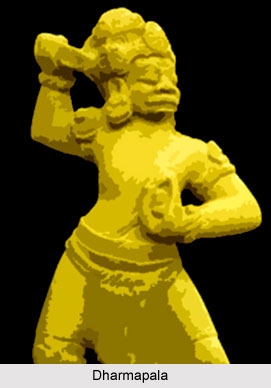 Bengal under the Pala kings became the important political and military powering ancient India. The reigns of Dharmapala and Devapala formed the period of ascendancy of the dynasty. The dynastic rule of the Pala kings gained a stronghold in Bengal and Bihar. Bengal became the key center of north Indian politics under the Pala kings. The Pala kings not only established their stronghold in Bengal but also extended their territory to a vast extent. The greatest achievement of the Pala kings lies in the field of administration The Pala kings besides being an efficient administrator also the great patron of art and literature. Under the patronage of the Pala rulers, education and architecture received a huge impetus in the northern India. The celebrated kings of the Pala lineage constituted Bengal as the important center of the national politics. However the imperial fabric of the Pala powers began to decline after the Devapala. The Pala power however revived its lost glory with the accession of the king Mahipala I.But the formidable power was destined to be declined under the successors of Mahipala I.
Dharmapala- Gopala though was the founder of the Pala dynasty, yet Dharmapala was considered to be the real founder. This is because the Pala Empire received a huge impetus during his reign. Dharmapala besides being a benevolent administrator was also great conqueror. He extended the limits of the Pala Empire to a vast extent. The significant event of his reign was the beginning of the Tripartite Struggle. Under him Bengal witnessed a huge ascendancy.
Devapala- Devapala was the successor of Dharmapala, who established the stronghold of the Pala Empire. Devapala was a great conqueror like his father. He also consolidated the kingdoms conquered by Dharmapala. Moreover Devapala was a patron of art and culture and during his time Bengal witnessed a thriving prosperity in the cultural field.
Mahipala I- The Pala Empire revived its imperial grandeur under the king Mahipala I. After the death of Devapala there was a complete anarchy and chaos. Mahipala however consolidated the disintegrated kingdom and also checked the foreign invasion. The Pala Emperors were
Decline of the Pala Empire
The period that followed the death of Devapala marked the Downfall of Pala Empire and also its disintegration. Till the time of Devapala, Bengal was reckoned as an important power in the history of ancient India. After the death of Devapala, the throne was ascended by Vigrahapala I, who ruled for a short period, with not much achievement to his credit. He was succeeded by his son Narayanapala about 854 A.D. He was a man of religious and soothing disposition so during his long career he did not have any military victory to his credit. According to some historians Narayanapala was one of the weakest kings of Pala lineage.
In 860 A.D. the Rashtrakutas had invaded his Empire and defeated him. The Pratiharas struck several blows to the Pala Empire and consequently disintegrated their glorious empire. Bhoja I snatched the imperial hold of North India from Narayanapala. Bhoja I by this means extended his own control upto Bihar, on the ruins of the Pala Empire. Mahendrapala, son of Bhoja Pratihara followed a policy of aggression against the Palas seized Magadha and even the territory of north Bengal from Narayanapala. The Paharpur Pillar Inscription states that Mahendrapala Pratihara had conquered a part of the Rajshahi district and the other inscription states that his sway had extended upto the region of Dinajpur. In these circumstances the king of Kamarupa and the Sailodbhaba dynasty of Orissa withheld their allegiance for the Palas and became independent kingdoms. Towards end of Narayanapala`s rule he was able to recover North Bengal and South Bihar from the powerful contenders Pratiharas, and left it as a legacy to his successor Rajyapala.
Rajyapala however reigned for a very short period of time. He was succeeded by his son Gopala II and the latter was succeeded by Vigrahapala. The long period of eighty years, when these three kings were in throne, was marked by increase in disintegration and decline of the Pala Empire. Moreover a series of foreign invasions led by the Chandellas, Kambojas and Kalachuriyas had shattered the Pala Empire. The Kalachuriyas made devastating inroads in Bengal, right up to eastern Bengal. During the reign of Vigrahapala II, a hilly tribe called Kambojas had captured western and Northern Bengal. Eastern and southern Bengal disregarded the supremacy of Palas and became independent under the Chandra Dynasty.
Towards the end of 10th century the paternal territory of Rajyapala and his two successors consisting of Bengal and Magadha, were divided into three well-defined independent kingdoms. These included Chandra kingdom of eastern and Southern Bengal, Kamboja kingdom of Northern and Western Bengal, the Pala kingdom (proper), under Rajyapala and his two successors, comprising Anga and Magadha. The period of stagnation continued for more than a hundred years, covering the reigns of generations of kings. During this period the Pala kings hardly attempted for expansion, they were lacking in energy and not dominant enough to check foreign invasions.
Pala dynasty did see a glorious revival under Mahipala I. Though Mahipala could not regain all the lost territories, a major portion of it was recaptured. But after him it was again towards a decline which was temporarily revived by Ramapala. With the death of Ramapala the strength of the dynasty vanished. Ramapala was succeeded by Kumarapala, Gopala III and Madanapala for a period of thirty five years. The circumstances leading to disaster of Pala dynasty are unclear. Kamarupa was lost gradually. Bhojavarman of Eastern Bengal overthrew the allegiance to Pala supremacy and became independent. King Anantavarman Chodaganga of Kalinga had annexed Orissa. The rigorous blow to Palas came from twp karnatic dynasties, Senas of Radha and House of Nanyadeva. Madanapala lost Gauda and North Bihar to his opponents. He had control over Central Bihar only. That was also lost by his successor though it is unknown as to who it was. Hence the Palas lost their foot hold completely.