
Assamese literature during the modern period had commenced from the late 19th century A.D. Modern Assamese literature, just like other umpteen Indian regional literary genres, were profoundly impressed and marked by the arrival of colonialism in India, owing to efforts by the British Empire. The British had inflicted Bengali language in 1836 in Assam, after the state was invaded and encroached upon in 1826.
However, owing to a persistent and tireless campaign, Assamese language was once more established in 1873 as the state language. With the ushering in of the initial printing press and literary activities occurring in a sequential formation in eastern Assam, the Eastern dialect was inaugurated in schools, courts and offices and shortly came to be officially recognised as the Standard Assamese. However, in much contemporary periods, with the expansion of Guwahati as the political and commercial nerve centre of Assam, the Standard Assamese has gradually metamorphosed away from its roots in the Eastern dialect.
In this context of development of Assamese literature into its modern counterpart, the influence of British missionaries upon the state and its populace had much to do, according to historical annals. The modern Assamese period took its first step with the publication of the Bible in Assamese prose by the American Baptist Missionaries in 1819. The presently prevalent standard Asamiya has its ancestors in the Sibsagar dialect of Eastern Assam. The American Baptist Missionaries were the first to employ this dialect in translating the Bible in 1813. These Missionaries also were decisive to institute the first printing press in Sibsagar in 1836 and began employing the local Asamiya dialect for functions of composition. In the year 1846, these well-wishing men had started a monthly periodical named Arunodoi, and in 1848, Nathan Brown issued the first ever book on Assamese Grammar. The American Baptist Missionaries also had taken as much pain as to publish the first Assamese-English Dictionary, compiled by M. Bronson in 1867. One of the most path-breaking contributions of the American Baptist Missionaries to the Assamese language and literature was the reintroduction of Assamese as the official language in Assam. In 1848, missionary Nathan Brown issued a treatise solely involving the Assamese language. This treatise had lent a powerful thrust towards reintroducing Assamese as the official language in Assam.
The ideal ushering in of modern Assamese literature began with the publication of the Assamese journal Jonaki (1889), which brought in the form of short story for the first time by Laxminath Bezbarua. Thus was commenced the `Jonaki period` of Assamese literature. In 1894, Rajanikanta Bordoloi released the first Assamese novel Mirijiyori. Modern Assamese literature has today been exceedingly augmented by the works of Jyoti Prasad Agarwalla, Hem Barua, Atul Chandra Hazarika, Nalini Bala Devi, Navakanta Barua and umpteen other respected personas. In 1917, the Oxom Xahityo Xobha ("Assam Literary Society", or Assam Sahitya Sabha) was founded as the `guardian` of the Assamese society and the public platform for the development of Assamese language and literature. Padmanath Gohain Baruah had served as the first president of Assam Sahitya Sabha.
The second half of the 19th century indeed had remained witness to a flood of literary activity in modern Assamese literature. Hemachandra Barua (1835-1896), the foremost respected figure in modern Assamese literature, furnished a work on Assamese grammar, referred to as Asamiya-Vyakarana (1895) and a dictionary named Hema Kosha (1900). In the middle of 19th Century, Assamese magazines like Arunodaya Samvad Patra (1846) and Asam Bandhu (1885) witnessed the light of successful launching. Anandaram Dhekial Phukan (1829-96) and Gunabhiram Baruwa (1837-95) were the prima notabilities of this period. Gunabhiram Barua`s (1837-1895) Rama-navami (1857) and Hemchandra Barua`s Kaniya-kirtana (1861) were the earliest Assamese dramas to taste the flavour of respect and appreciation.
The trio comprising Chandra Kumar Agarwala (1867-1938), Lakshminath Bezbarua (1867-1938) and Hemachandra Goswami (1872-1928) were the trailblazers of the new `poetry movement` in Assam. The trio thus initiated the monthly magazine Jonaki in 1889, as delineated above. At the same time, Chandra Kumar Agarwala issued two authoritative and commanding works, Pratima (1914) and Vin-Baragi (1923). Lakshminath Bezbarua also produced two compendiums of verses named Kadamkali (1913) and Padum Kali. His patriotic song `O mor aponar des` (O My Own Country) is one of the most memorable and heart-rending pieces of work in Assamese literature during the modern period. Hemchandra Goswami, in the meantime, brought out a compilation of poems named Phular Caki (1907).
A generation of novelists and poets like Bholanath Das (1858-1928), Kamlakanta Bhattacharya (1853-1927), Rajanikanta Bardalai (1867-1939), Hiteshwar Barbarua (1876-1939), Padmanath Gohain Barua (1871-1946), Benudhar Raj Khowa (1872-1935) and Raghunath Chaudhari (1879-1966) began to pen profusely on patriotic, social and romantic disciplines with Indian Independence Movement in the then burning backdrop. Rajnikanta Bardoloi was the pioneer of the genre `novel` in modern Assamese literature. His important novels include Mirijiyari (1895), Manomati (1900), Danduwa Drah (1909) and Rahadai Ligiri (1930). Amongst several others, Padmanath Gohain Barua`s poetic works comprise Phular Caneki, Jurani (1900) and Lila (1901).
The long-established tradition of mystical poetry in this language was immensely made a household name by Durgesvar Sharma (1882-1961) and Nalini Bala Devi (1898-1978) under the modern Assamese literature genre. The `Omar Khayyam` was translated into Assamese by Jatindranath Duara (1892-1978), other prominent and celebrated poets in Assamese language comprise: Ratnakanta Barrakakati (1897-1963), Parvati Prasad Barua (1904-1964), Kamalesvar Chaliha (b.1904), Padmadhar Chaliha (1895-1968), Jyotiprasad Agarwala (1903-1951), Prasannalal Choudhuri (b.1902), Binanda Chandra Barua (b.1903) and Devakanta Barua (b.1914).
Modern Assamese literature possesses its own vibrant short-story genre. Some of the best writers comprise: Phul Goswami, Indira Goswami, Harendra Kumar Bhuyan, Arupa Patangia Kalita and Manoj Kumar Goswami. Modern Assamese literature is one that has triumphantly assimilated all its ancient traditions, lending it their own touch of the flowing contemporaenity. People like Birendra Kumar Bhattacharyya (also only winner of the coveted Jnanpith Award), Bhabendra Nath Saikia, Syed Abdul Malik, Homen Borgohain, Nava Kanta Baruah, Devkanta Barua, Nirmal Prabha Bordoloi, Nilmani Phikan, Mmoni Raisom Goswami etc., have been recognised as writers of great repute all over the country.
As for the tribal languages of Assam, Bodo has developed noticeably in the last few decades, taking into consideration the fact that every tribal language is a rich storehouse of oral folk literature, with myths, legends, tales, songs, proverbs, riddles, lullabies and rhymes.
Modern Assamese Literature
Modern Assamese literature, with its fuelling Independence movement tract, is still evolving towards achieving pinnacle.
Recently updated articles in Indian Literature
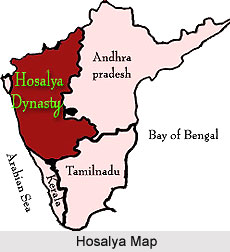
Gadyakarnamrita
Gadyakarnamrita is a 13th-century Sanskrit literary work written mainly in prose. It describes the ninety-day battle at Srirangam between the Hoysala...
Women Writers in Malayalam Literature
Women writers in Malayalam literature have worked incessantly to make a place for their literary works. In the earlier periods, they were completely o...
Comrade Kirillov, Novel by Raja Rao
Comrade Kirillov, a distinctive creation of Raja Rao, is presented as a brief yet incisive novelette that offers an ironic portrayal of the self-contr...
The Foreigner, Novel by Arun Joshi
“The Foreigner” is a book authored by Arun Joshi and published by Vision. It is an illustrious creation in the entire career of Arun Joshi, the famous...
Short Story in Telugu Literature
Short Story in twentieth century Telugu Literature was extremely popular and growing in and developing in a major way. Their popularity was greatly fa...
Related articles in Indian Literature
Mythological Themes in Indian Literature
Mythological themes in Indian literature have been integral to every ancient and contemporary writer and their path to f
Literature During Gupta Age
It is during the Gupta Age literature in the form of poetry, epos and drama gained a colossal importance.
Literature of Aravidu Dynasty
Sanskrit and Telugu were the popular literary medium of communication during Aravidu dynasty.
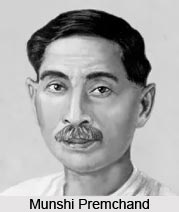
Munshi Premchand
Munshi Premchand was a legendary Indian writer notable for his modern Hindustani literature. A writer of a very high caliber, Premchand`s writings hav...
Sanskrit Poets
The names of some of the Sanskrit Poets are Bharavi, Devarshi Ramanath Shastri, Jayadeva and Srinivas Rath.