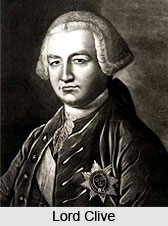
 Military administration in British India necessarily entails those very factors which were associated with the armed forces wings and other martial forces that had acted heart and soul during British Raj. However, this does not strictly mean that military administration during British India was confined only to the establishment of the British India Army during the late years of 19th century. Indeed, a piece of information that can be stated in this context is that the very first English instance of victory under army was the Battle of Plassey in 1757 under the infamous Lord Clive. Travelling down a prolonged line of military ruling and armed forces, contemporary India has stayed a telling witness to uncountable armed services instances during British India. The intensification of British military administration and political upper-hand during British India perhaps possesses no parallel in British Indian history. Sailing by sea as mere traders in the Orient land, the Britishers secretly had infiltrated into the political domain through their clandestinely institutionalised so-stated military forces. Beginning from the first ship Hector under Captain William Hawkins which touched Surat in 1607, almost all the English ships which pursued were in essentiality of the kind of battleships and carried along cannons and other warlike resources supplied by the British Board of Ordnance for their safety on the way and safeguarding of their factories in the then India.
British administration in India has always essentially been termed a military rule. Naval forces indeed had founded the British Empire in India, with the succeeding army power maturing and consolidating it. Rendering evidence before the Parliamentary Select Committee (1832), Major General Sir John Malcolm had stated: "The (Indian) Empire has been acquired and must be maintained by the sword. The military plans for the government of our eastern empire must ever be entitled to primary consideration. The local army of India, but above all, the native branch should always be preserved in a condition of efficiency and attachment. Our means of preserving and improving our possessions through the operation of our civil institutions depend on our wise and politic exercise of that military power on which the whole fabric rests." This fiery and blood-boiling statement from an invading power very much states the status of military administration in British India and what the Indian natives were to witness and suffer in gradual gathering times.
Military administration means a rigorous and out-and-out arrangement of the army into a competent and resourceful one, so that it turns into a potential force and champions the nation at each time of its crisis. Hence, the survival of a country relies very much upon its defence strategies. A military or military force is a combination of men, machines and equipments that lends life to an army. While it can pertain to an armed force, it by and large pertains to a permanent, professional force of soldiers or guerrillas - trained absolutely for the function of sabotaging warfare. The doctrine that avows the primary importance of a military with in a society is referred to as militarism. As such, military administration in British India was strictly followed by these mentioned guidelines, at times resorting to dire measures of cruelty or treachery, backing the Englishmen and overlooking the native hapless soldiers.
The growth and development of military administration and power in British India is a surpassing account, details of which can be devoted into pages after pages. The early and first time settlements of the British East India Company, strongly asserted to be solely mercantile, had almost their commencements in a few European artillerymen, who constituted a portion of the guard preserved for the protection of the factories newly erected. Soon after, with a rather bolder policy, a number of artillery parts were kept handy and prepared in the reinforcement built by the coastline. With time, the East India Company got involved in scuffles and skirmishes with European antagonists and the native vassal chiefs. Henceforth, the quandary of everyday supply of arms, transport, food, clothing and other warlike resources to the Company troops gradually began to witness an escalading scale. The arrangement and administration of the expanding army became a vital and pressing crucial factor for guaranteeing victories in the upcoming combats. The decisive step thus taken by the Company in this regard was the establishment and constitution of regular companies of artillery, ordinance service and the organisation of ammunition factories in the year 1748.
Military administration during British India however was not an all-encompassing and too promising and rosy an affair; umpteen hardships had to be tackled and overcoming them appeared to a knotty troubled one. And precisely in this context, the natives had gradually begun to enter the scenario, with Britishers recruiting mercenaries against their own wish. The first Indian Sepoy levies engaged by the East India Company possessed meagre discipline and were fortified with appalling ingredients like matchlocks, bows and arrows, spears and swords. There was, however, no deficiency of first-rate fighting material from amongst the natives. As time passed by, these sepoys were conditioned and disciplined on the European lines, corrected, armed with muskets, equipped with sophisticated weapons and also interwoven into first class fighting units. The men came to acquire and admire the notions of drill and discipline and private military qualities, those rigorously imparted to the trainee sections.
Indian soldiers began to be referred to as `Native Troops`, who were badly armed and `although drilled in the use of the musket were chiefly armed with sword, the spear and the shield, wore their native dress and were commanded by native officers `. By this time, precisely the 18th century, the three Presidency towns comprising Bengal Presidency, Madras Presidency and Bombay Presidency, had already been enforced into prominence, possessing a separate military wing of their own. As such, military administration of British India was already acknowledged as one of the most strongly cohered one in the world, with strategical measures assisting in their every rendezvous. In the Madras Army armed servants, guard and peons named as Telingas (from Telengana, in present day Andhra Pradesh), were an unsystematic and muddled mob who "had no discipline, nor any idea that discipline was required." They were armed with matchlocks, bows and arrows, spears, swords, bucklers, daggers, or any other weapon they could get, practically unarmed against the rising British military prowess. They consisted of bodies of diverse strength and potential, each under the directive of its own chief, who, in turn, earned from government the pay of the whole body and circularised it to his subordinates.
A historical retrospect of military administration of India can conveniently be classed into the following periods:
• First Period - The initial phase of 1600 - 1708, when the forces of the East India Company were almost detached and an unorganised body .
• Second Period - The Presidency Armies under the Company from 1709 to 1857.
• Third Period - The Presidency Armies under the British Crown from 1858 to 1894
• Fourth Period - The period of the British Union, after the abolition of the Presidency Armies of 1895 - 1920
• Fifth Period - The period of consolidation from 1921 to the present times.
However, this significant division can be summarised into a rather humble one, primarily concentrating on the British Indian period, which had remained a forever telling witness to the two World Wars in much later periods, after the establishment of British Indian Army, and the much previous Anglo-Sikh Wars or the Anglo-Maratha Wars. However, the most deciding and now-legendary instance of dichotomous and haywire military administration during British Indian times was witnessed in the First Battle of Indian Independence - the Sepoy Mutiny of 1857. The Sepoy Mutiny indeed had set the tables turning against British brittle pride, gradually shattering towards final crumbling.