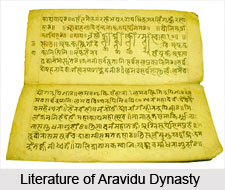
Kannada literature took a momentous Hindu bend with the orthodox Vijayanagara kings (14th - 15th A.D.) during the middle ages. Kannada literature in Vijayanagara period assimilated some of the most eminent names in literary scenario, comprising: Bhima Kavi, Padmanaka, Mallanarya, Singiraja and Chamarasa. The Bhakti Movement also had affected Kannada literature in the 15th and 16th centuries. The Ramayana, Mahabharata and Puranas were translated afresh, employing the folk metres satpadi (six-line verse, first cited by Nagavarma I in Chhandombudhi of c. 984 and operational from 1165) and ragale (lyrical narrative authorships, operational from 1160). Devotional songs of dasas or `singing friars` were gathered together, which formed a crucial part of popular literature.
The 14th century India had remained witness to trembling upheavals in geo-politics of southern India with Muslim empires ceaselessly invading from the north. It was then that the Vijayanagara Empire stood as if like a rampart against these invasions and induced an ambience, contributive to the development of fine arts. In a Golden Period of Kannada literature under Vijayanagara kingdom, competition between Vaishnava and Veerashaiva writers were severe and literary contestations between the two sects were an everyday encounter, especially in the court of King Deva Raya II. Heightened rivalry led to "organised processions" in admiration and nobility of the classics composed by poets of the respective sects.
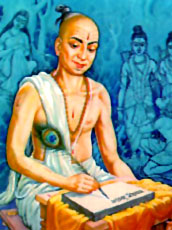
Kumara Vyasa (the nom de plume of Naranappa), a doyen of medieval epic poets and one the most authoritative Vaishnava poets of the time, had reigned during Vijayanagara period in Kannada literature. Kumara Vyasa was particularly celebrated for his polished and refined usage of metaphors and had even achieved the title Rupaka Samrajya Chakravarti ("Emperor of the land of Metaphors"). In 1430, he had authored the Gadugina Bharata, also admired as Karnata Bharata Kathamanjari or Kumaravyasa Bharata in the Vyasa tradition. The work is a translation of the first ten chapters of the epic Mahabharata and accentuates upon the divinity and grace of Lord Krishna, representing all characters with the exemption of Krishna to go through human idiosyncrasies. An intensely occupying facet of the work is the sense of wit displayed by the poet and Kumara Vyasa`s hero, Krishna. This work marked a transition of Kannada literature to a rather modernistic genre and harbingered a new age, amalgamating `poetic perfection` with `religious inspiration`. The remaining parvas (chapters) of Mahabharata were translated by Timmanna Kavi (1510) in the court of King Krishnadevaraya. The poet named his work Krishnaraya Bharata after his patron king.
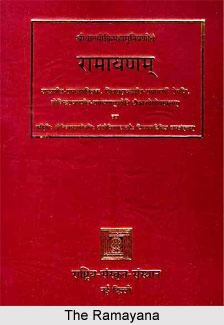
Kannada literature in Vijayanagara period further had received its impetus under Kumara Valmiki (1500), who had finished the first entire brahminical adaptation of the epic Ramayana, renamed as Torave Ramayana. According to the author, the epic he wrote did not much recount God Shiva`s tête-à -tête with his consort Parvati. This writing has however remained popular down the centuries, also enlivening folk theatre, such as the Yakshagana, which has made complete utilisation of its verses as a script for enacting episodes from the great epic. In Valmiki`s version of the epic, demon King Ravana is portrayed as one of the suitors at Sita`s Swayamvara (literally standing for a ceremony of "choice of a husband"). His letdown and consequent collapse to win the bride`s hand ensues in jealousy directed towards Rama, the eventual bridegroom. As the story builds up, Hanuman, for all his services to Rama, is elevated and almost beatified to the status of "the next creator". Towards the termination of the story, during the war with Rama, Ravana finally comprehends that his antagonist is none other than another manifestation God Vishnu and thus rushes to breathe his last in Rama`s hands to achieve nirvana.
Chamarasa, a Veerashaiva poet, was a tough contender of Kumara Vyasa in the court of Devaraya II. His panegyric of the saint Allama Prabhu, titled Prabhulinga Lile (1430), was later interpreted into Telugu and Tamil at the somewhat command and request of his patron king. In the story Prabhulinga Lile, the saint was regarded as an incarnation of Hindu God Ganapathi, whereas, Parvati had taken the form of a princess of Banavasi.
Mutual reciprocation between Kannada and Telugu literatures, a trend which had begun in the Hoysala period, increased further during Vijayanagara period. Translations of classics from Kannada to Telugu and vice versa began to gather momentum. Renowned and distinguished bilingual poets of this period include: Bhima Kavi, Piduparti Somanatha and Nilakanthacharya. In fact, some Telugu poets were so well versed in Kannada, also including Dhurjati, that they indeed made free use of numerous Kannada terms in their Telugu authorships. It was because of this "familiarity" with Kannada, that the notable writer Srinatha even called his Telugu, "Kannada". This admiring and praiseworthy process of interaction between the two languages continued into the 19th century in the form of translations by bilingual writers.
The next two centuries were a busy period with several ruling dynasties of the Wodeyar kings, Bijapur Sultans and Mughals, and much literary activities happening in Kannada literature from the Vijayanagara period. Bhattakalanka Deva`s Karnataka Shabdaushasana (1604 A.D.) on grammar, Sakdakshara Deva`s romantic writings the Rajshekhara Vilasa (1657 A.D.), the historical and distinguished compositions of the Wodeyar period (1650-1713 A.D.), Nijaguna Yogi`s Viveka Chintamani of Shaiva lore (mid 17th century), Nanja Raja`s Puranic works, the Shiva Bhakti Mahatmya and Hari Vamsa (circa 1760), were some of the notable creations, to have fetched decisive attention.