The Kanchenjunga Biosphere Reserve (KBR) is one of the finest biosphere reserves in India. The reserve is located in the North South and West district of the state of Sikkim in India. The boundaries of the reserve lie between the latitude of 270 15` North and longitude of 88002 and 880 40` East. The biosphere reserve encompasses a huge area of 2655.26 km and has two core zones with total area of 1819.34 square kilometres. There are four buffer zones covering an area of 835.92 square kilometres, in the biosphere reserve, as well. The reserve is located in the altitude ranging from 1220 to over 8550 m amsl.
The Kanchenjunga Biosphere Reserve has the Kanchenjunga (high altitude) National Park and the Lungnak La (5537 m) ridge, to its north. The Tista River is flowing to the east of the reserve and to the south, the reserve`s boundary runs all along the boundary of various reserved forests of the South and West Forest Division of Sikkim. The reserve is bounded by the Singalila Range to the West. This range forms the international boundary between the Indian state of Sikkim and Nepal. The Kanchenjunga National Park (KNP) is situated within the Kanchenjunga Biosphere Reserve. The KNP/KBR complex is the biggest IBA in Sikkim, occupying nearly 40% of the State. This IBA also has the world`s third highest (and India`s highest) peak Mt. Kanchenjunga (8,598 m) and is hence the highest altitude wildlife protected area in India.
The features of the Kanchenjunga Biosphere Reserve are in agreement with almost all the required international criterions of such reserve. The most important features of the Reserve include (i) unique geomorphic features with some of the lofty picturesque and beautiful peaks of heights ranging from 5825 m to over 8550 m asl; glaciers; high altitude lakes; and one of the world`s highest ecosystems. The reserve covers varying eco-clines from sub-tropical to arctic areas (1220-8550m) and several major North-South and west South trans-boundary watersheds, and it has religious significance, as well. The Mountains, Lakes, Rocks and Caves located inside the Biosphere Reserve are sacred to the local people and are worshipped by them.
 The climate of the Kanchenjunga Biosphere Reserve varies in different parts, according to location, change in altitude and aspect. The main reason behind this variation is the difference in altitude. The summer at the foot-hills of this reserve is extremely hot and the winter on high mountains of this reserve is freezing chill. The spring occurs during the months of March to May and autumn occurs during the months of September to November. The Kanchenjunga Biosphere Reserve also experiences a wide range of humidity, from 70% in the month of December to 92% in July; however, the annual means is around 82%.
Only the Government Reserved Forests, forests set aside for grazing (Goucharan) and for the purpose of public utility (Khasmal), are included in the Kanchenjunga Biosphere Reserve. The boundary of the Reserve runs all along the Reserved Forest boundary in places where villages are adjacent to the forests. The Reserve is also surrounded by rural villages in which, the communities like Lepchas (early settlers), Bhotiyas and Nepalese, live.
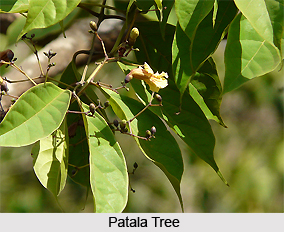
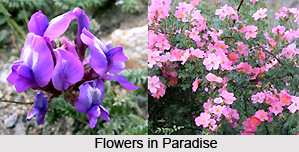
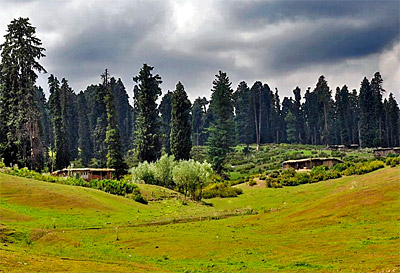
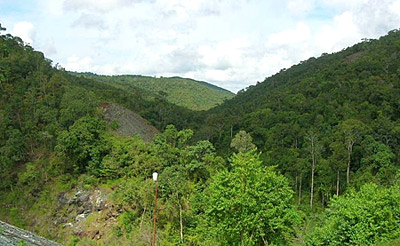
The natural vegetation in the Kanchenjunga Biosphere Reserve is quite rich. The forests in this reserve represent diverse plant communities, including diverse vegetation. This diversity in vegetation is mainly because of variation of climatic and edaphic factors. The main vegetation types found in the forests of Kanchenjunga Biosphere Reserve include Sub-Tropical Broad-Leaved Hill Forest, Himalayan Wet Temperate Forests, Temperate Broad-Leaved Hill Forest, Himalayan Wet Temperate Forests, Temperate Broad-Leaved Forests, Mixed Coniferous Forests, Sub-Alpine Forests, Moist Alpine Forests, and Dry Alpine Forests. Some of the most important flora species found in these forests include Aconitum spp., Rhododendron spp., Meconopsis spp., Costus speciosa, Taxus baccata, Swertia Chirata, Gynocardia odorata, Paphiopedilum, anustum Orchid, etc.
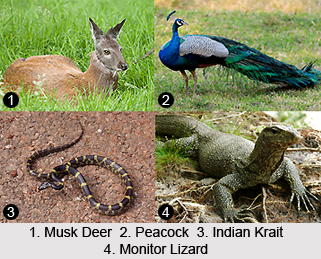
The fauna of the reserve is also quite rich. The Kanchenjunga Biosphere Reserve is home to innumerous mammal and bird species. The high altitude alpine and plateau regions and foot hills of the reserve are conductive to the growth of faunal wealth and also provide safe refuge. The Biosphere Reserve provides natural habitat to several threatened mammal fauna species like Jungle Cat, Leopard Cat, Panther or Leopard, Snow Leopard, Musk Deer, Himalayan Tahr, Tibetan Wolf, Clouded Leopard, Serow, Red Panda, Nayan, etc.
The number of bird species in the Kanchenjunga Biosphere Reserve is also quite large. The areas in West Sikkim like Dentam-Uttarey-Chitrey-Chewabhanjyang, the Rathong Chu Valley along the Yoksum-Dzongri-Goecha La trekking trail, Tashiding, Rabdentse, Dubdi, Khecheopalri, are some of the important habitats in this Reserve, for the bird species. The areas in North Sikkim like Tholung Valley in Dzongu, Tsungthang-Menshithang-Lachen-
 Thangu, the Muguthang-Green Lake route including the Zemu Glacier-Zemu Chu Valley, also provide important habitats to the bird species. The different kinds of bird species include both the resident type and migratory birds. Some of these species are considered as endangered, critically endangered, threatened or endemic.
The bird species recorded in the Kanchenjunga Biosphere Reserve are from at least four biomes. There are about 127 bird species found in this reserve, out of which, seven species are considered as globally threatened. Some of the most important bird species found in the Kanchenjunga Biosphere Reserve include Himalayan Golden Eagle, Himalayan Bearded-Vulture, Satyr Tragopan, Himalayan Monal Pheasant, Tibetan Snow Cock, Tibetan Horned or Eagle-Owl, Forest Eagle-Owl, Black Eagle, etc.
The Kanchenjunga Biosphere Reserve is playing an important role in maintaining the balance of India`s rich bio-diversity. It is contributing highly to maintain the relation between all living beings in India and also to study about their interaction with the elements of the lithosphere, hydrosphere, and atmosphere.
Kanchenjunga Biosphere Reserve
Occupying about 40% of Sikkim, the Kanchenjunga Biosphere Reserve is one of the most important reserves in India.