


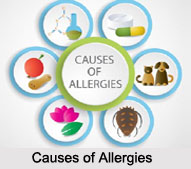
 Causes of Allergies are very important to be diagnosed before treating them. Risk factors for allergies can be placed in two general categories, namely the Genetic and the Environmental factors. Genetic factors for allergy include heredity, sex and age, with heredity being by far the most significant. However, there have been recent increases in the incidence of allergic disorders that cannot be explained by genetic factors alone. Four major environmental candidates are alterations in revelation to infectious diseases during early childhood, environmental pollution, allergen levels and dietary changes. Exposure to Allergens, especially in early life, is an important risk factor for allergy and is recognised as an important cause of allergies in India. Causes of Allergies are very important to be diagnosed before treating them. Risk factors for allergies can be placed in two general categories, namely the Genetic and the Environmental factors. Genetic factors for allergy include heredity, sex and age, with heredity being by far the most significant. However, there have been recent increases in the incidence of allergic disorders that cannot be explained by genetic factors alone. Four major environmental candidates are alterations in revelation to infectious diseases during early childhood, environmental pollution, allergen levels and dietary changes. Exposure to Allergens, especially in early life, is an important risk factor for allergy and is recognised as an important cause of allergies in India.
Genetic Factors for Allergy Genetic reasons prove to be some of the most vital causes of allergies. Allergic diseases are strongly familiar. The identical twins are likely to have the same allergic diseases about 70 percent of the time; the same allergy occurs about 40 percent of the time in non-identical twins. Allergic parents are more likely to have allergic children and their allergies are likely to be more severe than those from non-allergic parents. The risk of allergic sensitization and the development of allergies vary with age, with young children most at risk. Several studies have shown that IgE levels are highest in childhood and fall rapidly between the ages of 10 and 30 years. The peak prevalence of Hay Fever is highest in children and young adults and the incidence of Asthma is highest in children under 10. Sex differences tend to be a cause of variation in the level of allergy. Boys have a higher risk of developing allergy than girls, although for some diseases, namely asthma in young adults, females are more likely to be affected. Environmental Factors for Allergy Individuals living in too sterile an environment are not exposed to enough pathogens to keep the immune system busy. Since human bodies evolved to deal with a certain level of such pathogens, when it is not exposed to this level the immune system will attack harmless antigens, and thus normally compassionate microbial objects, like pollen, will trigger an immune response. There are many causes behind developing allergies; however, the cause decides the symptoms of allergy and thus the identification of particular kind of allergy leads to the proper treatment. Causes of allergies should not be neglected while diagnosed, since these are the parameters, which decide the method of treatment of Allergies. |
| |||



Home > Health > Naturopathy > Nature Cure Treatments > Common Ailments > Allergies > Causes of Allergies
Causes of Allergies
| Causes of allergies can range from food habits to contact with foreign bodies. The severity of allergies depends upon the immune system of an individual. |
| ||||||||||||||||||||||||||||

