Art and Architecture of Pala Dynasty
|
Art and Architecture of Pala Dynasty was very developed and `Pala School of Sculptural Art` was a distinctive achieveme.
|
|
|
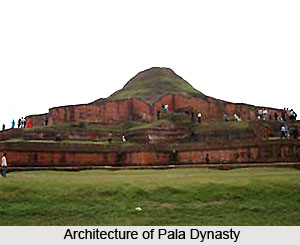 In India, during the rule of Palas, art and architecture witnessed a phenomenal development in the states of Bengal and Bihar. The matchless tradition of sculptural art had attained a new position under the reign of Palas. The exclusive development of Art and Architecture of Pala Dynasty demonstrated the emergence of 'Pala School of Sculptural Art'. The characteristic of art and architecture of that period included lot of local phenomena of the Bengali society. Consequently, the most distinctive achievements during the age of the Palas were in the field of art and sculptures. In India, during the rule of Palas, art and architecture witnessed a phenomenal development in the states of Bengal and Bihar. The matchless tradition of sculptural art had attained a new position under the reign of Palas. The exclusive development of Art and Architecture of Pala Dynasty demonstrated the emergence of 'Pala School of Sculptural Art'. The characteristic of art and architecture of that period included lot of local phenomena of the Bengali society. Consequently, the most distinctive achievements during the age of the Palas were in the field of art and sculptures.
Art and Architecture of Pala Dynasty furnished the accomplishment in the field of terracotta, sculpture and painting. One of the finest instances of architecture of the Pala period is a creation of Dhamapala, the Somapura Mahavihara at Paharpur. In addition to that several enormous structures of Vikramshila Vihar, Odantpuri Vihar, and Jagaddal Vihar proclaim to be the masterpieces of the Palas. The architectural style of the Pala Empire influenced the whole of the country and its neighbouring countries. Their approach was followed throughout south-eastern Asia, China, Japan, and Tibet.
The matchless examples of the Art and Architecture of Pala Dynasty find their significance in the museums in Bangladesh and West Bengal as the remarkable display. The museums play abode to the innumerable beautiful sculptures on Rajmahal black basalt stone. The sculptures beautifully carved in the Pala period demonstrate the mastery of Pala dynasty. The age saw an upsurge of perfect carving and Bronze sculptures. Furthermore, it has been recognized by the historians that the specimens of bronzes influenced the art in south-east Asian countries.
Art and Architecture of Pala Dynasty also involved the art of painting also excelled in that period. Though, no exact examples of paintings have been found of that period yet various illustrations of beautiful paintings of the Buddhist gods and goddesses, appearing in the Vajrayana and Tantrayana Buddhist manuscripts corroborate the subsistence of paintings in the Pala Empire. Moreover, with advanced stage of architectural expansion several Buddhist Viharas came originated. The plan of central shrine in the Buddhist Vihara evolved in Bengal during the Pala rule. Other instances demonstrating the brilliance of the art in the Pala period include the terracotta plaques. These plaques are used as the surface decoration of the walls and are recognised as unique creation of the Bengal artists.
|
|
|
|





