In the long gone days of the ancient era, Indian theater originated in a rather haphazard way. The modish approach was not there; the a la mode elegance was also missing as theatre in ancient India was an instrument of humanizing people. The chronicle of Indian drama uncovers the fact that theatre in medieval India, for the first time germinated the seed of the modern drama in a significant way. It was during the gothic period in Indian culture, theatre and drama broke the tradition of illustrating the facts from epics and eposes and developed a rather systematic dramatic form.
Theatre in medieval India therefore not only was a narration of the epic poems but it was during that period the very concept of "Theatrical art" was introduced. The fragrance of the "Nine Rasas" which Bhasa introduced in his Natya Shastra started evolving around each play for the greater objective of producing harmony. Bhavabhuti, the famous dramatist of medieval India in his three important plays- Malati-Madhava, Mahaviracharita and the Uttar Ramacharita, almost played with the nine rasas distinctively.
Introduction of Indian Classical Dance Drama
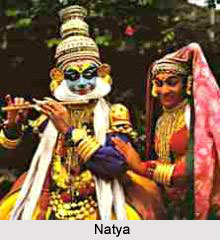
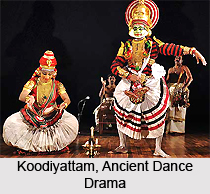
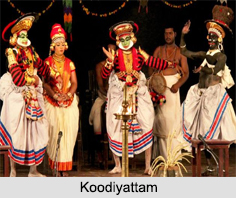
Till the fag end of the fifteenth century, Sanskrit dramas were performed on stage. However it is with the introduction of the Indian classical dance drama, the true aura of Indian theatre was felt for the first time. Theatre in medieval India further witnessed a new genre of Indian drama with the introduction and later on with the popularity of Indian classical dance drama. In this classical genre of Indian theatre, style, idea, logic, poise and above all dramatic development all gained a typical shape amidst the artistic expression through timber, music, songs and mudraas. Theatre in medieval India gradually became quite a thriving personification and of course a refined embodiment of the realities of life through dance, music and poise. The introduction of "Loknatya" during the mid 16th and late 16th century again added a whole fresh enunciation to Indian theater during the medieval period. The over theatrical pattern of the ancient drama gained a rather rational rhythm in the style and pattern of theatres in medieval India.
Role of Religion in Theatre
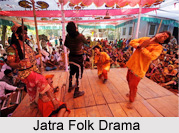
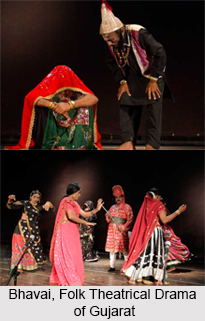
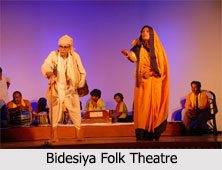
The practice of theatre in medieval India was mainly based on oral traditions. Songs, dance and recitation based plays like Rasleela, Ramlila, Bhand Nautanki and Wang ruled the drama pattern in the medieval India. Religion played a pivotal role in shaping the medieval Indian theatre as devotional plays, mythological plays and other religious plays reverberated the aura of Bhakti Movement in the timeline of Indian theatre. Although not in a very structured way, yet the very aureole of the regional theatres started evolving during that era. However, historically it was during the 15 and 16th century the folk theatre emerged forcefully in different regions. It used different languages, the languages of the regions in which it emerged. This indeed paved the way of the historical development of regional theatres in India.
Theater in medieval India unveils the voyage of Indian theater from the age old eposes to the traditional rasalilas. It is the account of an altering tradition and the legend of that ever-changing Indian culture, art and folklore which from the remote past supported India in standing apart with her rich heritage, mores and civilization.