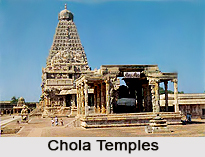
 The Sarangapani temple is considered second to Srirangam temple. The Vaideeka Vimana here is considered an offshoot of the Sreerangam Pranava vimanam, and a replica of that vimanam was presented to Vibhishana by Lord Rama. It was built like a chariot with wheels drawn by horses and elephants, and is grander than the Melakkadambur temple built by Kulottunga Chola I.
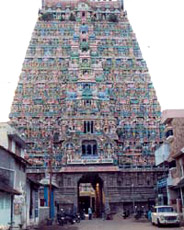
The temple of Lord Sarangapani is given the third place of importance among the shrines dedicated to Lord Vishnu, the first being the temple of Lord Ranganatha at Srirangam and the second that of Lord Venkatachalapathy of Tirupati. The temple of Sarangapani was built by the Nayak kings. Its main gopuram is 146 feet high, measuring 90 feet by 51 feet at the base-an imposing structure of 12 storeys with numerous ornamented figures. Just like the town of Srirangam, on the two sides of Kumbhakonam flow the Kaveri River and the Arasalar Rivers which the poets and Vaishnavaite saints had described as the garlands decorating this place and the sacred shrine of Lord Sarangapani.
There are two entrances to the shrine of the Lord-one on the southern and the other on the northern side. As the devotees are required to enter the shrine through the entrance on the southern side during the period of Dakshinayana, it is known as the "Entrance of Dakshinayana" and for similar reasons the entrance on the northern side is called "Entrance of Uttarayana". The Dakshinayana entrance is also known as the "Entrance of Marriage", as Lord Sarangapani came out first through this gate and soon after married Kamalavalli. The legend connected with the two entrances provided to the shrine of the Lord is that once the two Devatas now in charge of the Uttarayana and Dakshinayana entrances prayed to the Lord to attain divine powers and eternal bliss. Lord Sarangapani one day appeared before them and directed them to go to Kumbakonam and stand at the two entrances to his shrine. It is said that the devotees pleased the Lord by serving him as directed and got their desires fulfilled.
The temple has two big cars. It is said that the larger of the two is the third biggest in the district. There is a silver car also in the temple which is being used to take out the Lord in procession on important occasions like the first day of Tai (January-February), Vasanta Utsavam, etc.
Although the temple existed during the Pallava period, the current structure belongs to the Vikrama Chola period (1121 onwards). Later Cholas built the superstructure of the 11-tiered gopuram, and the Vijayanagar rulers completed the tower. The tower is 140 feet in height. It contains sculptures depicting Bharata Natyam positions on the first tier of the Gopuram, where in other temples they are seen on walls. On the banks of the Mahamagam tank, there are several mandapams built by Govinda Deekshitar - minister of the Nayaks of Madurai.
Legend of Kumbakonam Temple
There are a number of legends associated with the temple. It is said that sage Bhrigu had entered Vaikuntham and had kicked Lord Vishnu on the chest not having recognized the Lord. At this Goddess Lakshmi had left for earth and had settled on the banks of Kumbhakonam tank. Bhrigu Muni was re-born as Hema Rishi and Goddess Lakshmi was born as his daughter in Mahamagum lotus tank. She was offered by Hema Rishi to Sarangapani in marriage.
Festivals of Kumbakonam Temple
One should visit the temple on the day of Vaikuntha Ekadasi when thousands of devotees from far and wide throng here and get the grace of Sarangapani. Another important festival attracting crowds is that of Mattai Adi which also takes place in the month of Tai. The first day of Uttarayanam in Sarangapani Temple witnesses the silver chariot procession. Bhramotsavam is celebrated in Tai and Chittirai, and Vasantotsavam in Vaikasi. Also celebrated are the Pavitrotsavam in Ani, Navaratri, Pankuni Uttiram, Maasi Magam, and the Dolotsavam in Margazhi.