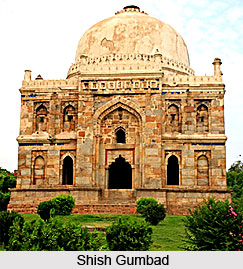
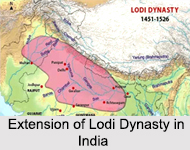
 The Lodi Dynasty was established by the Ghizlai tribe of the Afghans by Bahlul Khan Lodi when he replaced the Sayyid Dynasty. The time of the Lodis was a period of reforms in administration, strengthening of the army, gearing up the machinery of land revenue administration, expansion and improvement of the cultivation and welfare of the people. There were three main rulers in the history of the Lodi Dynasty, all of whom are discussed below in detail:
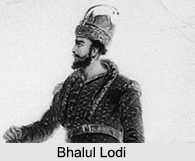
Bhalul Lodi (AD 1451- 1489)
Founder of the Lodi Dynasty in India and the first Afghan ruler of Delhi, Bahlul Lodi was the nephew and son-in-law of Malik Sultan Shah Lodi, the governor of Sirhind in Punjab. During the reign of the Sayyid dynasty ruler Muhammad Shah, Bahlul Lodi succeeded his uncle and served as the Subedar or Governor of Lahore and Sirhind. Bahlul Lodi seized the throne without much resistance from the last Sayyid ruler of Delhi, Alam Shah. His territory was spread across Jaunpur, Gwalior and northern Uttar Pradesh. During his reign in 1486, he appointed his eldest son Barbak Shah as the Viceroy of Jaunpur.
 Sikander Lodi (AD 1489- 1517)
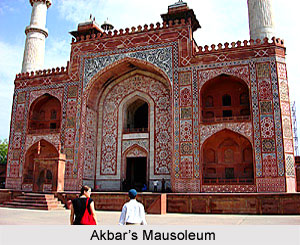
Born as Nizam Khan, the second son of Bahlul Lodi was given the title of Sultan Sikander Shah when he succeeded his father as the king. He transferred his capital from Delhi to Agra, a city which he founded in 1504. The village of Sikandara, near Agra, where the tomb of Akbar stands, was named after Sikandar.
Sikander Lodi was the ablest of the 3 Lodi rulers. His empire extended from Punjab to Bihar, and later he signed a treaty with the ruler of Bengal, Alauddin Hussain Shah. It was under his rule that Dariya Khan Lohani was appointed as the Governor of Bengal. Under his rule there was abolition on corn duties and introduction of the system of auditing the accounts and relaxed restrictions on trade, which greatly promoted the economic prosperity of the people. Sikander Lodi introduced "Gaz-i-Sikandari" also known as the Sikandar`s yard, of 39 digits or 32 inches, for the measurement of agricultural land.
Sikander Lodi was a staunch Sunni and a Muslim fanatic, who lacked religious tolerance and levied Jaziya and Pilgrim`s tax on Hindus. Other than this he was a liberal patron of arts and wrote letters and verses in Persian under the pen name of Gulrukhi.
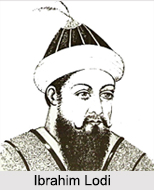 Ibrahim Lodi (AD 1517- 1526)
The last sultan of the Lodi Dynasty, Ibrahim Lodi was the youngest son of Sikandar Lodi who succeeded the throne after the death of his father. There were many revolts during his reign; Bihar declared its independence under Dariya Khan Lohani. His repressive policy towards the Lohani, Formuli and Lodi tribes and his unsympathetic treatment of Dilawar Khan, the governor of Lahore, turned the nobles against him. Daulat Khan Lodi, the father of Dilawar Khan and Alam Khan invited Babur, the Timurid ruler of Kabul, to invade India and thus the first Battle of Panipat (AD 1526) ensued, where Babur defeated Ibrahim and killed him. This marked the end of the Lodi Dynasty and the rise of the Mughal Empire in India led by Babur.
Fall of the Lodi Dynasty
When Ibrahim Lodi ascended the throne to Lodi Dynasty, the political structure in the empire had dissolved due to abandoned trade routes and depletion of the treasury. In the 15th century, the supply lines of the coastal trade of the Deccan had collapsed, which resulted in cutting off supplies from the coast to the interior, where the Lodi Dynasty resided. The dynasty was not in a position to protect itself from warfare, if it were to break out on the trade route roads; therefore, they didn"t use those trade routes, thus their trade declined and so did their treasury leaving them vulnerable to internal political problems. It was Daulat Khan, the governor of Punjab region who asked Babur to invade the Lodi kingdom, with the thought of taking revenge from Ibrahim Lodi. The Hindu Rajput leader of Mewar, Rana Sanga also offered his support to Babur to defeat Ibrahim Lodi.