


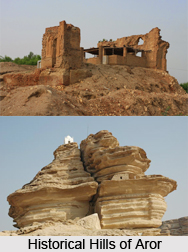
 Aror was the capital of Sindh in ancient India, which is now situated 8 km east of Rohri in Sindh, Pakistan. Aror was the capital of Sindh in ancient India, which is now situated 8 km east of Rohri in Sindh, Pakistan.
Importance of Aror Aror was the centre of trade and commerce in ancient India. Hindi, Urdu, Punjabi and Sindhi were the spoken languages here. People followed Hinduism, Islam and Sikhism in Aror. Meaning of Aror The name of the Aror city was derived from a place named Aror which was situated near the modern towns of Rohri and Sukkur in Sindh, Pakistan. The Arab historians used various words to describe Aror including Al-rur, Al-ruhr and Al Ror. History of Aror The Aroras originated from the Aror. They were the Kshatriya of Aror. During the time of Maharaja Ranjit Singh, the Aroras were settled in Amritsar. There is a street in Amritsar named after them as Arorianwali Gali. After the decline of the Indus Valley Civilization, the Indo -Aryans migrated to the east and south but some of them settled in the Punjab region. It is said that the Aroras are one of these groups. Some historians are of the view that the Aroras are descendants of an Indo-Aryan group known as Arattas (Arachosians). From Arachosia they migrated to Sindh and populated the Indus valley. Aror and Arora are derivatives of Aratta. It is also believed that the legendary Parasurama drove them towards Multan near by this place and they founded Arorkot (or Aror). There they were cursed by a faqir. Then the town became desolate and they fled through its three gates to the north, south and west, and the three main groups (Uttradhi, Dakhna and Gujarati or Dahra) arose. Aror as the Capital of Sind It was the capital of Sindh when it was ruled by King Dahir. In 711 AD, Muhammad bin Qasim ruled the city and moved the capital to Mansura. In the 10th century, as the result of a massive earth quake, Indus changed its course. The present course of Indus is west of Aror. At present Aror is a small dusty village. Aror in Modern India During the Indian Independence Arors joined hands with the rest of India. As they belonged to the Western Punjab region, the Aroras migrated to India during the Partition of India |
| |||



Aror - Indian City
| Aror was an ancient city in India. It was located 8 km east of Rohri in Sindh, Pakistan, was the ancient capital of Sindh and located on the bank of Indus. |
| ||||||||||||||||||||||||||||

